 Save
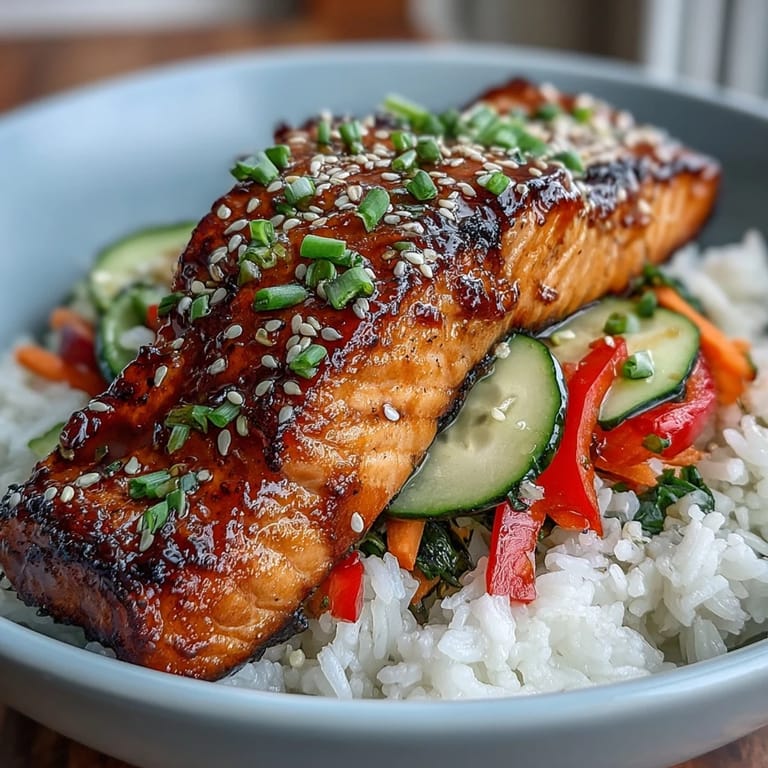
Save My neighbor once knocked on my door holding a takeout bowl from the place down the street, raving about how good it was but wishing she could make it at home. That conversation sent me down a rabbit hole of testing soy glazes and rice textures until I landed on this bowl. It became my weeknight answer to restaurant cravings without the markup or the wait. Now I make it every other week, and honestly, it tastes better than what started the whole thing. There's something about controlling the glaze sweetness and piling on the crunch that just works.
I served this to a friend who claimed she did not like salmon, and she ate two bowls. She kept asking what I did to make it taste different, and the truth is just honey, ginger, and a hot oven. The glaze caramelizes just enough to hide any fishiness and the vegetables add enough crunch to keep every bite interesting. That night she texted me asking for the recipe, and I knew I had a keeper.
Ingredients
- Salmon fillets: Go for center cut pieces with even thickness so they cook uniformly, and do not worry about skin on or off, either works beautifully here.
- Soy sauce: This is the salty backbone of your glaze, and low sodium works if you are watching salt but regular is fine if you balance it with the honey.
- Honey: It brings just enough sweetness to balance the soy and helps the glaze cling to the fish as it bakes.
- Fresh ginger: Grate it finely so it melts into the glaze instead of leaving fibrous bits, and do not skip it because it is what makes this taste alive.
- Garlic: Minced small and mixed raw into the glaze, it mellows as everything bakes and adds that warm, savory depth.
- Rice vinegar: A splash of tang cuts through the richness and keeps the glaze from tasting one note.
- Sesame oil: Just a tablespoon perfumes the whole dish with that toasty, nutty aroma that smells like an actual restaurant kitchen.
- Cornstarch: Optional, but if you like a thicker, stickier glaze that coats the salmon instead of running off, whisk it in with a little water.
- Jasmine or sushi rice: Fluffy, slightly sticky, and perfect for soaking up extra glaze, rinse it well or it will turn gummy.
- Carrot, cucumber, red bell pepper: Julienne them thin for crunch and color, and they add freshness that balances the richness of the salmon.
- Edamame: Shelled and cooked, they are little protein packed pops of green that make the bowl feel complete.
- Toasted sesame seeds: They add a nutty crunch and make everything look polished, toast them yourself if you have time.
- Scallions: Slice them thin and scatter on top for a sharp, fresh bite that cuts through all the sweet and savory.
- Lime wedges: A squeeze at the end brightens everything and gives you control over the tang.
Tired of Takeout? 🥡
Get 10 meals you can make faster than delivery arrives. Seriously.
One email. No spam. Unsubscribe anytime.
Instructions
- Rinse and cook the rice:
- Rinse jasmine rice under cold water until it runs clear, then combine with water in a saucepan, bring to a boil, reduce to low, cover, and simmer for 15 minutes. Let it stand covered off the heat for 10 minutes so it finishes steaming and turns out fluffy.
- Make the soy ginger glaze:
- Whisk together soy sauce, honey, grated ginger, minced garlic, rice vinegar, and sesame oil in a small bowl until smooth. If you want it thicker, dissolve cornstarch in a tablespoon of water and stir it in now.
- Prep the salmon:
- Preheat your oven to 200 degrees Celsius and line a baking sheet with parchment paper. Place salmon fillets on the sheet and brush them generously with the glaze, saving some for later.
- Bake the salmon:
- Slide the sheet into the oven and bake for 12 to 14 minutes, until the salmon is cooked through and flakes easily with a fork. The edges should look caramelized and smell incredible.
- Thicken remaining glaze:
- Pour the reserved glaze into a small saucepan and bring it to a simmer over medium heat, stirring constantly until it thickens, about 1 to 2 minutes. Remove from heat and set aside for drizzling.
- Prep the vegetables:
- Julienne your carrots, cucumber, and red bell pepper into thin matchsticks. This is where a sharp knife and a little patience make a big difference in texture.
- Assemble the bowls:
- Divide the cooked rice among 4 bowls, then top each with a piece of baked salmon. Arrange the julienned vegetables and edamame around the fish so every bowl looks like a little work of art.
- Garnish and serve:
- Drizzle each bowl with the extra thickened glaze, then sprinkle with sesame seeds and sliced scallions. Add a lime wedge on the side if you want that optional citrus hit.
 Save
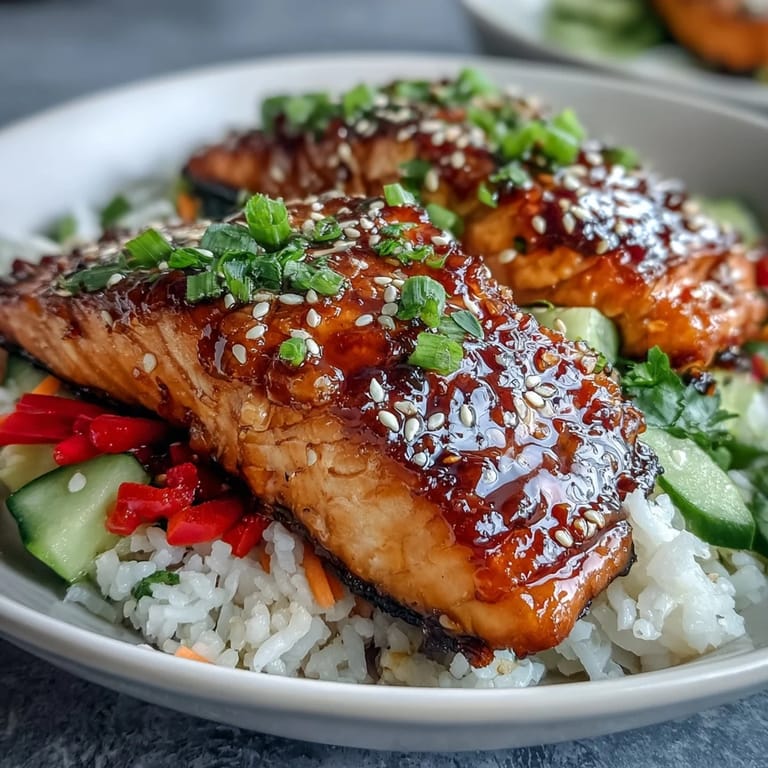
Save The first time I made this for a dinner party, I plated each bowl individually and everyone got quiet when I brought them out. It was one of those rare moments where the food looked as good as it tasted, and I felt like I had somehow pulled off something impressive without breaking a sweat. That is the magic of a good bowl, it is all about the assembly.
Choosing Your Salmon
I used to grab whatever salmon was on sale, but I learned that thicker fillets hold up better in the oven and do not dry out as fast. Look for pieces that are about the same size so they finish cooking at the same time, and if you can, ask for center cut because the tail ends cook faster and can get tough. Skin on or off does not matter much here since you are baking it, but I usually go skinless just to make eating easier. Fresh is great, but frozen works too as long as you thaw it in the fridge overnight.
Getting the Glaze Right
The first few times I made this, my glaze was too thin and slid right off the salmon. That is when I started using the cornstarch trick, and it changed everything. If you like a thicker, stickier glaze that clings and caramelizes, whisk a teaspoon of cornstarch with a tablespoon of water and add it to the sauce before you simmer it. If you prefer a lighter drizzle, skip it and just brush the glaze on as is. Either way, save some for drizzling at the end because that is when the flavor really pops.
Make It Your Own
This bowl is incredibly flexible, and I have swapped ingredients based on what I had in the fridge more times than I can count. Swap jasmine rice for brown rice, quinoa, or even cauliflower rice if you want to cut carbs. Add avocado slices, pickled ginger, or a soft boiled egg for extra richness. If you are gluten free, use tamari instead of soy sauce and you are all set.
- Try adding a handful of shredded purple cabbage for color and crunch.
- A drizzle of sriracha or chili oil gives it a spicy kick without changing the base flavor.
- Swap edamame for snap peas or steamed broccoli if that is what you have on hand.
 Save
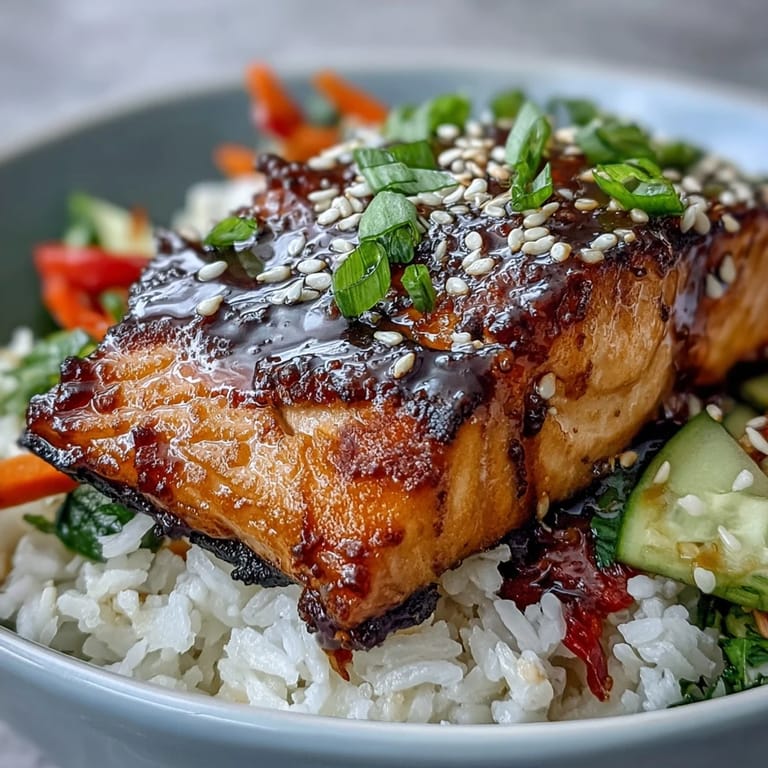
Save This bowl has become my go to when I want something that feels special but does not require much effort. It is colorful, satisfying, and honestly just makes me happy to eat.
Recipe FAQ
- → Can I use frozen salmon fillets?
Yes, thaw frozen salmon completely in the refrigerator before marinating and baking. Pat dry thoroughly to ensure the glaze adheres properly and the fish cooks evenly.
- → How do I julienne vegetables efficiently?
Use a sharp knife or mandoline slicer to cut vegetables into thin, uniform matchsticks. Carrots and cucumber work best when cut into 2-3 inch lengths first for easier handling.
- → What can substitute for jasmine rice?
Brown rice, quinoa, or cauliflower rice make excellent alternatives. Adjust cooking times accordingly—brown rice requires about 45 minutes while quinoa cooks in 15 minutes.
- → Is this bowl suitable for meal prep?
Absolutely. Store cooked salmon, rice, and vegetables in separate airtight containers. Reheat salmon gently and add fresh toppings like sesame seeds and scallions when serving.
- → How can I make this gluten-free?
Replace regular soy sauce with tamari or coconut aminos. Verify all condiments are certified gluten-free, especially the rice vinegar.
- → Can I grill the salmon instead?
Certainly. Brush salmon with glaze and grill over medium-high heat for 4-5 minutes per side. The glaze will caramelize beautifully, adding smoky depth to the dish.