 Save
Save The smell of sesame oil hitting warm rice always takes me straight back to a tiny lunch counter in Vancouver, where I first watched someone build a salmon bowl with the kind of speed that comes from making the same thing a hundred times a day. I was mesmerized by how each ingredient landed in its own section, never mixing until the very last moment. When I got home, I tried to recreate it, and while my first attempt looked more like a pile than a bowl, the flavors were so good I didn't care. That messy, delicious plate taught me that bowl food is as much about balance as it is about beauty. Now I make this version whenever I want something that feels both indulgent and clean at the same time.
I made this for a friend who claimed she didn't like raw fish, so I marinated the salmon just long enough to give it a glossy, almost-cooked sheen on the outside while keeping it tender inside. She ate the entire bowl without looking up, then asked if I had more rice. That night, I realized this recipe works because it lets each person customize their heat, their crunch, their creaminess. It's one of those rare dishes that feels personal even when you're serving a crowd.
Ingredients
- Fresh salmon fillet: Look for bright, firm flesh with no fishy smell, the kind that bounces back when you press it, and cut it into cubes only right before marinating so it stays moist.
- Tamari sauce: This is the gluten-free cousin of soy sauce, a little richer and less salty, and it clings to the salmon better than anything else I've tried.
- Toasted sesame oil: A tiny amount goes a long way, so don't pour it like regular oil or you'll end up with something that tastes like a sesame seed exploded in your mouth.
- Rice vinegar: It adds a gentle tang that wakes up the rice without making it taste pickled, and I always keep a bottle next to my rice cooker now.
- Honey or agave syrup: Just a teaspoon balances the salty and sour notes, and I've used maple syrup in a pinch with no complaints.
- Sushi rice: Short-grain rice gets sticky enough to hold together but not gummy, and rinsing it three times before cooking makes all the difference.
- Ripe avocado: It should yield slightly when you press the top, and I slice it right before serving so it doesn't brown while I'm prepping everything else.
- Roasted peanuts: The crunch is essential, and I prefer unsalted so I control the saltiness, but salted works if you go easy on the tamari.
- Chili oil: I use the kind with crunchy bits at the bottom, and I always drizzle it in a zigzag so every bite has a chance to meet some heat.
- Wasabi paste: Real wasabi is hard to find, so I use the tube stuff and add it in tiny dots that people can mix in or avoid as they like.
- Nori sheet: Cutting it into strips with kitchen scissors is faster than a knife, and it adds that ocean-y flavor that ties the whole bowl together.
- Cucumber: I slice it thin with a peeler for delicate ribbons that add coolness without taking over.
- Spring onions: Both the white and green parts go in, sliced thin on a bias because it looks better and tastes milder.
- Toasted sesame seeds: I toast them in a dry pan for two minutes until they smell nutty, and they add a final layer of crunch that makes everything feel finished.
Tired of Takeout? 🥡
Get 10 meals you can make faster than delivery arrives. Seriously.
One email. No spam. Unsubscribe anytime.
Instructions
- Marinate the salmon:
- Whisk tamari, sesame oil, rice vinegar, and honey in a medium bowl until the honey dissolves, then add the salmon cubes and toss gently so every piece gets coated. Cover and refrigerate for 10 to 15 minutes, no longer or the acid will start to cook the fish.
- Season the rice:
- While the salmon marinates, stir rice vinegar, sugar, and a pinch of salt into the warm cooked rice, folding it gently so the grains don't break. Keep it covered with a damp towel so it stays soft and doesn't dry out.
- Prep the toppings:
- Slice the avocado, chop the peanuts, cut the nori into thin strips with scissors, and slice the cucumber and spring onions. Lay everything out on your counter so assembly feels like putting together a puzzle.
- Build the bowls:
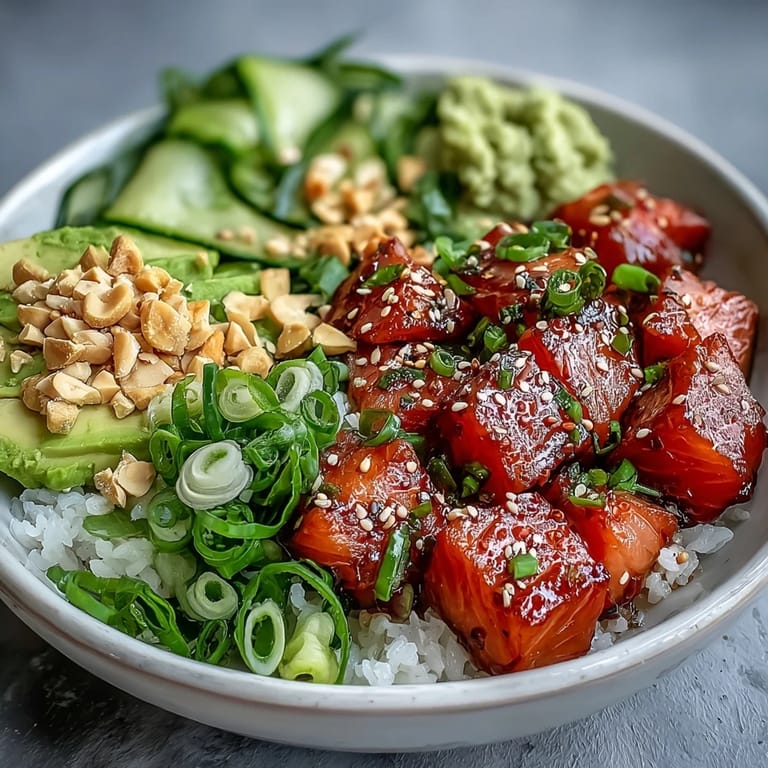
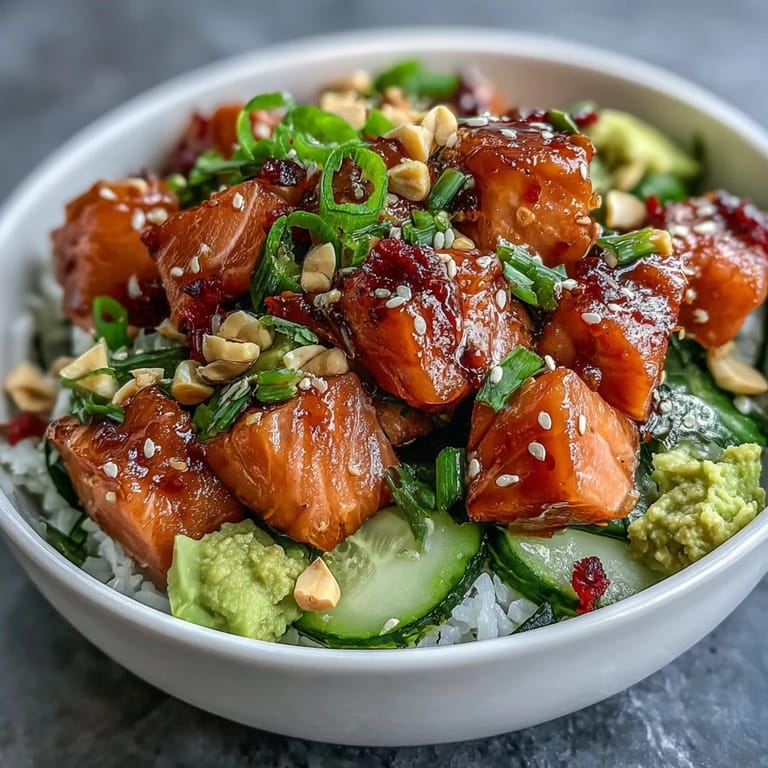
- Divide the seasoned rice between two bowls, pressing it gently into a flat base. Arrange the marinated salmon, avocado slices, cucumber, and spring onions in separate sections so each ingredient gets its moment.
- Add the finishing touches:
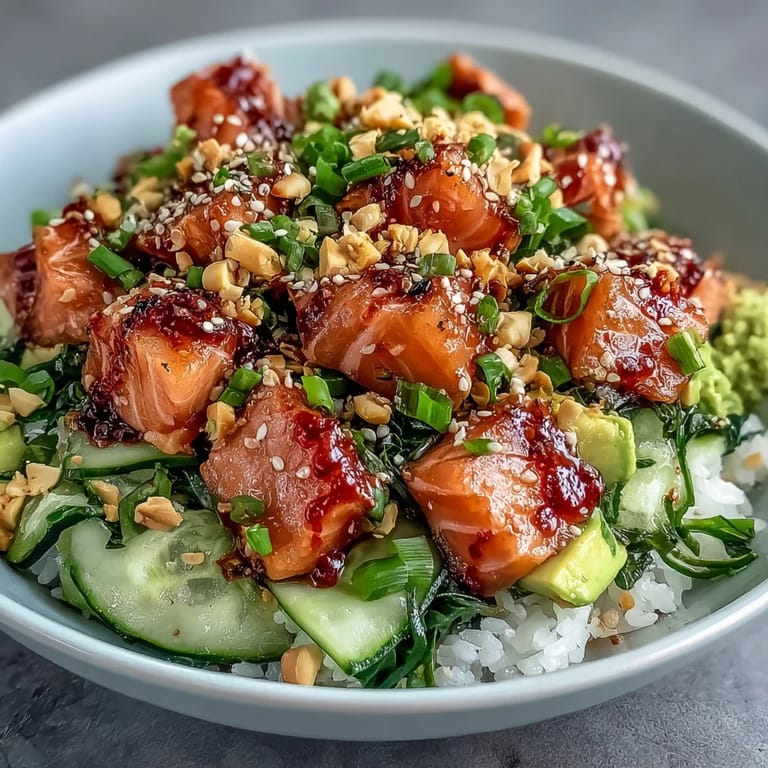
- Drizzle chili oil in a loose pattern across the bowl, then dot wasabi paste in a few spots for people to discover. Sprinkle roasted peanuts, sesame seeds, and nori strips over everything, and tuck in a few cilantro leaves or microgreens if you have them.
 Save
Save One evening, I made this bowl after a long day and realized halfway through eating that I hadn't looked at my phone once. There's something about the ritual of mixing the wasabi into a bite of salmon, scooping up some avocado, and crunching through a peanut that demands your full attention. It's the kind of meal that makes you slow down, and that's become just as important to me as the flavor.
How to Pick the Best Salmon
I used to grab whatever salmon was on sale, but I learned the hard way that dull, soft fillets don't marinate well and can taste muddy. Now I look for bright orange or pink flesh that's firm to the touch and smells like the ocean, not like fish. If you're buying from a counter, ask when it arrived, and if the person behind the glass hesitates, walk away. Fresh salmon should have a clean, almost sweet smell, and the difference it makes in this bowl is worth the extra two dollars per pound.
Making It Your Own
I've made this bowl with leftover grilled salmon, pan-seared tofu, and even shredded rotisserie chicken when I had nothing else in the fridge. The marinade works on almost any protein, and the toppings are just suggestions, you can swap cucumber for radish, peanuts for cashews, or chili oil for sriracha mayo. One friend adds mango for sweetness, another throws in pickled ginger for tang. The structure stays the same, but the bowl becomes yours once you start switching things around.
Storing and Serving Tips
If you're prepping this ahead, keep the rice, salmon, and toppings in separate containers so nothing gets soggy. The marinated salmon holds in the fridge for up to 24 hours, and the rice stays good for two days if you cover it tightly. When you're ready to eat, reheat the rice gently with a splash of water, or serve it cold if you're in the mood for a poke-style bowl. I like to set out all the toppings in small dishes and let people build their own, it turns dinner into something a little more interactive.
- Store the wasabi and chili oil separately so they don't overpower the other ingredients overnight.
- If you're packing this for lunch, put the avocado in a separate container with a squeeze of lime to keep it green.
- Leftover nori strips get chewy after a day, so add them fresh right before serving.
 Save
Save This bowl has become my answer to nights when I want something nourishing but don't want to think too hard. It's flexible, forgiving, and always tastes like I put in more effort than I actually did.
Recipe FAQ
- → Can I use other fish instead of salmon?
Tuna, cod, or sea bass work well as alternatives. Adjust cooking times based on the thickness and type of fish you choose.
- → Is there a vegetarian option?
Yes, replace the salmon with marinated tofu or tempeh. Use the same marinade and pan-fry or bake the tofu until golden and slightly crispy.
- → How spicy is this bowl?
The spice level is easily adjustable. Start with a small amount of chili oil and wasabi, then add more according to your preference. The base flavor is mild and savory.
- → Can I prepare components ahead?
You can cook the rice and prepare toppings a day in advance. Marinate the salmon just before cooking for the best texture and flavor.
- → What rice works best?
Sushi rice is ideal for its sticky texture and ability to hold seasonings. Short-grain white rice or brown rice can be substituted with slight adjustments to cooking time.