 Save
Save Black currant cheesecake arrived in my life on a rainy November afternoon when my neighbor handed me a jar of homemade compote she'd made from berries picked at a farmers market upstate. I'd never made cheesecake before, but something about those deep purple currants made me want to try. The first slice I served was to my sister, who closed her eyes after the first bite and asked for the recipe before she'd even swallowed. That's when I knew this dessert had quietly become something I'd make again and again.
I made this for a book club meeting once, and it became the only thing anyone remembered about that night. One friend asked if I'd been secretly trained as a pastry chef, which made me laugh because I'd nearly forgotten the water bath halfway through. The cheesecake arrived at the table still warm from the oven, and watching people's faces when they tasted that first spoonful of cream with the bright burst of currants—that moment reminded me why I love cooking for people.
Ingredients
- Digestive biscuits or graham crackers, crushed (200 g): The foundation matters more than you'd think; these create a sturdy base that doesn't turn to paste when you press them down.
- Unsalted butter, melted (80 g): Unsalted lets the biscuit flavor shine through without competing with the tartness of the currants later.
- Granulated sugar for crust (2 tbsp): A small amount adds subtle sweetness that balances the filling without making the crust cloyingly sugary.
- Salt (pinch): This tiny amount awakens all the other flavors and you'll be amazed at the difference.
- Black currants, fresh or frozen (250 g): Frozen currants work beautifully and often have more concentrated flavor than fresh; don't thaw them if frozen.
- Granulated sugar for compote (70 g): The berries will release their own juices, so this amount sweetens without drowning the tart brightness.
- Lemon juice (1 tbsp): This sharpens the compote and keeps it from becoming one-dimensional.
- Cornstarch slurry (1 tsp cornstarch mixed with 1 tbsp water): This thickens the compote to the perfect consistency for swirling without making it stiff or gluey.
- Cream cheese, room temperature (700 g): Room temperature is non-negotiable; cold cream cheese creates lumps that no amount of beating will fix.
- Granulated sugar for filling (200 g): Beat this with the cream cheese until it's absolutely smooth and creamy before adding anything else.
- Large eggs, room temperature (3): Cold eggs can cause the filling to break or become grainy, so take them out of the fridge while you're preparing everything else.
- Sour cream (180 ml): This adds tang and creates that velvety texture that makes people wonder if there's magic in your kitchen.
- All-purpose flour (1 tbsp): This small amount prevents the filling from cracking and gives it structure without making it dense.
- Pure vanilla extract (2 tsp): Use real vanilla; the flavor difference is worth it and plays beautifully with the tartness of the currants.
- Lemon zest (from 1 lemon): This bridges the gap between the sweet filling and the tart compote, tying everything together.
- Salt (pinch): Like the crust, this small amount amplifies every other flavor in the filling.
Tired of Takeout? 🥡
Get 10 meals you can make faster than delivery arrives. Seriously.
One email. No spam. Unsubscribe anytime.
Instructions
- Prepare your pan and heat your oven:
- Preheat to 160°C (320°F) and line a 23 cm springform pan with parchment paper on the bottom. A water bath is coming later, so make sure your pan is completely clean and dry.
- Build the crust:
- Mix crushed biscuits with melted butter, sugar, and salt until it looks like wet sand. Press it firmly into the bottom of the pan—I use the bottom of a measuring cup to make it even—and bake for 10 minutes until it's lightly golden and smells toasted.
- Create the black currant compote:
- While the crust bakes, combine black currants, sugar, and lemon juice in a saucepan over medium heat. You'll hear them start to pop after about 5 minutes; that's your cue that they're releasing their juices and softening beautifully.
- Thicken the compote:
- Stir in your cornstarch slurry and simmer for another 1-2 minutes until it coats the back of a spoon. Let it cool completely on the counter while you work on the filling—this prevents it from bleeding into the batter.
- Beat the cream cheese and sugar:
- In a large bowl, beat room-temperature cream cheese and sugar together until it's completely smooth and pale, about 3-4 minutes. This is where patience pays off; lumps at this stage will stay lumps.
- Add eggs one at a time:
- Add each egg individually, beating well after each addition. This method ensures they incorporate smoothly without overmixing the batter, which could introduce too much air.
- Fold in the remaining ingredients:
- Gently mix in sour cream, flour, vanilla, lemon zest, and salt just until combined. Stop as soon as everything is incorporated; overmixing now is your enemy and will lead to cracks later.
- Layer and swirl:
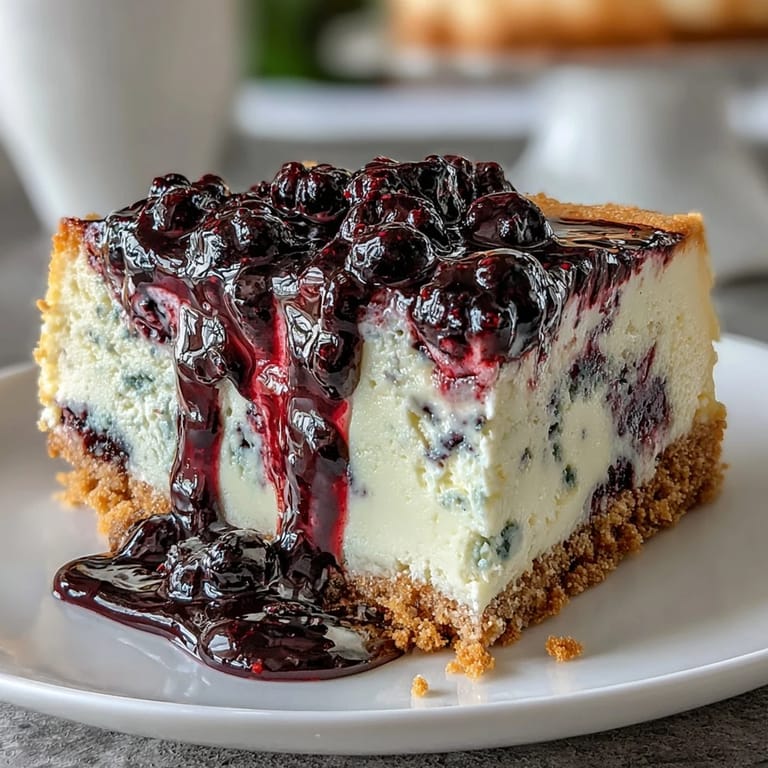
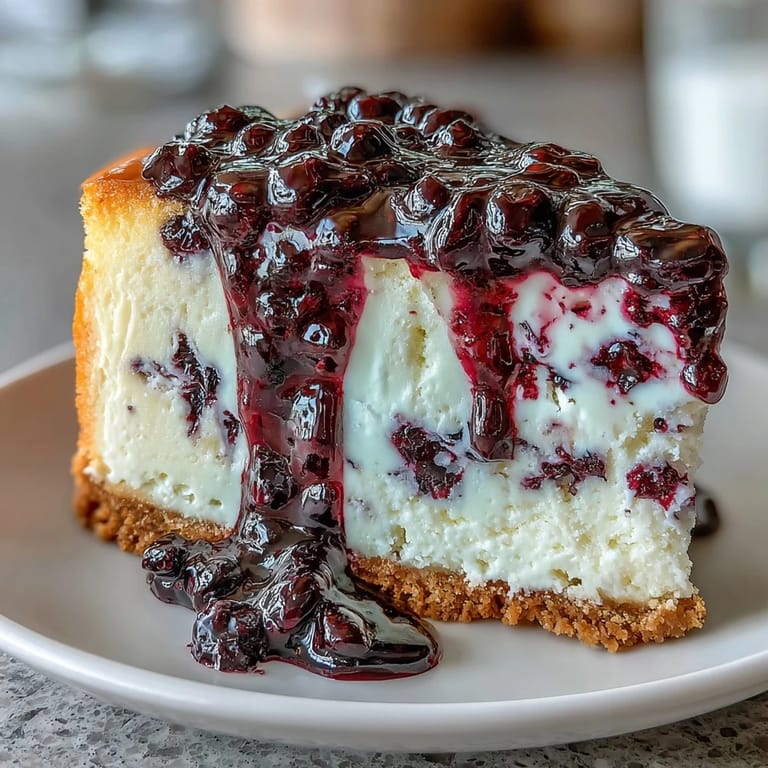
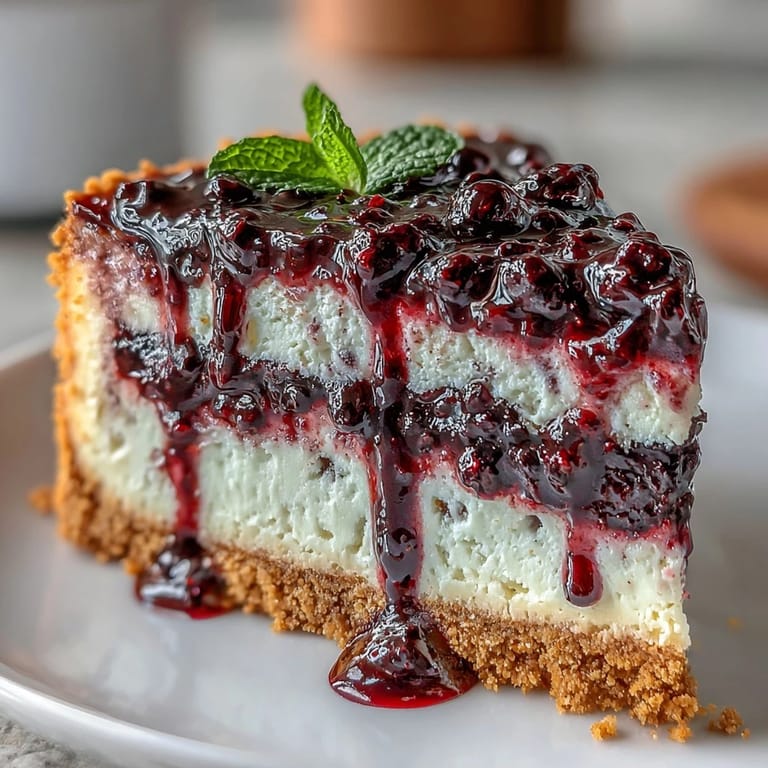
- Pour the filling over the cooled crust and spoon dollops of cooled black currant compote across the surface. Use a skewer or thin knife to gently swirl through the compote and batter, creating that beautiful marbled effect without stirring it into oblivion.
- Set up the water bath:
- Place the springform pan inside a larger roasting tin and pour hot water into the tin until it reaches halfway up the sides of the pan. This gentle, moist heat bakes the cheesecake evenly and prevents cracks from forming.
- Bake with intention:
- Bake for 50-60 minutes until the edges are set but the very center still jiggles slightly when you give the pan a gentle shake. The cheesecake continues cooking after you remove it, so pulling it out when it looks slightly underbaked is the secret.
- Cool gradually in the oven:
- Turn off the oven, crack the door open about 2 inches, and let the cheesecake sit for a full hour. This slow temperature change prevents the dramatic cracks that happen when cheesecake goes from hot to cold too quickly.
- Chill completely:
- Remove from the oven, cool to room temperature at the counter, then refrigerate for at least 4 hours or overnight. The flavors meld and deepen as it chills, making it even better the next day.
 Save
Save There was a moment at my best friend's engagement party when someone asked who'd made the cheesecake, and my friend immediately pointed at me with this proud smile. I'd almost bailed on making it that day because I was nervous about the water bath, but she'd texted me that morning saying, 'You've got this.' Watching everyone come back for seconds, and then thirds, I realized desserts like this do something beyond feeding people—they make them feel celebrated.
The Currant Advantage
Black currants are different from blackberries or even blueberries, and I didn't understand why until I tasted a homemade compote. They're more tart, more complex, almost wine-like in their depth, which makes them absolutely perfect for cutting through the richness of cream cheese and sour cream. When you bite through creamy filling into a pocket of that deep purple compote, your palate wakes up. That contrast is what makes this cheesecake memorable instead of just sweet.
Room Temperature Matters More Than You Think
I learned this the hard way the first time I tried to rush and use cold cream cheese and eggs. The filling came out lumpy and grainy, and no amount of mixing fixed it. Now I pull everything out of the fridge at least 30 minutes before I start mixing, and the difference is immediate and obvious—smooth, silky filling that beats like butter. It sounds like a small detail, but it's one of those moments where understanding the why behind technique changes your cooking forever.
Making It Your Own
This recipe is elegant enough to stand on its own, but it's also a canvas for small variations. I've made it with raspberry compote for a brighter celebration, with blueberries for a subtler sweetness, and once with a swirl of white chocolate that my niece still asks about. The structural integrity of the cheesecake stays the same; you're just playing with the flavor note in the middle. The confidence that comes from understanding the foundation means you can experiment without anxiety.
- If black currants are hard to find, frozen berries from Eastern European or Scandinavian markets are usually more affordable and packed with flavor.
- For a gluten-free version, swap the digestive biscuits for gluten-free options and reduce the flour to 2 tsp to maintain the right texture.
- Serve slices with extra compote spooned on top or a dollop of whipped cream to make it feel even more luxurious.
 Save
Save This cheesecake has become one of those recipes I return to because it never disappoints and it always impresses. Every time I make it, I feel that same quiet pride my neighbor must have felt when she handed me that jar of currants.
Recipe FAQ
- → How can I prevent cracks on the surface?
Avoid overmixing the filling and bake it in a water bath. Also, let the cheesecake cool gradually with the oven door slightly open before chilling.
- → Can I use frozen black currants for the compote?
Yes, frozen black currants work well; just allow extra time for them to soften while cooking with sugar and lemon juice.
- → What alternatives exist for the crust if gluten is a concern?
Use gluten-free crushed biscuits or crackers to maintain the crisp texture without gluten.
- → Is it possible to substitute black currants with other fruits?
Blueberries or raspberries are good substitutions, providing a similar tartness and color contrast.
- → How long should the dessert chill before serving?
Chill for at least 4 hours or preferably overnight to allow the filling to set properly and develop flavor.