 Save
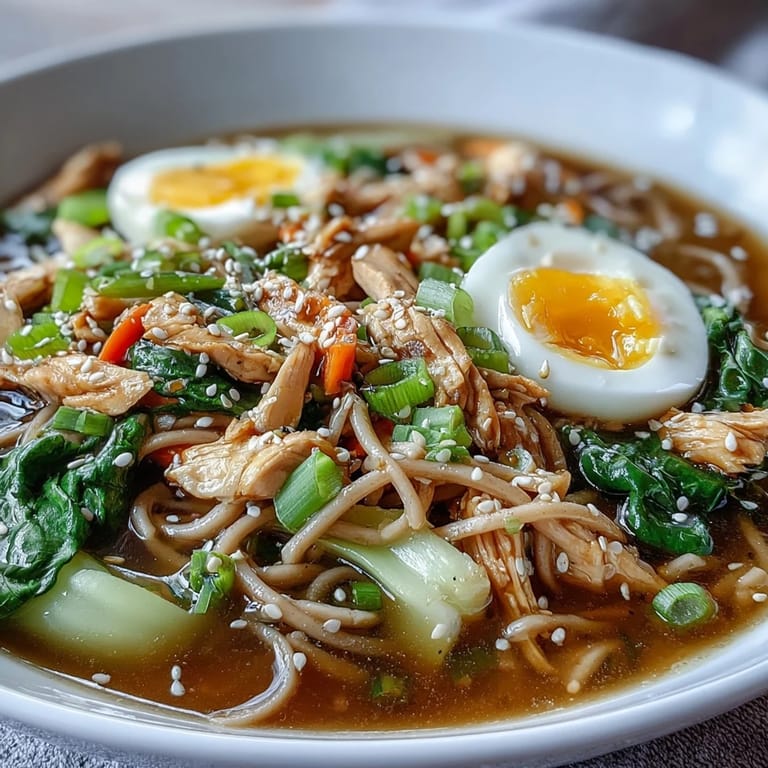
Save The first time I made miso broth, I stood over the pot wondering if something so simple could actually taste restaurant-worthy. One spoonful changed everything that cloudy, golden liquid carried more depth than anything I'd spent hours simmering before. Now this bowl is my weeknight salvation when I want something that feels luxurious but comes together in under an hour.
Last winter my neighbor smelled this simmering through our shared apartment wall and actually knocked on my door to investigate. We ended up eating steaming bowls at my kitchen table while she told me about her grandmother's ramen shop in Osaka. Now whenever I make it, I think of her stories and how something so simple can build unexpected bridges between people.
Ingredients
- Chicken thighs or breasts: Thighs stay juicier in the hot broth but breasts work if you prefer lean meat
- White miso paste: Look for refrigerated tubs in the Asian aisle, this fermented soybean paste is the soul of the dish
- Soba noodles: Their nutty flavor and slightly chewy texture hold up beautifully in broth, but whole wheat spaghetti is a solid backup
- Shiitake mushrooms: These add meaty umami that deepens the broth's character
- Baby bok choy: Adds fresh crunch and soaks up the miso flavor like a sponge
- Soft-boiled eggs: The jammy yolks create an extra creamy element when stirred into the hot broth
Tired of Takeout? 🥡
Get 10 meals you can make faster than delivery arrives. Seriously.
One email. No spam. Unsubscribe anytime.
Instructions
- Marinate the chicken:
- Whisk miso paste with soy sauce, rice vinegar, honey, ginger, garlic, and sesame oil until smooth. Add chicken and turn to coat, then refrigerate for at least 30 minutes to let the flavors penetrate the meat.
- Cook the noodles:
- Boil soba noodles according to package directions until just al dente, then drain and rinse under cold water. Toss with a few drops of sesame oil to keep them from clumping together.
- Grill the chicken:
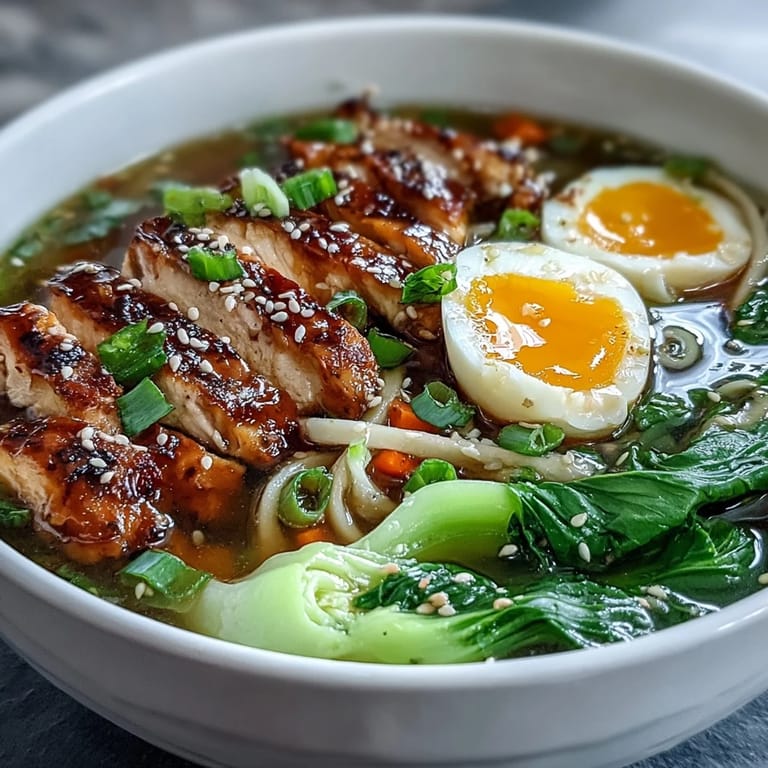
- Heat a grill pan or skillet over medium-high heat, remove excess marinade from the chicken, and cook for 4 to 5 minutes per side until the internal temperature reaches 165°F. Let rest for 5 minutes before slicing into thin strips.
- Simmer the broth:
- Bring chicken broth and water to a gentle simmer in a clean soup pot, whisk in the remaining miso paste until fully dissolved, then add mushrooms, carrots, bok choy, and snow peas. Simmer for 3 to 4 minutes until vegetables are just tender.
- Assemble the bowls:
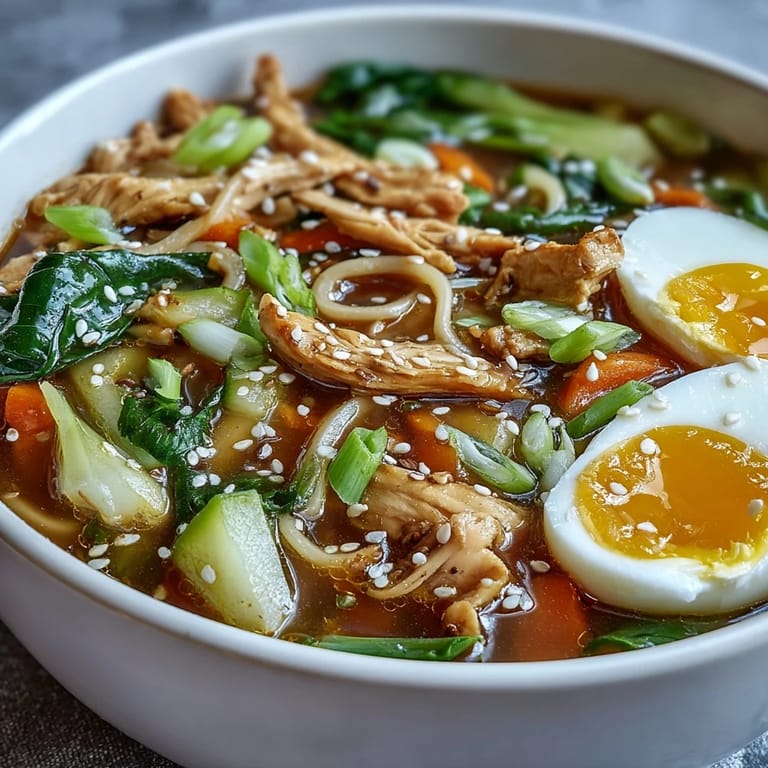
- Divide noodles between two bowls, arrange sliced chicken on top, and ladle hot broth and vegetables over everything. Finish with soft-boiled egg halves, scallions, sesame seeds, cilantro, and nori strips.
 Save
Save My partner asked me to make this for his birthday dinner instead of going out to a fancy restaurant. We sat at our tiny kitchen table in sweatpants, slurping broth and soft-boiled eggs, and he said it was better than anything we could have ordered. Sometimes the best celebrations happen right at home.
Making It Vegetarian
Swap chicken for extra-firm tofu cubes and use vegetable broth instead of chicken. Press the tofu for 15 minutes before marinating so it absorbs the miso flavors instead of becoming watery. The result is still deeply satisfying and packed with protein.
Customizing Your Vegetables
This recipe is endlessly forgiving based on what you have on hand. I've used broccoli stems, shredded cabbage, and even frozen peas in a pinch. The key is adding hearty vegetables first and delicate greens last so everything maintains the perfect texture.
Getting The Perfect Soft-Boiled Eggs
The difference between a good noodle bowl and a great one often comes down to those jammy eggs. Bring water to a boil, gently lower in cold eggs, and cook for exactly 6 and a half minutes. Ice bath immediately for easy peeling and that golden, just-set center.
- Use room temperature eggs for more predictable cooking times
- Older eggs peel more cleanly than fresh ones
- Score the bottom of each egg before peeling for easier removal
 Save
Save There's something deeply restorative about hunching over a steaming bowl of noodles, letting the miso-scented steam fog up your glasses. This recipe has become my answer to cold days, tired evenings, and the question what's for dinner at least twice a month.
Recipe FAQ
- → Can I make these Miso Chicken Noodle Bowls vegetarian?
Absolutely! To adapt this dish for vegetarians, simply swap the chicken for extra-firm tofu, pressed and cubed, then follow similar marinating and cooking steps. Be sure to use a high-quality vegetable broth instead of chicken broth for the soup base.
- → What's the best way to store leftovers?
To keep your noodles from becoming soggy, it's best to store the cooked noodles and broth separately. Keep the chicken and vegetables in an airtight container in the refrigerator, and reheat gently on the stovetop or microwave, combining just before serving.
- → Can I substitute other vegetables in this dish?
Yes, this bowl is very versatile! Feel free to use other quick-cooking vegetables like broccoli florets, edamame, snap peas, or even thinly sliced bell peppers. Adjust cooking times as needed to ensure they are tender-crisp.
- → How long should I marinate the chicken for optimal flavor?
For the best depth of flavor, marinate the chicken for at least 30 minutes. If you have more time, marinating it for 2-4 hours, or even overnight (up to 8 hours), will allow the miso and other ingredients to really penetrate the chicken, resulting in a more succulent and flavorful outcome.
- → What kind of noodles work best if I don't have soba?
While soba noodles offer a unique buckwheat flavor and texture, you can certainly use other options. Whole wheat spaghetti, ramen noodles, or even rice vermicelli would work well. Adjust cooking times according to package instructions for your chosen noodle type.
- → Is this dish gluten-free?
The original dish contains gluten due to soba noodles (often made with wheat) and soy sauce. To make it gluten-free, use 100% buckwheat soba noodles or other gluten-free noodle alternatives, and swap regular soy sauce for tamari. Always check labels for hidden gluten.