 Save
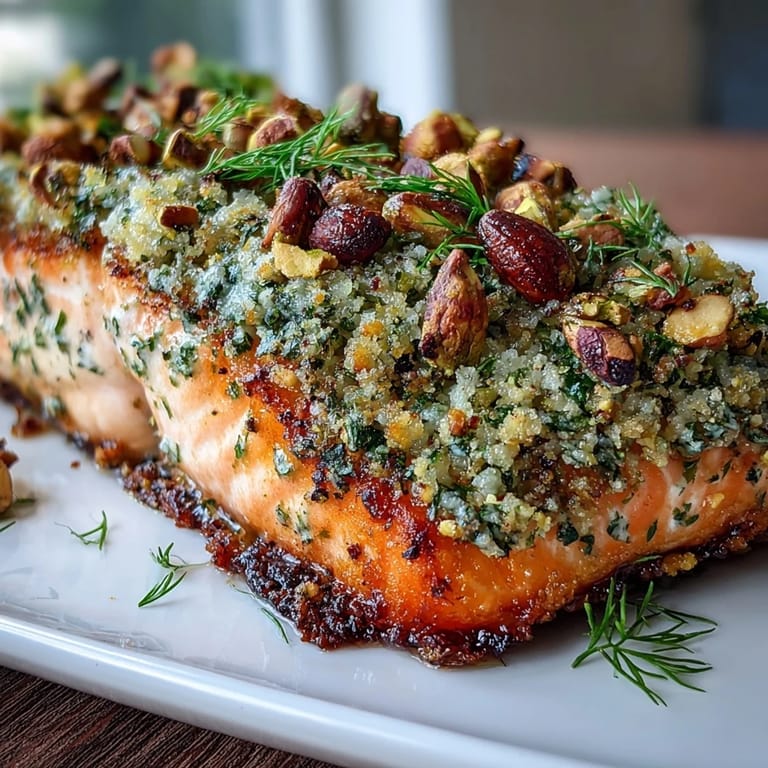
Save My neighbor knocked on my kitchen door one evening with a handful of pistachios from her tree, asking if I could do something interesting with them. I'd been stuck in a salmon rut, making the same old lemon-butter version week after week, so I decided to take a risk and press those green gems into a crust. The first bite was electric—that nutty crunch against the buttery salmon interior felt like discovering a new favorite without meaning to.
I made this for a dinner party last spring when I was nervous about cooking for people I barely knew. Watching everyone's faces light up when they tasted that first forkful—the surprise of the nutty crunch, the way the lemon zinged through everything—changed something for me about cooking. Food really does bring people together, even when you're still getting to know each other.
Ingredients
- Salmon filets: Look for filets that are roughly the same thickness so they cook evenly; thinner edges tend to overcook before the center is done.
- Unsalted pistachios: Finely chop them by hand or pulse them in a food processor until they look like coarse breadcrumbs—too fine and they turn to paste, too chunky and the crust won't hold.
- Fresh parsley and dill: The herbs are what make this sing, so don't skimp or use dried here; the brightness matters.
- Lemon zest: Microplane it fresh right before cooking so you get all those aromatic oils.
- Panko breadcrumbs: This acts as a binder that helps everything stick together; without it, your crust falls off in the pan.
- Olive oil: Use a good quality one for both the crust mixture and cooking; it's worth the upgrade.
Tired of Takeout? 🥡
Get 10 meals you can make faster than delivery arrives. Seriously.
One email. No spam. Unsubscribe anytime.
Instructions
- Prepare the salmon:
- Pat your filets completely dry with paper towels—any moisture prevents the crust from crisping up beautifully. Season generously on both sides; you want to taste the salt, not just guess it's there.
- Build the crust mixture:
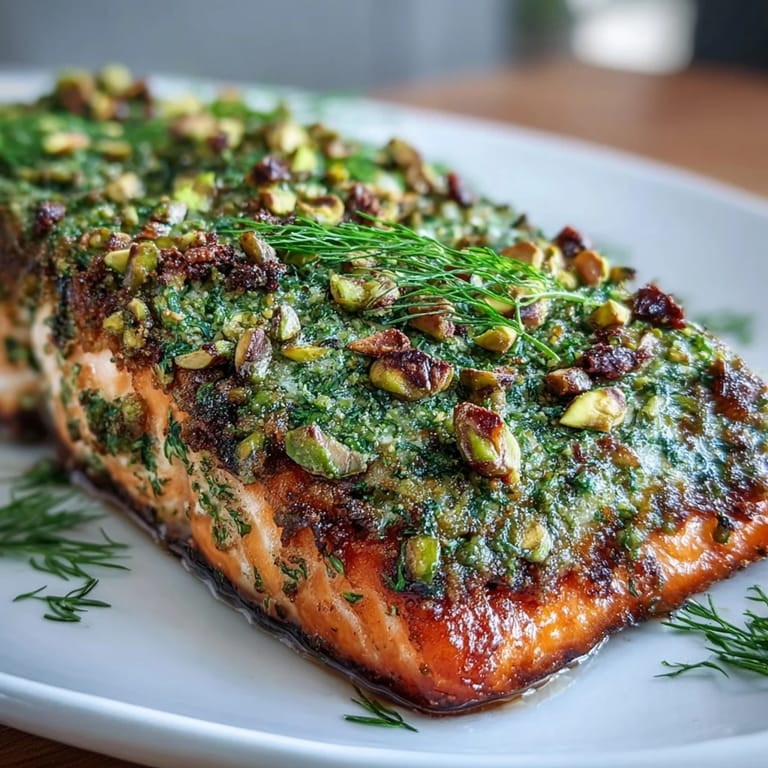
- Combine your pistachios, herbs, lemon zest, panko, and olive oil in a shallow bowl, stirring until everything is evenly coated and looks like wet sand. This is where the magic happens, so don't rush it.
- Crust the filets:
- Press the top of each salmon filet into your mixture, using your fingers to pack it firmly so it adheres properly. You'll use about a quarter of the mixture per filet.
- Heat your pan:
- Get your skillet hot over medium heat with 2 tablespoons of olive oil; you want it shimmering but not smoking, which means your crust will sear without burning.
- Sear crust-side down:
- Place the filets gently in the pan and resist the urge to move them for 3 to 4 minutes—this is when the golden crust forms and the pistachio flavors deepen. You'll hear a gentle sizzle, which means everything's working.
- Flip and finish:
- Use a thin spatula to carefully flip each filet, then cook the other side for 3 to 5 minutes until the salmon flakes easily and reaches 125 to 130 degrees Fahrenheit inside. This temperature keeps the fish tender and just barely opaque.
- Rest and serve:
- Let the cooked filets sit in the pan for 2 minutes before plating; this tiny pause lets the proteins relax and stay juicy. Serve with fresh lemon wedges so people can squeeze them over if they want extra brightness.
 Save
Save There's something about serving food you've made yourself that feels like a small act of love. When my mom tasted this, she asked for the recipe immediately, and now it's become her go-to dish when her friends come over. That moment of realizing something you invented in your kitchen is good enough to share with people you care about—that's the real reward here.
Why Pistachios Work So Well
Pistachios are different from other nuts—they're buttery and slightly sweet, but they also have this earthy, almost savory edge that somehow makes perfect sense against rich, fatty salmon. Their natural oils keep the crust moist enough that it doesn't get grainy or hard as it cools, which matters if people are eating at different paces. The color alone makes the dish feel special, like you put real thought and care into every detail.
Timing and Temperature
The whole point of medium-rare salmon is keeping it tender inside while getting a proper sear outside, and that 125 to 130 degree sweet spot is what makes that happen. If you cook it hotter, it dries out and loses its silky texture. If you undercook it, you miss the subtle sweetness that develops as the proteins just barely set.
Ways to Make It Your Own
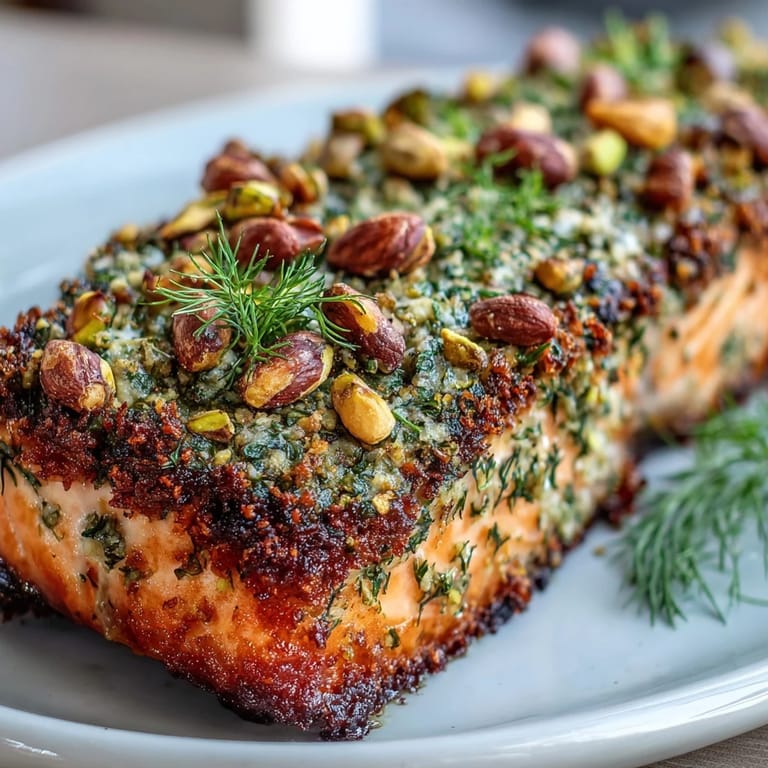
This recipe is forgiving because the core combination of nuts, herbs, and fish is solid. You can swap in walnuts or almonds if pistachios feel too fancy or you have them on hand, and the dish still works beautifully. Tarragon instead of dill, lime zest instead of lemon, or even a touch of Dijon mustard mixed into the crust—all of these feel natural rather than forced.
- Try toasting your pistachios lightly in a dry pan for 2 to 3 minutes before chopping to deepen their nutty flavor.
- If you're making this for a crowd, you can prep the crust mixture hours ahead and store it in the fridge, then coat and cook the filets right before serving.
- Serve alongside roasted asparagus or a simple arugula salad dressed with lemon and olive oil to keep everything bright and balanced.
 Save
Save This dish taught me that simple ingredients treated with care can create something memorable without fuss or complexity. Make it whenever you want to feel proud of what you've put on the table.
Recipe FAQ
- → How do I ensure the crust adheres well to the salmon?
Press the pistachio mixture firmly onto the top side of the salmon filets to help it stick during cooking.
- → Can I use other nuts instead of pistachios?
Yes, chopped almonds or walnuts can substitute pistachios, but pistachios provide a unique flavor and crunch.
- → What is the best cooking method for this dish?
Pan-searing over medium heat creates a golden, crunchy crust while cooking the salmon evenly.
- → How do I know when the salmon is cooked properly?
The salmon flakes easily with a fork and reaches an internal temperature of about 125–130°F (52–54°C) for medium doneness.
- → Can I make this dish gluten-free?
Yes, use gluten-free panko or omit breadcrumbs for a gluten-free version without sacrificing crunch.
- → What herbs work best in the crust?
Parsley and dill are classic, but basil or tarragon can offer a different herbal aroma if preferred.