 Save
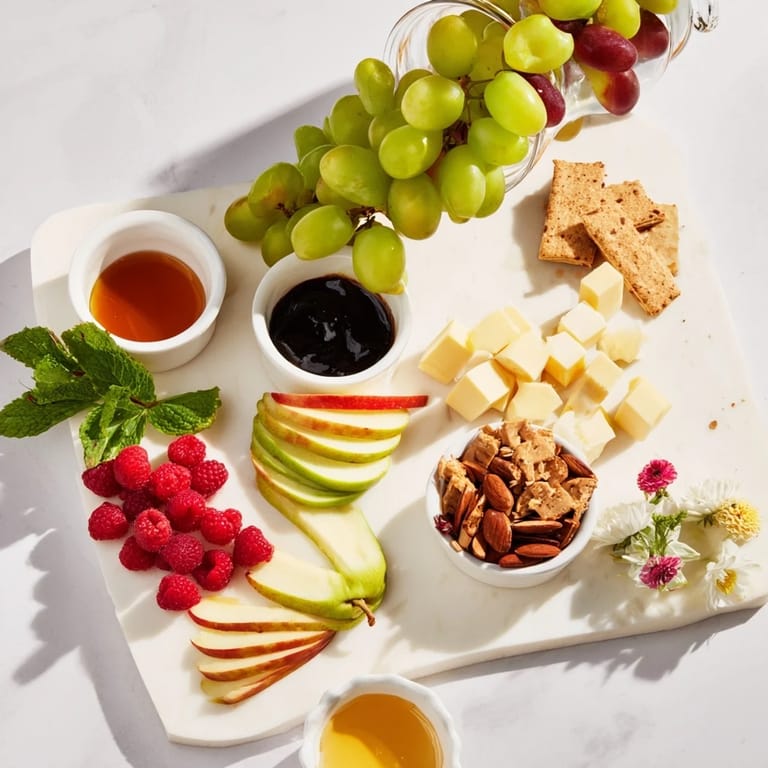
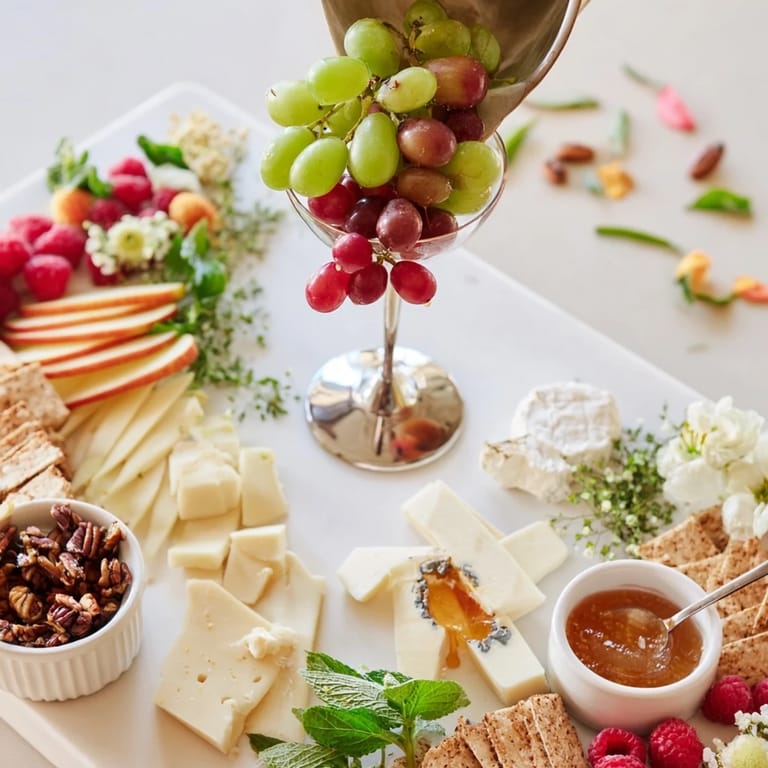
Save The moment I saw a champagne coupe tilted on a grazing board, spilling fruit and cheese like liquid gold, I knew this had to become my signature entertaining move. There's something about the theatricality of it—the way guests lean in, drawn by the unexpected elegance of grapes cascading toward them—that transforms a simple board into an experience. It happened at a friend's wedding brunch, and I watched people abandon their plates to gather around this one stunning creation. I went home that afternoon and spent the next hour on my kitchen counter, experimenting with angles and arrangements until I got it right. Now, every celebration in my home starts with this board.
I made this board the night before my sister's engagement party, and honestly, I was nervous about the fruit oxidizing overnight. So I prepped everything in separate containers and didn't arrange it until thirty minutes before guests arrived—and that's when the magic happened. Watching my sister's face when she walked into the room and saw the champagne coupe tilted dramatically on the table, grapes tumbling toward the edge like they were alive, is a memory I'll carry forever. That's when I realized this isn't just about food; it's about creating a moment.
Ingredients
- Brie, sliced: The soft, buttery foundation that melts on your tongue and grounds everything else; slice it just before serving so it stays creamy, not greasy.
- Aged cheddar, cubed: This one has character—sharp and complex—and the cubes catch light beautifully on the board while offering that satisfying bite.
- Goat cheese, crumbled: Its tanginess cuts through richness and adds a visual pop of white, like delicate scattered pearls.
- Green and red grapes: These are your cascade element; buy them a day ahead and keep them cold so they roll smoothly and stay plump and jewel-like.
- Pear and apple slices: The pear brings subtle sweetness and soft texture, while the apple adds a touch of tartness; toss them lightly in lemon juice just before arranging to keep them from browning.
- Fresh raspberries: These add precious little pockets of tartness and soft color throughout; handle them gently as they bruise easily.
- Candied pecans and roasted almonds: The candied ones are your little flavor surprises, sticky-sweet treasures scattered throughout, while the almonds provide everyday crunch.
- Assorted crackers and baguette slices: Choose a mix of textures—some delicate, some sturdy—so there's something for every cheese and personality preference.
- Honey and fig jam: The honey is warmth and floral sweetness, the fig jam is earthy and sophisticated; both deserve their own small bowls so people can drizzle as they please.
- Edible flowers and mint sprigs: These are your final brushstrokes, the things that make someone pause and say 'I've never seen that before'—use them intentionally, not as filler.
Tired of Takeout? 🥡
Get 10 meals you can make faster than delivery arrives. Seriously.
One email. No spam. Unsubscribe anytime.
Instructions
- Find the perfect tilt:
- Place your champagne coupe glass on a large board and angle it gently on its side, letting it rest naturally as if it's been casually knocked over. Spend a moment getting the angle right—it should look accidental but balanced, like gravity got creative.
- Create the waterfall effect:
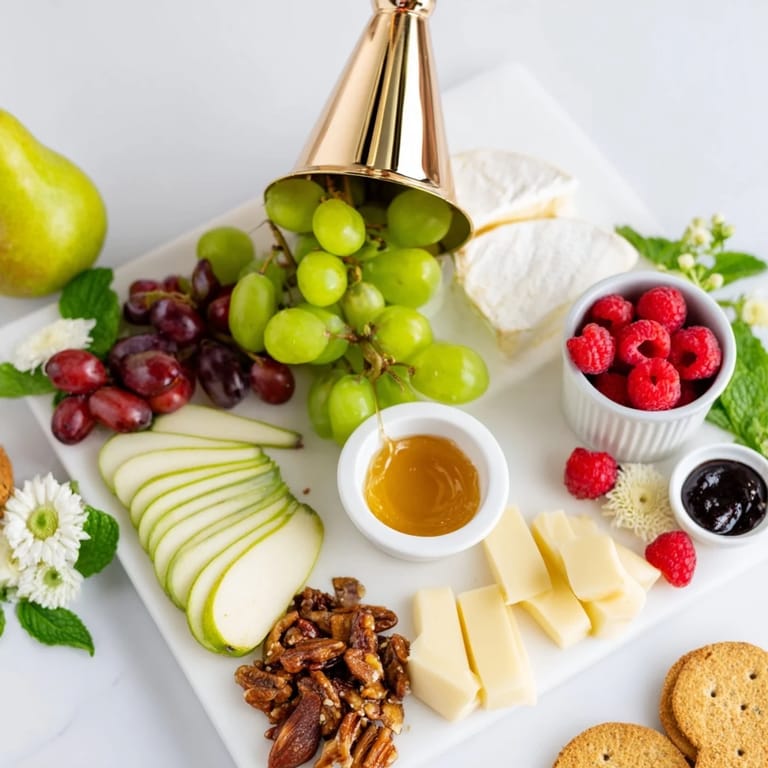
- Start with your grapes, arranging them to spill from the glass's rim toward the board's edge as if they're tumbling downward. Layer your pear and apple slices alongside them to enhance the cascade, fanning them slightly so light catches their surfaces and they look almost sculptural.
- Build the landscape:
- Cluster your cheeses—brie, cheddar, and goat cheese—around the base of the glass and along the fruit's path, creating little pockets of color and texture. Think of it like building a landscape where each element has its own breathing room.
- Add the depth:
- Fold prosciutto if you're using it, pile salami in casual arrangements, and scatter your nuts and raspberries throughout the entire board. This is where you balance empty space with plenty, creating visual rhythm.
- Finish with purpose:
- Nestle small bowls of honey and fig jam among the other elements, position your crackers and bread at the edges for easy reaching, and crown everything with edible flowers and fresh mint sprigs placed thoughtfully, not haphazardly. Step back and let your eye be the judge.
 Save
Save There's a quiet magic in watching strangers become curious together. At a recent dinner party, I watched three people I'd never met before cluster around this board, laughing and pointing, debating which cheese to pair with which fruit, creating little flavor combinations like they were scientists. By the end of the evening, they'd become friends—bonded over something as simple as a tilted glass and the permission to play with their food.
The Art of the Arrangement
The first time I made this board, I treated it like a puzzle—trying to fit everything perfectly into every corner. I learned that emptiness is actually an ingredient here. The spaces between clusters of cheese, the gaps where grapes roll freely, the simplicity of white space on the board—these create elegance. Let your eye rest between visual moments rather than bombarding it with abundance. This is restraint as a strength, not a limitation.
Seasonal Variations Worth Trying
Summer calls for fresh berries and stone fruits tumbling from that glass; autumn begs for figs, pomegranate seeds, and deeper cheeses; winter invites dried apricots and candied citrus peel; spring whispers for fresh peas and baby vegetables. I've learned that the board stays exciting because it breathes with the seasons, never becoming stale or predictable. The champagne coupe stays constant—your reliable center—while everything else can shift and surprise you.
Timing and Temperature Secrets
The temperature of your ingredients matters more than people realize. Cold cheese tastes sharper and holds its shape better; room-temperature fruit releases more flavor; cold grapes have a jewel-like quality that warm ones lose. I've found that prepping everything cold, then letting the cheeses sit out just long enough to take the chill off—maybe ten minutes before final assembly—creates the perfect texture balance. Think about this board not as a static moment, but as something that evolves in temperature and flavor as people eat.
- Keep your serving board in a cool spot beforehand so it doesn't warm ingredients prematurely.
- Assemble no more than thirty minutes before serving, which means your browning-prone fruits stay bright and your cheese stays perfectly textured.
- If you must assemble earlier, cover loosely with plastic wrap and chill until the moment guests arrive.
 Save
Save Every board is a conversation starter, a small theater production on your dining table. This one, with its tilted coupe and cascading ingredients, reminds me that entertaining doesn't have to be complicated—it just has to be thoughtful and a little bit playful.
Recipe FAQ
- → How do you create the waterfall effect?
Place a champagne coupe glass tilted on its side at the center of the board and arrange grapes spilling over its edge cascading downwards for a visual waterfall.
- → Can this board be made vegan?
Yes, substitute plant-based cheeses and omit charcuterie to keep it vegan-friendly without sacrificing flavor or style.
- → What fruits complement the waterfall board?
Green and red grapes, sliced pears and apples, fresh raspberries, and seasonal choices like figs or pomegranate seeds enhance the flavor and appearance.
- → What condiments pair well with this board?
Honey and fig jam add a sweet contrast to the savory cheeses and nuts, balancing flavors beautifully.
- → How should this board be served for best results?
Assemble just before serving to maintain freshness and vibrant presentation, pairing nicely with chilled sparkling wine.
- → Are there allergy considerations?
This board contains dairy, tree nuts, and gluten; charcuterie includes pork. Always check ingredient labels for guests with allergies.