 Save
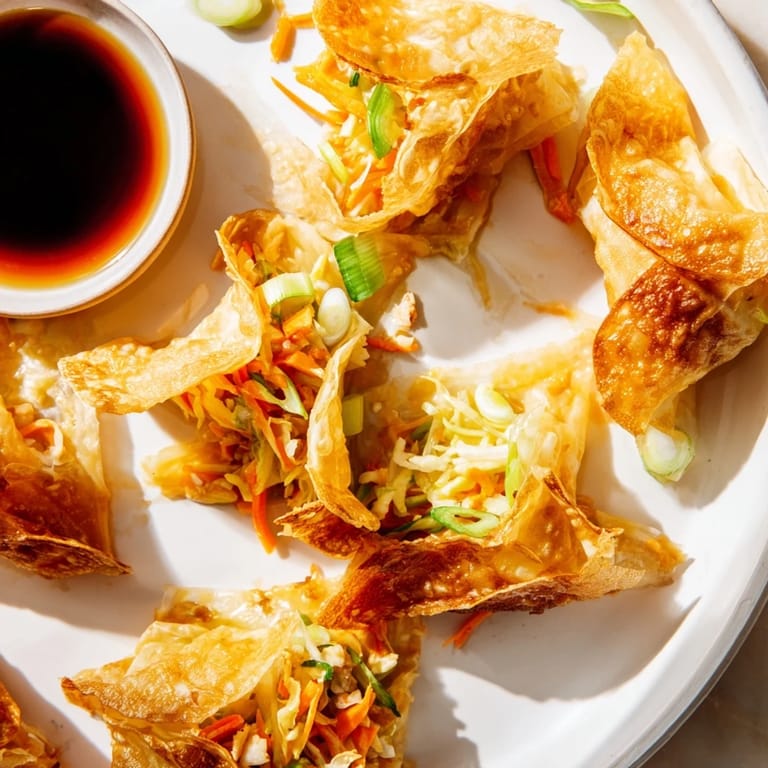
Save The first time I made these crispy rice paper dumplings, I was frantically trying to impress someone who'd just mentioned they loved Asian food. I grabbed rice paper wrappers from the pantry, threw together whatever vegetables I had, and panicked through the whole cooking process—but somehow those golden, crackling little pockets emerged from the skillet looking restaurant-worthy. Now, years later, they're my go-to when I want something that feels fancy but doesn't require hours of work.
I remember my neighbor watching me cook these one summer evening, skeptical about the rice paper because she'd only ever seen them in fresh spring rolls. When she bit into a warm dumpling with that crackling exterior, her eyes lit up in a way that made me realize I'd accidentally discovered something special. That's when I understood these weren't just snacks—they were conversation starters.
Ingredients
- Ground chicken or pork (200 g) or firm tofu: This is your flavor backbone—use whatever protein sits best with you, and don't skimp on seasoning the filling.
- Carrot and cabbage: These vegetables release just enough moisture to keep the filling tender while adding natural sweetness and crunch.
- Spring onions and garlic: They bring brightness and depth that cuts through the richness of the oil.
- Ginger and sesame oil: A small amount of ginger goes a long way, and toasted sesame oil is non-negotiable—it's the whisper of authenticity.
- Soy sauce and sugar: This combination balances salty and sweet, making every bite crave another.
- Rice paper wrappers (22 cm): Don't grab the thinnest ones—a medium thickness holds up to pan-frying without tearing.
- Vegetable oil: Choose a neutral oil with a high smoke point so it doesn't burn during that crucial golden-brown moment.
- Dipping sauce components: The rice vinegar is what gives this sauce its personality—it cuts through soy's saltiness with a gentle acid.
Tired of Takeout? 🥡
Get 10 meals you can make faster than delivery arrives. Seriously.
One email. No spam. Unsubscribe anytime.
Instructions
- Build your filling:
- Combine your protein with all the vegetables and seasonings in a large bowl, mixing until everything is evenly distributed and the filling feels slightly damp. Taste a tiny bit and adjust seasoning—this is your only chance to fix it.
- Soften the rice paper:
- Dip each wrapper into warm water for 6 to 8 seconds; it should still feel slightly stiff when you pull it out because it continues softening as you work. Too long and it becomes impossible to handle.
- Fill and roll with intention:
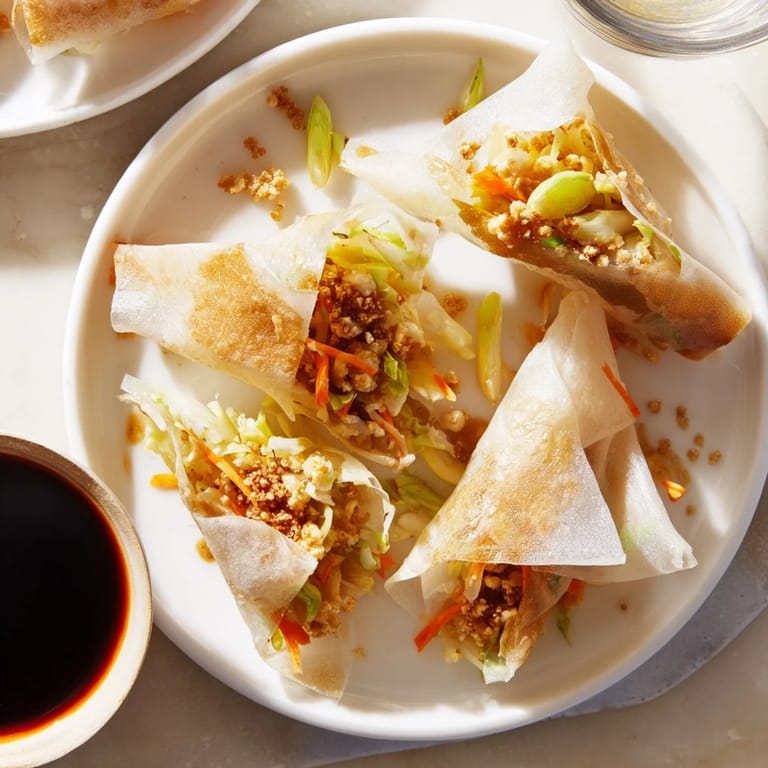
- Lay the softened wrapper on a damp kitchen towel, place about 2 tablespoons of filling in the center, then fold the bottom edge up and over the filling snugly. Fold in both sides like you're wrapping a present, then roll tightly away from you until sealed.
- Pan-fry to golden perfection:
- Heat oil in your skillet over medium heat until it shimmers, then place dumplings seam-side down and resist the urge to move them—let them sit for 2 to 3 minutes until the bottom is golden brown and crispy. Flip gently and cook the other side until equally golden.
- Make the dipping sauce:
- Whisk together soy sauce, rice vinegar, sesame oil, honey, minced garlic, and chili flakes in a small bowl until the honey dissolves. Taste and adjust the balance of salty, sour, and sweet to your preference.
- Serve with confidence:
- Transfer warm dumplings to a plate and arrange the dipping sauce alongside—they're best eaten immediately while that crispy exterior is still crackling.
 Save
Save There was an afternoon when my sister brought her kids over and they sat at the kitchen counter, watching the dumplings sizzle in the pan with complete fascination. One of them asked why they made that crackling sound, and I realized I'd never actually thought about explaining it—just that the moment felt important somehow, like cooking had become a way of showing love that didn't need explaining.
Filling Variations That Work
After making these dozens of times, I've learned that the basic formula—protein plus vegetables plus aromatics plus soy sauce—is flexible enough to reinvent itself. I've added finely chopped mushrooms when I wanted earthiness, diced bell peppers for sweetness, or even leftover roasted broccoli when I wanted to be practical. The key is keeping the filling moist but not wet, which means if you add watery vegetables like zucchini, you need to salt them first and let them sit to release moisture.
The Rice Paper Technique That Changed Everything
For years I struggled with rice paper wrappers—they'd either tear or become so limp I couldn't fold them without them collapsing. Then someone showed me the damp towel trick, and suddenly everything clicked. The moisture from the towel keeps the wrapper pliable just long enough to work with it, preventing that brittle snapping that happens when it dries out. Now I always keep a damp towel at my station like a professional, and it genuinely makes the whole process feel less stressful.
Why This Sauce Matters More Than You Think
The dipping sauce is where so many people cut corners, but honestly, it's what elevates these from good to unforgettable. That balance of salty, sour, and sweet with garlic heat creates a flavor combination that's greater than its individual parts. The rice vinegar is critical—it's brighter and more delicate than regular vinegar, and it lets the other flavors sing instead of overpowering them.
- If you find the sauce too salty, add a tiny drizzle of honey or a squeeze of lime juice to balance it.
- Make the sauce at least 10 minutes before serving so the garlic flavor has time to infuse everything.
- A light sprinkle of chili flakes adds complexity without making it aggressively spicy.
 Save
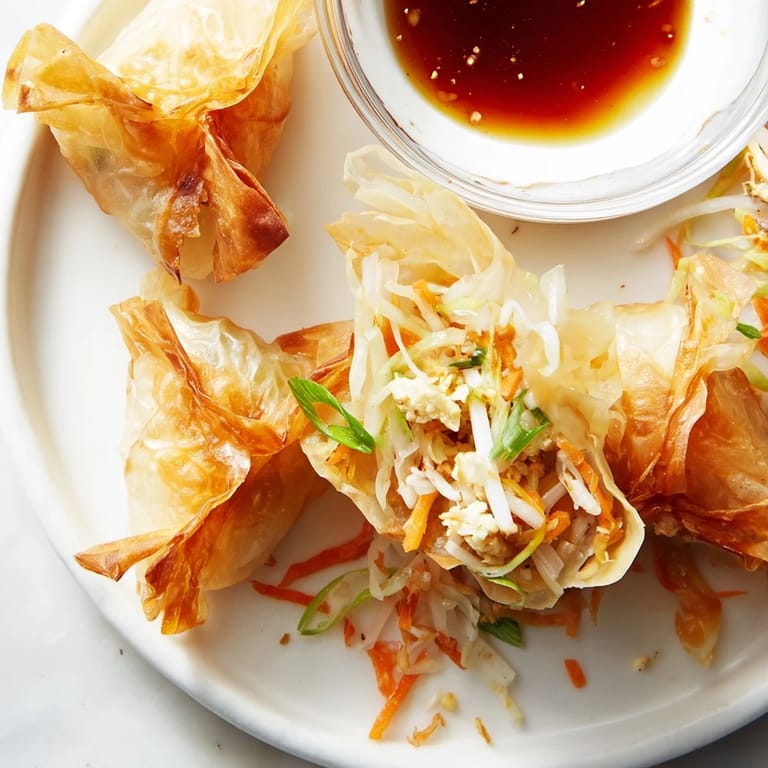
Save These crispy rice paper dumplings have quietly become my favorite thing to cook when I want to feel like I'm doing something special without the stress. Every time I hear that satisfying crackle and watch someone's face light up at the first bite, I'm reminded that the best meals are the ones that come together simply but taste like they took all day.
Recipe FAQ
- → How do I soften rice paper wrappers without tearing?
Dip each wrapper in warm water for about 6 to 8 seconds until pliable but still firm enough to handle. Avoid soaking too long to prevent tearing.
- → Can I substitute the meat filling with vegetarian options?
Yes, firm tofu works well as a plant-based alternative, and you can customize the filling with additional vegetables and seasonings for flavor.
- → What is the best oil for pan-frying these dumplings?
Use a neutral oil with a high smoke point such as vegetable or canola oil to achieve a crispy, golden exterior without burning.
- → How can I make the dipping sauce more balanced?
Adjust the ratio of soy sauce, rice vinegar, and sweetener to suit your taste, adding garlic and chili flakes for added depth and spice.
- → Is it better to cook dumplings in batches?
Yes, cooking in small batches prevents overcrowding, ensuring each dumpling crisps evenly and maintains its shape.