 Save
Save I discovered these bagels by accident on a rushed Tuesday morning when I realized I'd forgotten to buy bread for the week. Standing in my kitchen with a container of Greek yogurt and a bag of self-rising flour, I wondered if I could somehow make bagels without yeast or hours of waiting. Twenty minutes later, golden, chewy bagels were cooling on my rack, and I couldn't believe how simple it was. Now I make them whenever I crave that bagel texture without the planning ahead.
Last month I made a batch for my sister's surprise visit, and watching her bite into one while still warm, her eyes widening at how real they tasted, made me realize these aren't just a weeknight hack—they're the kind of thing people actually want to eat. She asked for the recipe before she even finished her first bagel.
Ingredients
- Self-rising flour: This is the secret—it's already mixed with baking powder and salt, so your dough rises perfectly without yeast. Make sure it's fresh, as old baking powder loses its strength.
- Plain Greek yogurt: Full-fat or low-fat both work beautifully; the moisture and slight tang are exactly what makes these bagels tender and chewy. Don't use flavored yogurt or the results will taste off.
- Egg: The wash creates that glossy, bakery-style shine and helps the seasoning stick to the surface.
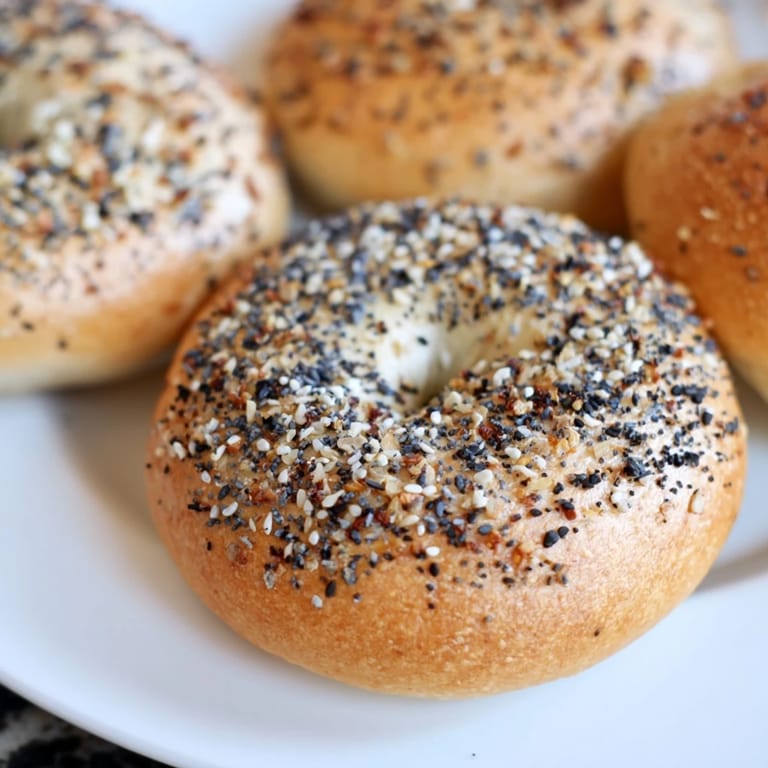
- Everything bagel seasoning: The star of the show—those little pockets of salt, garlic, onion, and sesame seeds make every bite interesting.
Tired of Takeout? 🥡
Get 10 meals you can make faster than delivery arrives. Seriously.
One email. No spam. Unsubscribe anytime.
Instructions
- Set the stage:
- Preheat your oven to 375°F and line a baking sheet with parchment paper. This small step means you're ready to go the moment your dough is shaped.
- Bring dough to life:
- Combine self-rising flour and Greek yogurt in a medium bowl, stirring until a shaggy, rough dough forms. It'll look scraggly and a bit wet at first—this is exactly right.
- Knead gently:
- Turn the dough onto a lightly floured surface and knead for just 2–3 minutes until it becomes smooth and elastic. The key word is gently—overworking it makes the bagels tough, so resist the urge to knead for longer.
- Shape into bagels:
- Divide the dough into 4 equal pieces and roll each into a rope about 7–8 inches long. Bring the ends together and pinch firmly to form that classic bagel ring, making sure the seam is sealed so it doesn't pop open while baking.
- Finish with the golden touch:
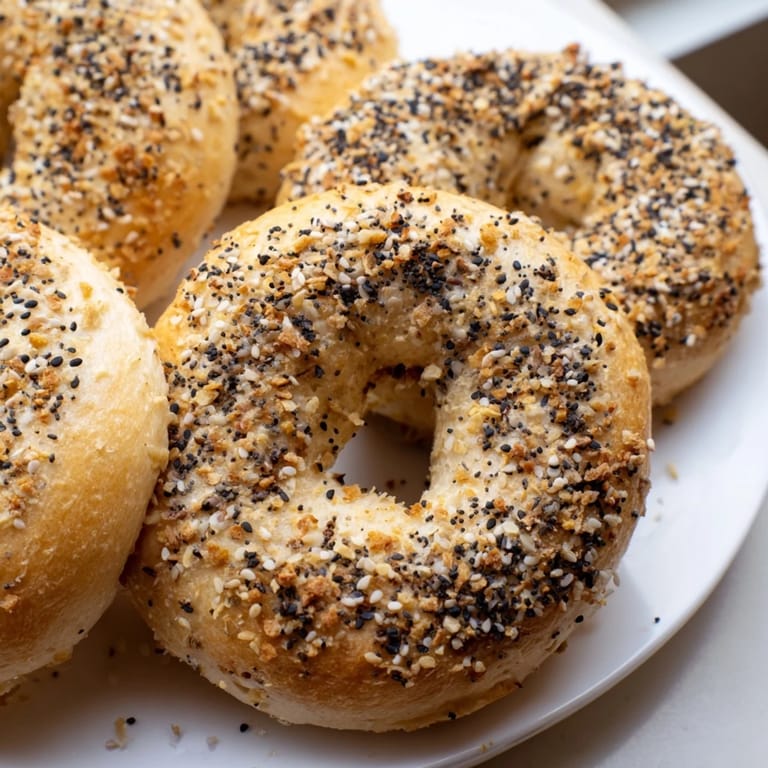
- Beat the egg in a small bowl and brush it across the top and sides of each bagel. Sprinkle everything bagel seasoning generously over the egg wash—don't be shy, these seasonings are meant to shine.
- Bake to perfection:
- Bake for 22–25 minutes until the bagels are golden brown and cooked through. You'll know they're done when they sound slightly hollow if you tap the bottom.
- Cool and serve:
- Let them rest on a wire rack for 5 minutes before eating. This short cooling time helps them set without getting soggy.
 Save
Save There's something special about pulling warm bagels from the oven on a sleepy morning, the aroma filling your kitchen with that toasted, savory scent. It's the kind of small luxury that transforms breakfast from routine into an actual moment you look forward to.
The No-Yeast Magic
What makes this recipe so brilliant is that self-rising flour already contains baking powder and salt, eliminating the need for yeast or long fermentation. The Greek yogurt adds both moisture and a subtle tang that mirrors the flavor you'd get from a slow overnight rise. I've made traditional yeast bagels plenty of times, and while they're rewarding, these capture that same chewy, satisfying bite in a fraction of the time, proving that shortcuts aren't always shortcuts—sometimes they're just different paths to the same delicious destination.
Customizing Your Bagels
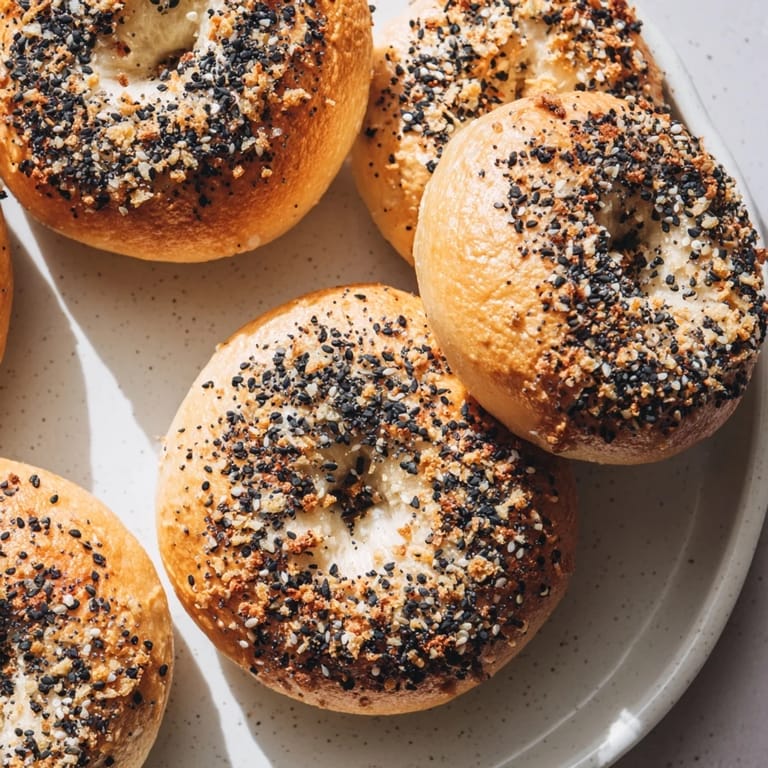
Once I made a batch with half the everything seasoning and topped three of them with cream cheese and chives while the fourth got lox and capers. Each one tasted totally different, but they all had that same pillowy interior. You can toast these bagels the next day and they transform again—the outsides get crispy while the inside stays tender, almost like having two different experiences from one batch.
Storage and Make-Ahead Ideas
These bagels stay soft in an airtight container for 1–2 days, and honestly, a quick toast before eating brings them right back to life. I often make a double batch on Sunday and have bagels ready to grab all week, which means I'm less likely to reach for store-bought bread or skip breakfast entirely. It's one of those recipes that rewards a little bit of planning without demanding much effort.
- Store cooled bagels in an airtight container at room temperature for the best texture.
- Toast them lightly the next day to refresh the exterior and warm the inside.
- You can also freeze them for up to 3 weeks; just thaw and toast when you're ready to eat.
 Save
Save These bagels have quietly become my go-to when I want something that tastes homemade and feels special without the fuss. They remind me that sometimes the best kitchen discoveries come from working with what you have on hand.