 Save
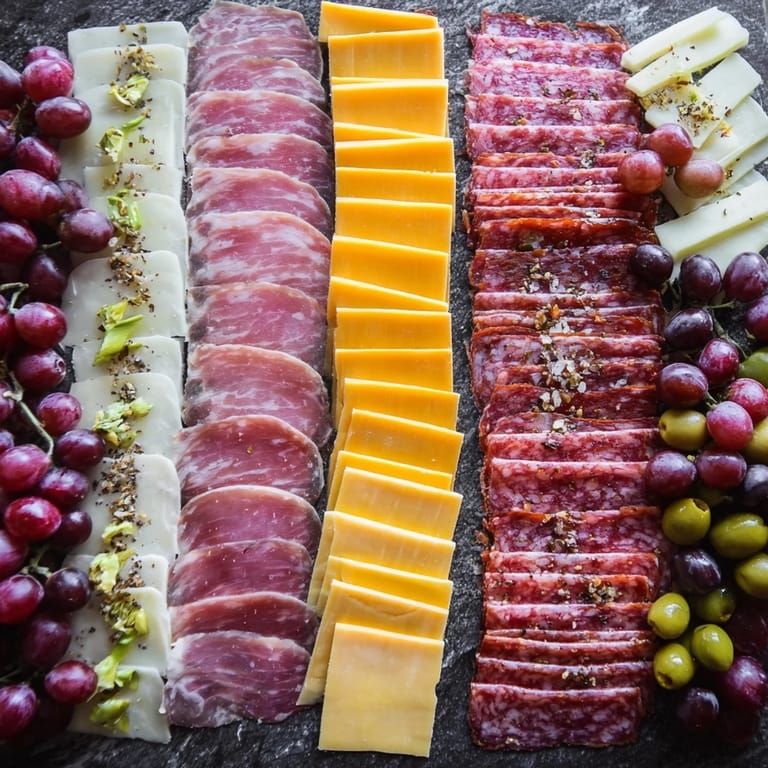
Save I stumbled onto the power of a slate board at a gallery opening in Berlin, watching a server slide one across a white tablecloth with such confidence that I couldn't look away. The meats and cheeses caught the light in these perfect geometric lines, and suddenly everyone at the table stopped talking and just stared. That's when I realized a platter doesn't have to be fussy or round or adorned with parsley—sometimes the boldest move is pure restraint and straight edges.
My neighbor once asked if I'd made everything from scratch when she saw this on the counter, and I loved not correcting her assumption. The arrangement felt like such a declaration of taste that she couldn't imagine it was just assembly. It became our quiet joke—the easiest thing I've ever made that convinced everyone I was secretly a chef.
Ingredients
- Smoked prosciutto: The delicate one, so thin it's almost translucent—buy it sliced at the counter, never the pre-packaged stuff.
- Soppressata: This Italian salami has just enough spice to keep things interesting without overwhelming the plate.
- Coppa: Marbled with fat in the best way, it sits between prosciutto's elegance and soppressata's boldness.
- Mortadella: Often overlooked, but its subtle sweetness and tender texture add dimension.
- Aged cheddar: The sharper the better—look for that crystalline crunch when you bite it.
- Manchego: Nutty and firm, it slices cleanly without crumbling, which matters when you're going for geometry.
- Gruyère: Adds a creamy, complex flavor that doesn't shout but makes everything around it taste better.
- Blue cheese: The moment of rebellion on an otherwise orderly board—use a good one with real veining.
- Seedless red grapes: Their sweetness cuts through the salt and fat in a way that feels like relief.
- Cornichons: Tiny pickled cucumbers that provide a vinegary snap between bites.
- Whole grain mustard: A dollop of this does more than you'd think—the texture and tang matter.
- Mixed olives: Briny anchors that ground the entire arrangement.
- Freshly cracked black pepper: Not the pre-ground dust—crack it just before serving so it releases its full aroma.
Tired of Takeout? 🥡
Get 10 meals you can make faster than delivery arrives. Seriously.
One email. No spam. Unsubscribe anytime.
Instructions
- Chill your slate:
- If you have time, place the board in the freezer for 20 minutes—cold surfaces keep the cheeses from sweating and everything stays crisp longer. This small gesture pays dividends.
- Slice and arrange the meats:
- Lay each type of cured meat in its own parallel line, slightly overlapping so you can still see the color variations. Think of it like a visual melody where each line is a different note.
- Line up the cheeses:
- Slice them thin enough to showcase their texture but thick enough that they don't curl. Position them opposite the meats in equally strict lines—the symmetry is what makes people pause.
- Fill the negative space:
- Tuck grape bunches, cornichons, and olives into the gaps between the lines. They should look intentional, not like you were just filling holes.
- Add the mustard:
- A thin line of mustard running perpendicular to the meats creates another plane of visual interest, and guests know exactly where to dip.
- Finish with pepper:
- A light scatter of freshly cracked pepper across the top adds texture and aroma in the final moment before serving. Don't overdo it—restraint is the whole point.
 Save
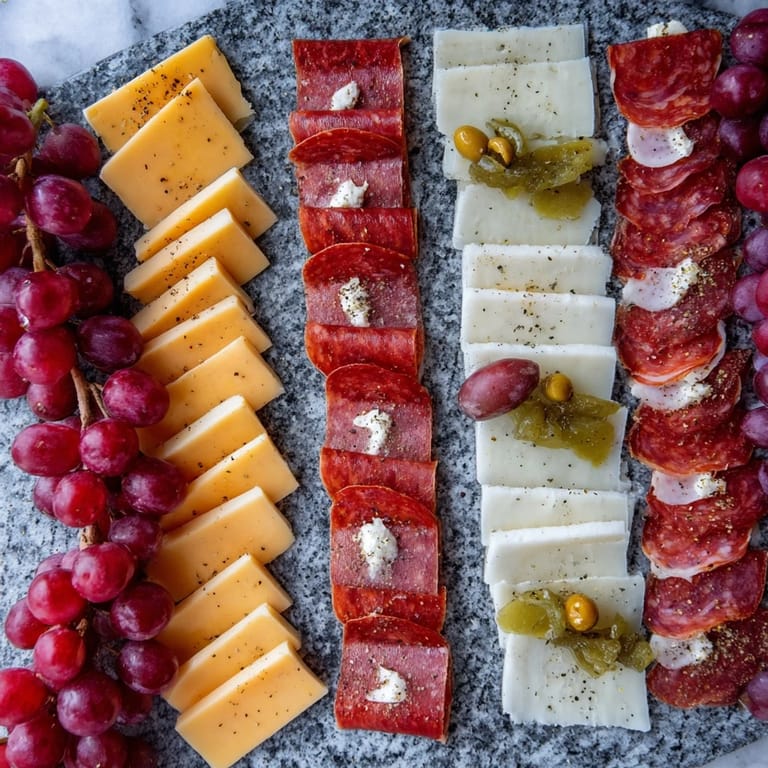
Save A friend brought their elderly mother to dinner once, and she spent the first ten minutes just looking at the slate platter without touching anything. When she finally picked up a piece of prosciutto, she said it reminded her of her wedding buffet in 1975, and that simple arrangement became something sacred. That's when I understood the real reason this platter works—it honors the food instead of competing with it.
The Art of Arrangement
Geometry sounds cold, but on a slate board it becomes a form of respect. Each ingredient gets its own moment, its own clean line, so nothing blends into everything else. The precision isn't about perfection—it's about clarity. When you slow down to arrange things this way, people slow down to eat them, and suddenly a platter becomes a meditation.
Pairing and Serving Strategy
Serve this with wine that doesn't apologize for having opinion. A crisp Sauvignon Blanc cuts through the richness, or go bold with a Cabernet Sauvignon if you want the wine and cheese to have an actual conversation. I've learned that the platter itself is so visually confident that the drinks can be equally unafraid. Pour generously and let people make their own combinations—part of the fun is the personal discovery of what tastes good together.
Beyond the Classic Version
If meat isn't your thing, the slate works beautifully as a vegetarian statement too. Swap the cured meats for marinated artichoke hearts, roasted pine nuts, toasted almonds, and sun-dried tomatoes, and the board becomes something entirely different but equally striking. The power of this format is that it adapts to what you love without losing its soul—the slate and the straight lines do all the heavy lifting, so the ingredients can change with the season or your mood.
- A vegetarian version deserves equally interesting cheeses and accompaniments, not leftovers on a board.
- Chill everything before assembling, including nuts if they've been toasted, so textures stay distinct.
- The minimalist lines work even better with vegetables because contrast and color become the visual story.
 Save
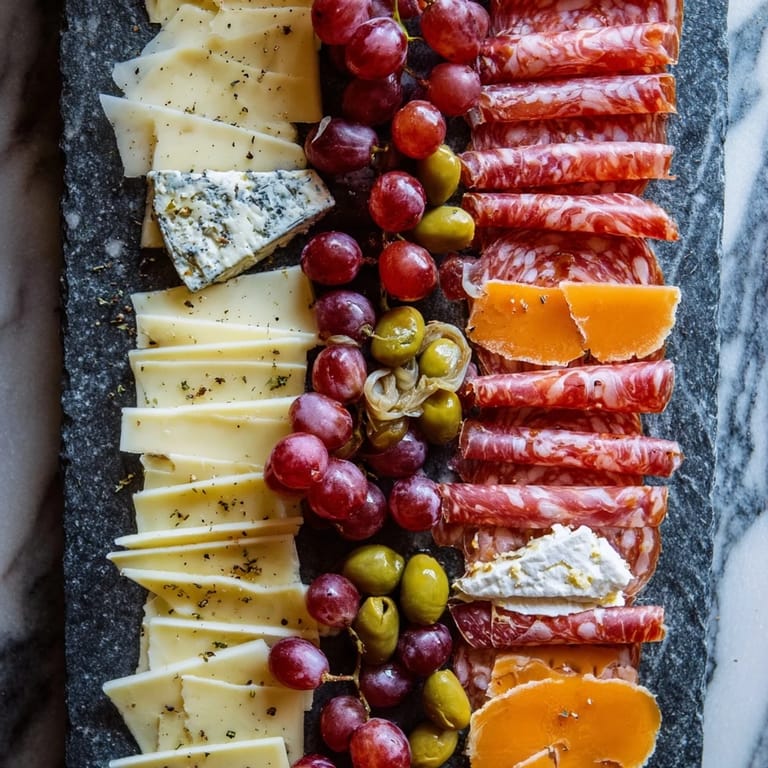
Save This platter taught me that sometimes the most impressive thing you can do is resist the urge to fuss. The slate remembers every gathering it hosts, and so will you.
Recipe FAQ
- → How should the meats and cheeses be arranged?
Arrange cold meats in straight, parallel lines on one side of the slab, and sharp cheeses similarly on the opposite side, grouping by type for visual appeal.
- → Can this platter be made vegetarian?
Yes, omit the cold meats and replace them with marinated artichoke hearts and roasted nuts for a flavorful vegetarian alternative.
- → What accompaniments enhance the platter’s flavor?
Seedless grapes, cornichons, mixed olives, and whole grain mustard add freshness, tanginess, and depth to the assortment.
- → Is there a best way to serve this platter?
Serve immediately on a heavy, unpolished stone slab to maintain the minimalist and industrial aesthetic, optionally chilling the slab beforehand to keep ingredients cool.
- → Are there any allergen considerations to keep in mind?
The platter contains dairy from cheeses, may include nuts in variations, and processed meats might contain gluten—always check labels carefully.