 Save
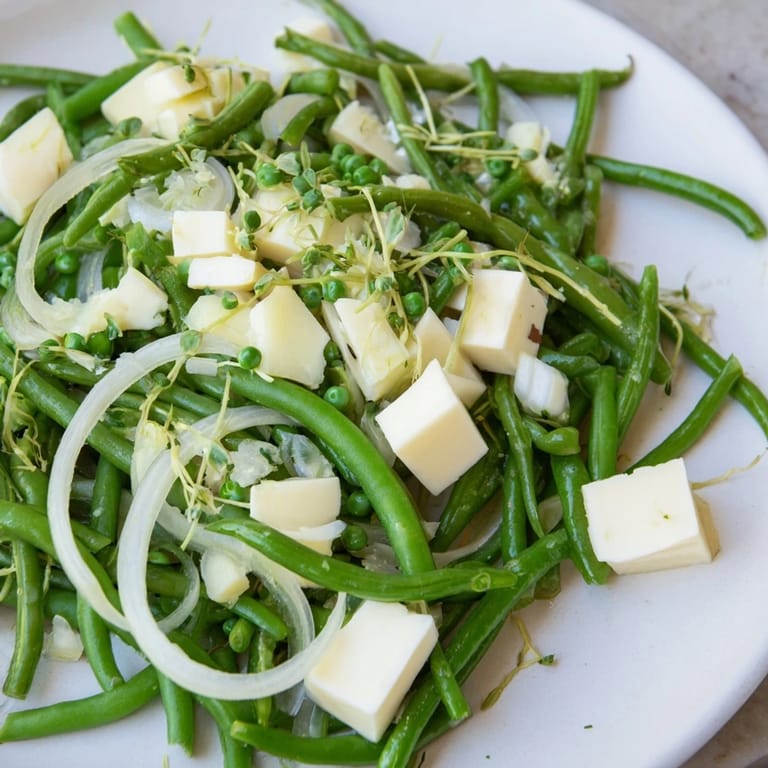
Save The first time I arranged vegetables like vines across a platter, I was trying to impress someone who'd mentioned they loved eating with their eyes first. Snap peas and green beans seemed too simple until I realized their natural curves could actually tell a story on the plate. Then came the sharp white cheddar, catching the light like little jewels threaded through green tendrils. That dish taught me that sometimes the most elegant meals come from listening to what your ingredients want to become.
I made this for a dinner party on an unexpectedly warm spring evening when everyone showed up hungry and ready to linger outside. Someone brought a bottle of crisp white wine, and watching people wind these vegetables around their forks while the sun caught the cheese—that's when I understood this salad isn't really about being healthy or light, it's about creating a moment where simple ingredients feel like a celebration.
Ingredients
- Snap peas and green beans (200 g each): The blanching is non-negotiable here; it transforms them from raw into something with real character, bright and snappy without being tough.
- Sharp white cheddar (100 g): Don't reach for mild—the sharpness is what makes this salad memorable, cutting through the sweetness of the peas.
- Fresh shallot (1 small): Thinly sliced raw shallot adds a whisper of bite that mellows slightly as it sits in the dressing.
- Extra virgin olive oil (2 tbsp): A good one matters; it should taste grassy and full.
- Fresh lemon juice (1 tbsp): Keeps everything bright and prevents the whole thing from feeling heavy.
- Dijon mustard (1 tsp): This tiny amount acts as an emulsifier and adds a subtle sophistication.
- Honey (1/2 tsp): Just enough to round out the sharpness without making it dessert.
- Fresh chives (2 tbsp): The finishing touch that says you cared, and they're optional only if you're in a real hurry.
Tired of Takeout? 🥡
Get 10 meals you can make faster than delivery arrives. Seriously.
One email. No spam. Unsubscribe anytime.
Instructions
- Boil the vegetables:
- Bring a pot of well-salted water to a rolling boil and drop in your snap peas and green beans. You'll see them brighten almost immediately—watch for that vivid green, then pull them out at exactly two minutes before they get mushy.
- Shock them in ice water:
- This is the step that keeps them snappy. Transfer them immediately to ice water and let them cool completely, then drain and pat them bone dry so they don't water down your dressing.
- Make the dressing:
- Whisk together oil, lemon juice, mustard, and honey in a large bowl until it emulsifies slightly and tastes balanced—you should taste the lemon, feel the sharpness of mustard, and sense a tiny kiss of sweetness.
- Combine everything:
- Toss the cooled vegetables and raw shallot with the dressing gently, as if you're arranging them rather than mixing them aggressively.
- Plate like you mean it:
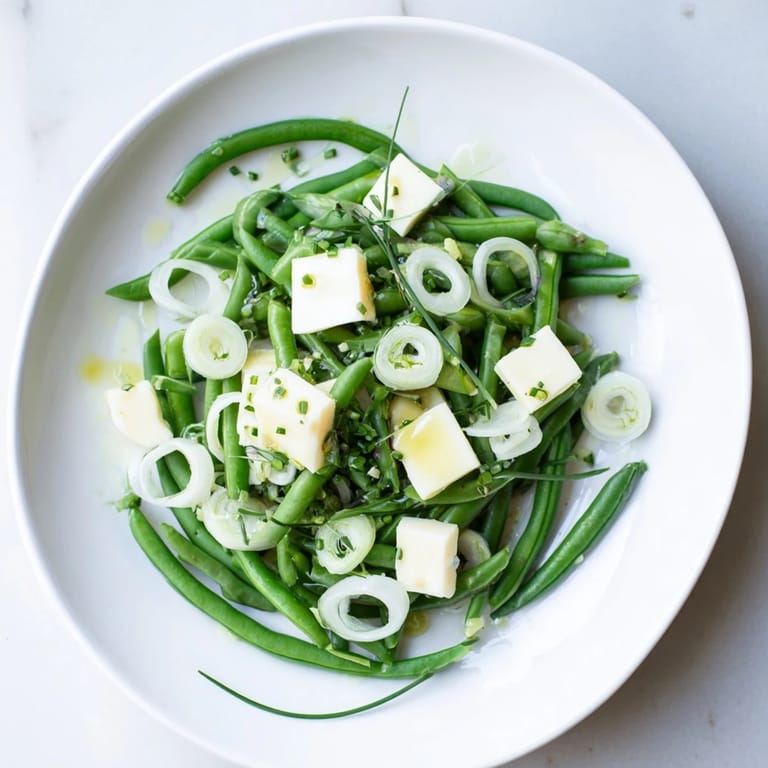
- Arrange the vegetables in long, winding vines on your platter, letting them flow naturally. This isn't just presentation; it changes how people eat the dish.
- Finish and serve:
- Scatter the cheddar shards over the top, sprinkle chives, and serve immediately while everything is still cold and the cheese is still cubed and distinct.
 Save
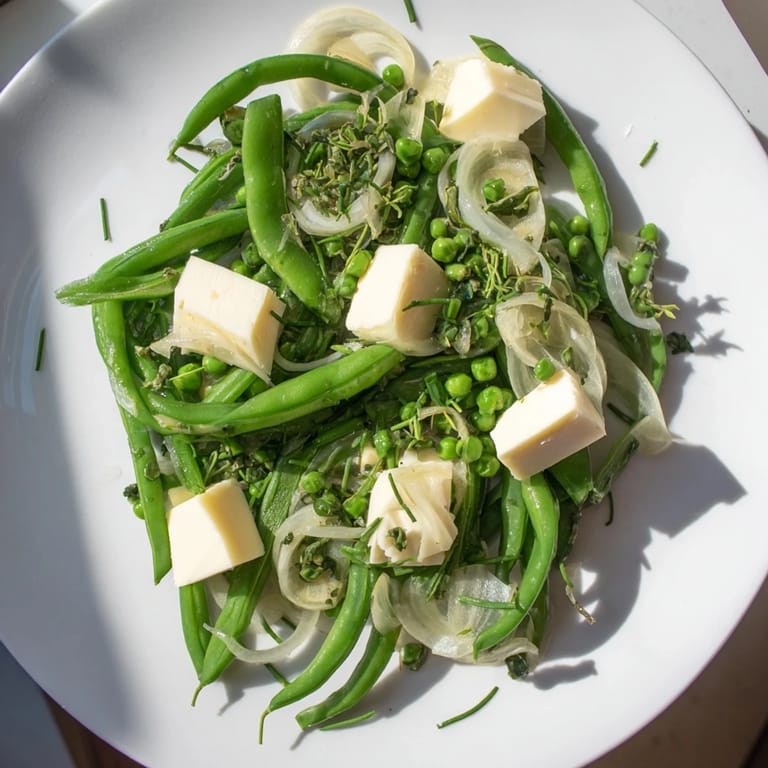
Save There's a moment right when you finish plating, before anyone eats it, where the salad looks almost impossible—like you've trapped spring on a plate. I remember standing there with my hands still slightly damp from handling the vegetables, feeling genuinely proud of something so simple. That's when I realized this recipe isn't about technique or difficulty; it's about respecting your ingredients enough to let them shine.
Why the Blanching Makes All the Difference
Raw snap peas and green beans have this potential energy, but blanching unlocks their real flavor and transforms their texture into something almost buttery while keeping that essential crunch. The heat also makes them brighter, more vibrant—the color change is actually a sign that their sugars are becoming more pronounced. I learned this the hard way by serving raw vegetables alongside blanched ones at the same meal, and the blanched ones were gone first.
The Cheddar Question
I've tried this with goat cheese, feta, even gruyere, and they're all delicious in their own way. But sharp white cheddar does something specific—it doesn't melt into the salad like softer cheeses do, it stays distinct and slightly salty, providing textural contrast. If you find your usual sharp cheddar is too crumbly, cut it into small cubes; if it's too waxy, shave it thin. The point is making the cheese an equal player, not just garnish.
Making It Your Own
This salad is a framework, not a rule book. Some nights I add toasted walnuts for earthiness, other times I throw in a handful of microgreens because they're what's in my garden. A few people I know add a drizzle of hazelnut oil to the dressing, which transforms it into something richer and more autumnal. The vegetables and cheddar are non-negotiable, but everything else is yours to play with.
- Toast walnuts or almonds in a dry pan for two minutes if you want to add them—it wakes them up completely.
- A crisp white wine like Sauvignon Blanc or Riesling tastes almost like it was made for this salad.
- Make the dressing up to two hours ahead, but assemble the final dish right before serving.
 Save
Save This salad has taught me that elegance doesn't require complexity, just intention. Serve it when you want people to feel cared for without being exhausted.
Recipe FAQ
- → How should the snap peas and green beans be cooked?
Blanch the snap peas and green beans in boiling salted water for 2 minutes until bright green and tender but still crisp.
- → What dressing complements the salad's flavors?
A dressing made from extra virgin olive oil, fresh lemon juice, Dijon mustard, honey, salt, and pepper provides a tangy and slightly sweet flavor.
- → Can the sharp white cheddar be substituted?
Yes, goat cheese or feta can be used for a tangier flavor variation.
- → What garnishes enhance this salad?
Freshly chopped chives add a mild onion note, and microgreens or pea shoots contribute extra freshness and visual appeal.
- → Is this dish suitable for gluten-free diets?
Yes, it is gluten-free but contains dairy, so check for mustard allergy precautions.
- → How can I add texture to the salad?
A handful of toasted walnuts or almonds adds a nutty crunch that complements the fresh vegetables.