 Save
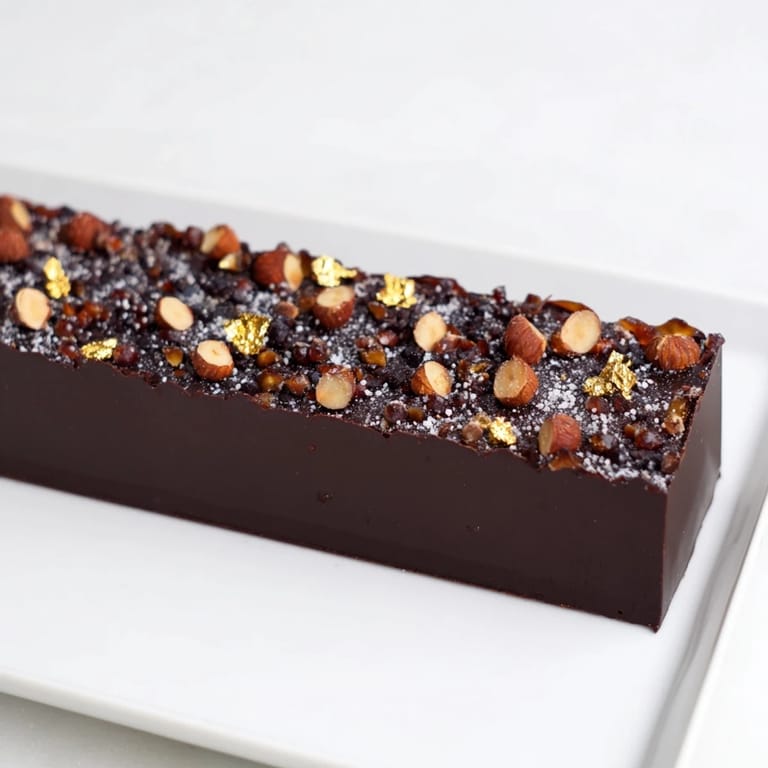
Save I first made this on a restless evening, the kind where you're not hungry but your hands need something to do. I'd been thinking about an old market trip where I caught the scent of aged chocolate mingling with brined olives at a vendor's stall, and something clicked. What if those two worlds collided on purpose, with figs as the unexpected bridge between them? Two hours later, I was slicing into something that looked like a jeweled artifact, each square a tiny landscape of dark, mysterious flavor.
I remember setting this down at a dinner party on a whim, nervous about how adventurous the combination actually was. A friend picked up a square, took a bite, and immediately laughed—that surprised, slightly bewildered laugh that told me the olives were doing their job, cutting through the richness with briny sophistication. By the end of the night, three people had asked for the recipe, and one asked if I was trying to make her rethink dessert entirely.
Ingredients
- Dark chocolate (70% cocoa), 200 g chopped: Use the good stuff here; the deeper, more complex the chocolate, the better it plays with the olives' salinity.
- Unsalted butter, 60 g cubed: This keeps the base silky rather than brittle, and lets the chocolate flavor stay front and center.
- Honey, 1 tbsp: Just a whisper of sweetness to soften the intensity without making this feel like standard dessert.
- Sea salt, pinch: This is the secret ambassador, deepening chocolate and coaxing out olive complexity.
- Dried figs, 120 g finely sliced: Their natural sweetness and chewy texture become the glue holding this bold pairing together.
- Pitted black olives (oil-cured preferred), 80 g thinly sliced: Oil-cured versions are less aggressive than brined ones; they'll surprise rather than overpower.
- Roasted hazelnuts, 50 g chopped: They add earthiness and a subtle crunch that prevents everything from feeling one-note.
- Cocoa nibs, 30 g: These are the texture game-changer, little pockets of pure chocolate intensity scattered throughout.
Tired of Takeout? 🥡
Get 10 meals you can make faster than delivery arrives. Seriously.
One email. No spam. Unsubscribe anytime.
Instructions
- Prep your vessel:
- Line your tin with parchment, letting the edges hang over like a makeshift sling. You'll be grateful for this when it comes time to lift the whole thing out.
- Melt mindfully:
- Set your bowl over gently simmering water—if the water's boiling hard, the chocolate will seize up on you, turning grainy and bitter. Stir until it's completely smooth, then kill the heat and add honey and salt while it's still warm.
- Spread and smooth:
- Pour the chocolate into your tin and use a spatula to spread it into an even layer. Take a breath here; this is your foundation.
- Build the mosaic:
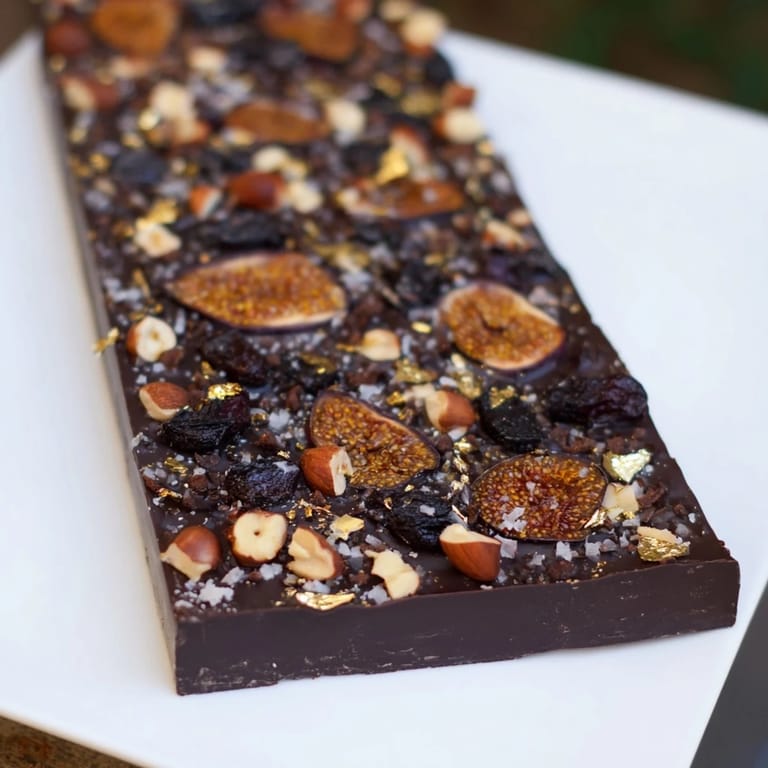
- Scatter your figs, olives, hazelnuts, and cocoa nibs across the surface, then gently press everything down. You're not trying to submerge them, just nestle them so there are no awkward air pockets staring back at you.
- Finish with flourish:
- A pinch of flaky salt on top is non-negotiable. The edible gold or rose petals are purely for you to decide—they're beautiful but optional.
- The patience part:
- Slide it into the fridge for at least two hours. This isn't rushed cooking; let the chocolate set completely so your slices stay intact.
- Slice and serve:
- Use the parchment handles to lift it out, then cut into small squares with a sharp knife dipped in hot water and wiped clean between cuts. The squares should feel dense and look intentional.
 Save
Save This dessert stopped being just food when a dinner guest told me it made her think differently about what chocolate could be. She'd always treated it as a simple pleasure, and suddenly she was considering it as a canvas. That's when I realized the real magic wasn't in the boldness of the combination—it was in how it gave people permission to be curious about flavor.
The Story Behind This Combination
Bold flavor combinations aren't accidental—they come from noticing small moments. I'd tasted this pairing fragmenting across a cheese board one evening: dark chocolate, green olives, dried fruit, nuts. Each element wanted attention. The idea of fusing them into a single, intentional creation felt right, especially the way olives could cut through richness while figs anchored everything in sweetness. Contemporary fusion sounds fancy, but really it's just listening to what foods want to say when they're together.
Making It Your Own
This recipe can shift based on what you have or what you love. Hazelnuts are wonderful, but pistachios bring a lighter, more floral note, and almonds add a subtle vanilla quality. If you're vegan, swap the butter for a plant-based version and use maple syrup instead of honey—the result will be slightly earthier and just as compelling. The beauty of a mosaic is that every piece looks different, so don't worry about matching my exact proportions.
The Finishing Touches
Serving this is half the experience. It's striking to look at, which means presentation matters. Pair each square with something to cut the richness: a glass of vintage port brings out the chocolate's depth, while dark-roast espresso makes the olive notes sing. Some people prefer it straight from the fridge when the chocolate is almost brittle; others like it at room temperature when it softens slightly and the flavors bloom more openly.
- A knife dipped in hot water and wiped clean between cuts keeps your squares looking neat and precise.
- If you're serving this for guests, slice it just before presenting so the edges stay sharp and confident.
- Store it in an airtight container in the fridge, and it'll stay perfect for almost a week, though it rarely lasts that long.
 Save
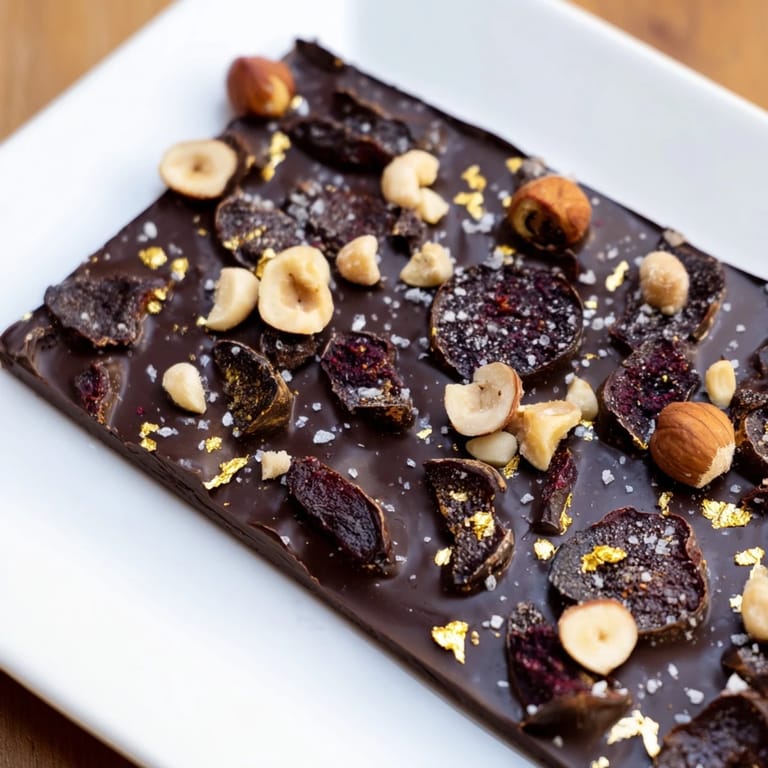
Save This mosaic is a reminder that dessert doesn't have to whisper. Sometimes it's supposed to be bold, surprising, and a little bit mysterious. Serve it with confidence.
Recipe FAQ
- → How do I achieve a smooth chocolate base?
Gently melt chopped dark chocolate and cubed butter over barely simmering water, stirring continuously until smooth. Stir in honey and a pinch of sea salt to enhance depth.
- → Can I substitute ingredients for dietary preferences?
For a vegan option, replace butter with plant-based alternatives and honey with maple syrup. Nuts can be swapped for almonds or pistachios as preferred.
- → What purpose do the black olives serve in this dessert?
Black olives introduce a subtle briny contrast that balances the sweetness of figs and chocolate, contributing complexity to the flavor.
- → How should the mosaic be chilled for best results?
Chill the assembled mosaic in the refrigerator for at least 2 hours until fully set. This ensures a firm texture and allows flavors to meld.
- → What is the best way to serve and store this dish?
Serve chilled or at room temperature, sliced into small squares. Store leftovers tightly covered in the refrigerator for up to a week.