 Save
Save There's something about standing in the kitchen on a lazy Sunday morning, still half-asleep, when you reach for sourdough and tomatoes without any plan except to make something feel like celebration. That's when burrata happened for me—not some revelation, just the moment I stopped overthinking breakfast and let good ingredients do what they do best. The cheese hit the warm toast and started melting in slow motion, and suddenly I understood why this simple combination had taken over every brunch menu in the city.
I made this for a friend who'd been complaining about uninspired mornings, and watching her face when she bit into it—that moment when you taste something and your shoulders actually relax—that's when I realized this wasn't just food. It was the kind of dish that makes you slow down, notice the basil's perfume, feel the warmth of the bread in your hands. She asked for the recipe before she'd finished her first toast.
Ingredients
- Sourdough bread, 2 large slices: You want a loaf with real tang and structure that won't collapse under the toppings; day-old bread toasts crisper than fresh.
- Fresh burrata cheese, 1 ball (125 g): This is the star—buy it as close to serving time as possible because once burrata sits, it tightens up and loses that creamy interior magic.
- Ripe tomatoes, 2 medium, sliced: Heirloom varieties taste like summer even in winter, but any tomato that smells like tomato will work; pale supermarket tomatoes will disappoint you.
- Extra virgin olive oil, 2 tbsp: Don't use the cheap bottle for this; you'll taste every penny's difference in the final bite.
- Garlic clove, 1, halved: Rubbing warm toast with raw garlic is a trick that takes thirty seconds and changes everything about the flavor.
- Flaky sea salt and freshly ground black pepper: These aren't afterthoughts; they're seasoning adjustments that happen right before eating, not before cooking.
- Fresh basil leaves, 6–8, torn: Torn, never chopped—the leaves bruise less and release their oils more gently this way.
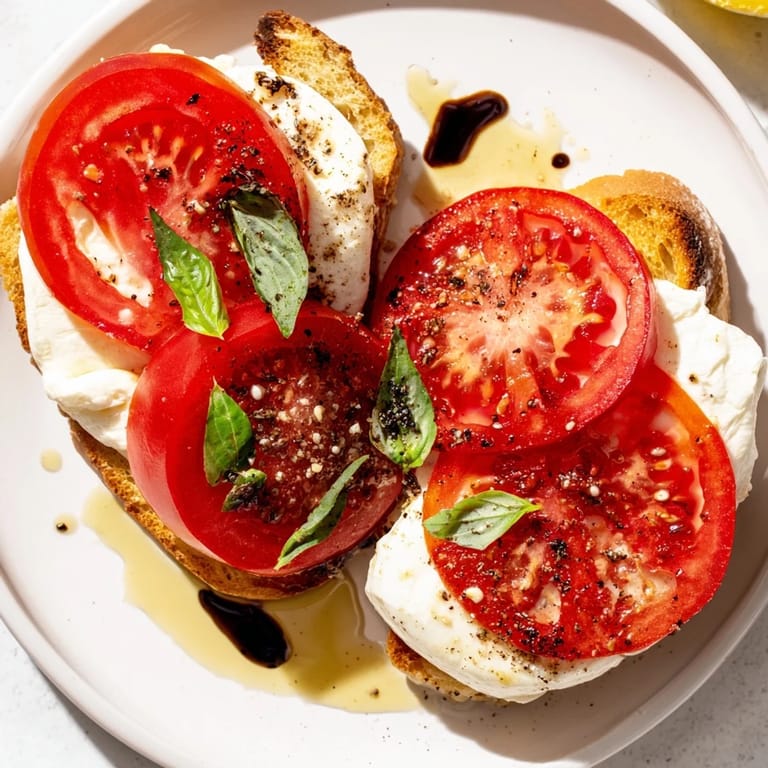
- Balsamic glaze, 1 tsp (optional): A whisper of balsamic adds depth, but skip it if you prefer the pure tomato-basil song.
Tired of Takeout? 🥡
Get 10 meals you can make faster than delivery arrives. Seriously.
One email. No spam. Unsubscribe anytime.
Instructions
- Toast your bread until it's golden and alive:
- You want crisp outside with just enough give inside—about two minutes in a toaster, or three on a grill pan where you can watch it. The sound of it crunching matters.
- Rub warm toast with garlic like you're seasoning it with your hands:
- Do this immediately while the bread is still hot enough that the garlic releases its oils without turning bitter. One swipe per slice is enough; you're adding whisper, not shout.
- Drizzle each slice with olive oil:
- A tablespoon per slice, coaxing the oil to settle into the crevices of the bread. This is your moisture insurance and flavor foundation.
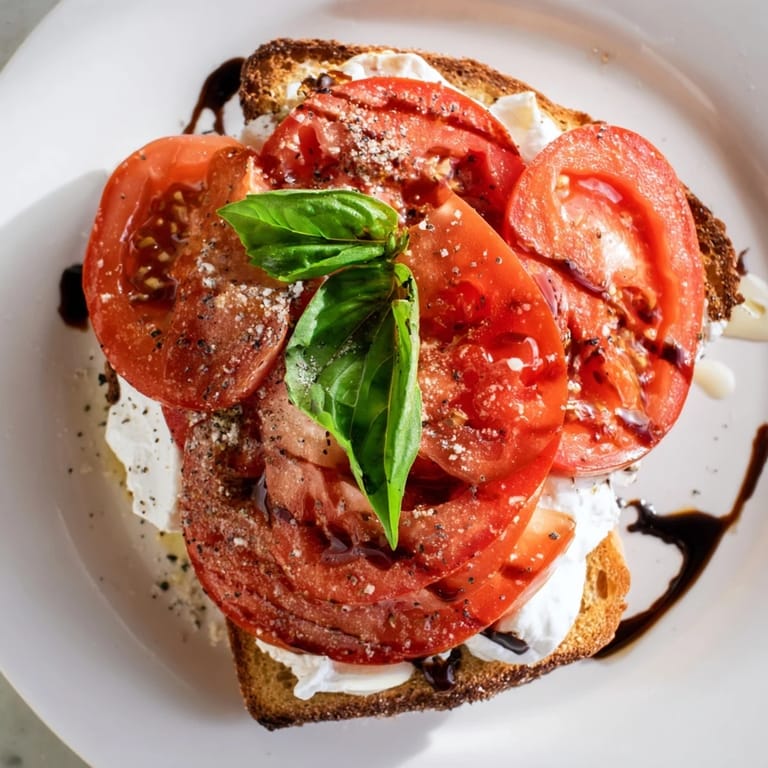
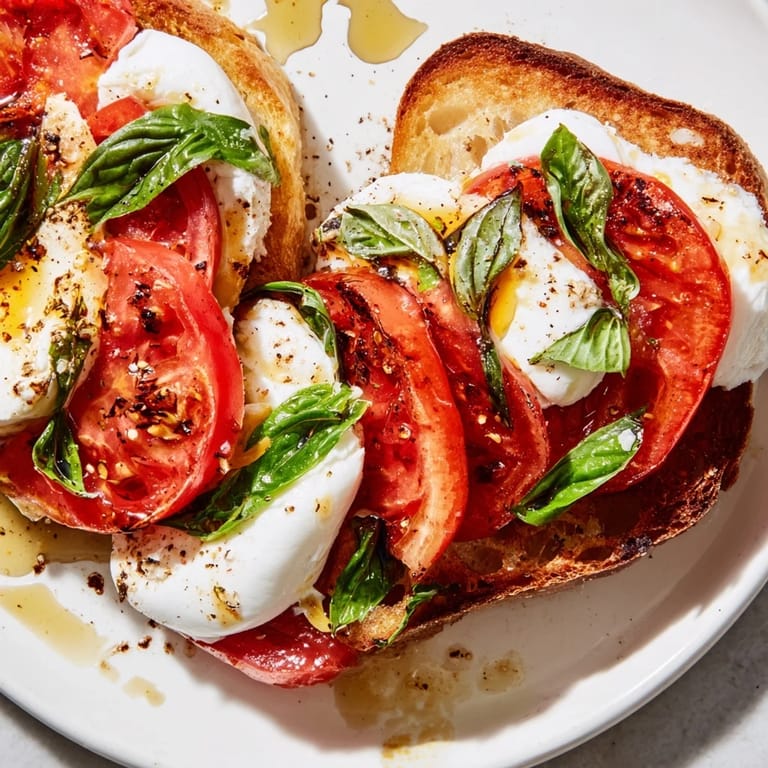
- Layer tomato slices like you're building something:
- Overlap them slightly so the stack feels intentional, then season with salt and pepper right away while the surface is still absorbing flavor.
- Tear and place the burrata gently:
- Don't stir it into the tomatoes; let it sit on top where it can stay creamy and separate, melting into the warm toast underneath as you eat.
- Scatter basil and finish with a subtle drizzle:
- The basil goes on last so it stays bright green and fragrant, and just a thread of balsamic if you're using it—let it catch the light instead of drowning everything.
- Serve immediately:
- The moment between plate and first bite is when everything is at its best, so don't wait.
 Save
Save There's this quiet moment when you've assembled everything and the bread is still steaming, the burrata still cold from the counter, the basil still bright—that's when you realize how little you need sometimes to feel like you've made something worth remembering. It's not about effort or technique; it's about choosing the right things and leaving them alone.
Tomato Matters More Than You Think
I used to think all tomatoes were basically the same until I tried this with a really good one—the kind that actually tastes like tomato instead of water with ambitions. The difference is everything. If you can get to a farmer's market or find heirloom varieties at your grocery store, it's worth the small splurge because the tomato isn't a supporting character here; it's the whole reason the dish works. Even in winter, a good tomato will carry the entire thing.
The Ritual of Toasting Bread
There's something almost meditative about toasting bread for this—not rushing it, actually listening for when it sounds right, watching for the exact moment the surface turns golden without being dark. It's one of those small kitchen moments that separates good mornings from rushed mornings. The warmth matters because it's what makes the garlic release its oils, what gives the olive oil somewhere to pool and sink in.
Variations and Thoughts
The beauty of this toast is how it bends to whatever you have on hand or whatever you're craving. I've made it with aged balsamic when I was feeling fancy, with a scatter of chili flakes when I wanted heat, with burrata's slightly less glamorous cousin, fresh mozzarella, when I couldn't get to the good shop. Once I added a fried egg on top, and that changed the whole mood from brunch to breakfast. The core stays the same—good bread, good tomato, good cheese—but everything else is permission to improvise.
- Try adding a pinch of chili flakes or red pepper for subtle heat.
- Arugula leaves underneath the tomato add peppery contrast if you want extra texture.
- A quick sip of good wine alongside makes the whole experience feel intentional.
 Save
Save This is the kind of dish that reminds you why you cook—because the best meals are often the simplest ones, made with ingredients you actually enjoy, eaten without hurry or agenda.
Recipe FAQ
- → What bread works best for this dish?
Sourdough bread with a firm crust and airy crumb is ideal for crisping and balancing the creamy toppings.
- → Can I substitute burrata cheese?
Fresh mozzarella can be used as a milder alternative with a similar creamy texture.
- → How do I enhance the garlic flavor?
Rubbing warm toast with a halved garlic clove infuses gentle garlic aroma without overpowering the dish.
- → Is balsamic glaze necessary?
It's optional but adds a sweet-tart complexity that complements the fresh ingredients beautifully.
- → What are good drink pairings?
Crisp Prosecco or light Pinot Grigio pair well, enhancing the fresh, savory flavors.