 Save
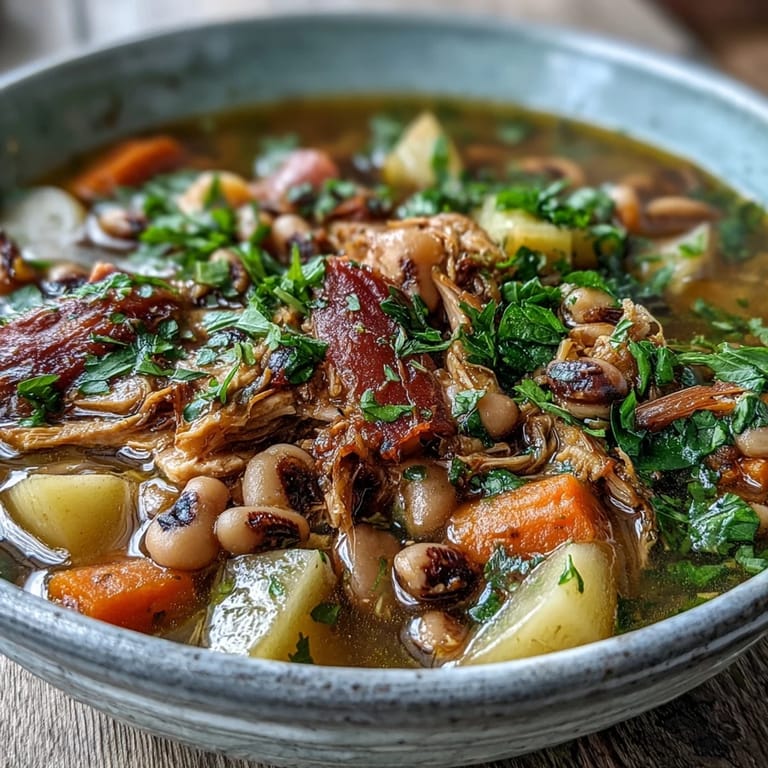
Save My grandmother's kitchen always smelled like this stew on cold Sundays, though she'd never call it fancy—just honest food that stuck with you. Years later, I found myself standing in my own kitchen on a January evening, ham hocks simmering away, and suddenly understood why she'd always make extra. There's something about the way black-eyed peas soften into the broth, how the smoke from the ham hocks settles into every spoonful, that makes you want to feed everyone you love. This stew became my answer to that pull, my version of that feeling.
I made this for my sister's first winter in her new house, back when her kitchen was still boxes and bare counters. We sat at her folding table with steaming bowls, and she got quiet for a moment—the kind of quiet that means food just became a memory. She texted me the recipe request three days later, saying her apartment finally felt like home.
Ingredients
- Smoked ham hocks (2, about 1.5 lbs): These are the backbone of the stew, giving you that deep, savory smoke without overwhelming the dish; don't skip them or substitute with bacon bits, the long simmer is what makes them magic.
- Dried black-eyed peas (2 cups, soaked overnight or 4 cups canned): Soaking overnight softens them and makes them cook faster, though canned works fine if you're short on time—just rinse them well to cut the sodium.
- Onion, carrots, and celery (1 large onion, 2 carrots, 2 celery stalks, all diced): This holy trinity forms the flavor foundation, and the smaller you dice them, the more they'll melt into the broth instead of staying chunky.
- Potatoes (2 medium, cut into 1-inch cubes): They thicken the stew naturally as they break down, so resist the urge to make them too small or they'll disappear entirely.
- Diced tomatoes (1 can, 14.5 oz, with juice): The acidity brightens everything and balances the richness of the ham; always use canned here rather than fresh, the concentrated tomato flavor is what you need.
- Garlic (3 cloves, minced): Add this after the soffritto is ready, not before, so it doesn't burn and turn bitter on you.
- Broth (6 cups chicken or vegetable): Low-sodium matters because the ham hocks and any seasonings will add salt as the stew simmers—you want control over the final flavor.
- Bay leaves (2), dried thyme (1 teaspoon), smoked paprika (1/2 teaspoon), black pepper (1/2 teaspoon), cayenne (1/4 teaspoon optional): These build layers without shouting; the smoked paprika echoes the ham hocks, and the cayenne is there if you like heat but it's completely optional.
Tired of Takeout? 🥡
Get 10 meals you can make faster than delivery arrives. Seriously.
One email. No spam. Unsubscribe anytime.
Instructions
- Soak your peas the night before:
- If you're using dried black-eyed peas, cover them with water and let them sit overnight on the counter. Drain and rinse well before you start cooking—this step cuts the cooking time in half and makes the peas taste less starchy.
- Build your flavor base:
- Heat a splash of oil in your Dutch oven over medium heat, then add the diced onion, carrots, and celery. You want them soft and starting to turn golden at the edges, about five minutes—this is when your kitchen starts smelling alive.
- Add the garlic:
- Stir in the minced garlic and cook it for just one minute, stirring constantly so it perfumes the oil without burning. If you let it go longer, it turns acrid and that rawness will haunt the whole pot.
- Layer everything in:
- Add the ham hocks, drained black-eyed peas, potato cubes, canned tomatoes with their juice, and broth. Pour in the bay leaves, thyme, smoked paprika, black pepper, and cayenne if you're using it—stir everything together so nothing sticks to the bottom.
- Bring to a boil, then back off the heat:
- Watch until you see big rolling bubbles breaking the surface, then lower the heat as low as your stove will go. Cover the pot and let it simmer gently for two hours, stirring every thirty minutes or so—the slower it goes, the more tender everything becomes.
- Shred the ham and return it:
- After two hours, the ham hocks should be falling apart. Fish them out, let them cool just enough to handle, then pull the meat away from the bones and skin, shredding it into bite-sized pieces and stirring it back into the pot.
- Taste and adjust:
- Now's when you taste and decide if it needs salt—remember, the ham already brought saltiness, so go slowly. If you want it thicker, simmer uncovered for another ten to fifteen minutes while the liquid reduces.
- Finish and serve:
- Fish out the bay leaves, ladle the stew into bowls, and scatter fresh parsley over the top if you have it. Set out hot sauce on the side for anyone who wants extra heat.
 Save
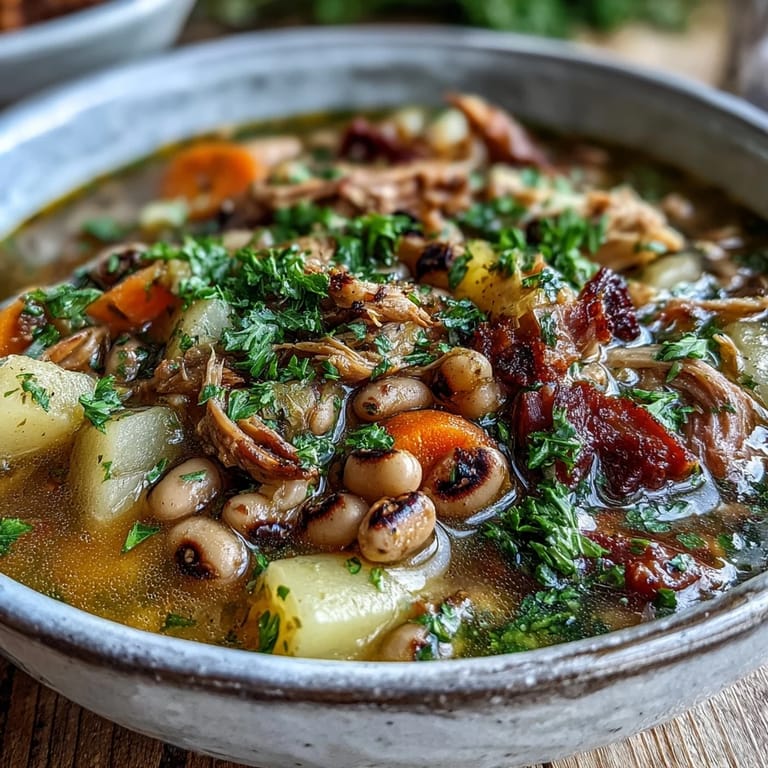
Save There's a moment, around the ninety-minute mark, when you lift the lid and the steam hits your face, and you realize why people make stews. It's not just about eating something warm; it's about that pause, that moment of anticipation. That's when I knew I'd gotten it right.
Why This Stew Works Year-Round
Winter is obvious—you want something that warms you from the inside out and fills your house with smell that says someone cares. But I've also made this in October when the weather turned cool overnight, in spring when I wanted comfort food that wasn't heavy, and in summer when I'd serve it cold the next day over rice as a hearty salad. The beauty is that it adapts to when you need it, not the other way around.
The Secret of Leftovers
Make this stew on a Sunday and you've solved dinner for at least two more days, maybe three. The flavors actually settle and deepen in the refrigerator—the ham smoke finds its way into every corner of every bean, the broth gets richer, the whole thing becomes more itself. It reheats gently on the stove with a splash of extra broth if it's thickened too much, or you can eat it cold straight from the container if you're standing in front of the refrigerator at midnight.
Making It Your Own
This recipe is sturdy enough to handle your changes without falling apart. Some people add a splash of hot sauce or vinegar at the end for brightness, others stir in fresh greens like collards or kale in the last fifteen minutes, and I once made it with smoked chicken instead of ham hocks for a friend who couldn't eat pork. The foundation stays solid no matter what you do to it.
- If you want it vegetarian, skip the ham hocks and add an extra teaspoon of smoked paprika plus a splash of liquid smoke to the broth for depth.
- Serve this with cornbread to soak up the broth, or over rice if you want something more substantial.
- Leftovers keep for three days refrigerated and also freeze beautifully for up to two months.
 Save
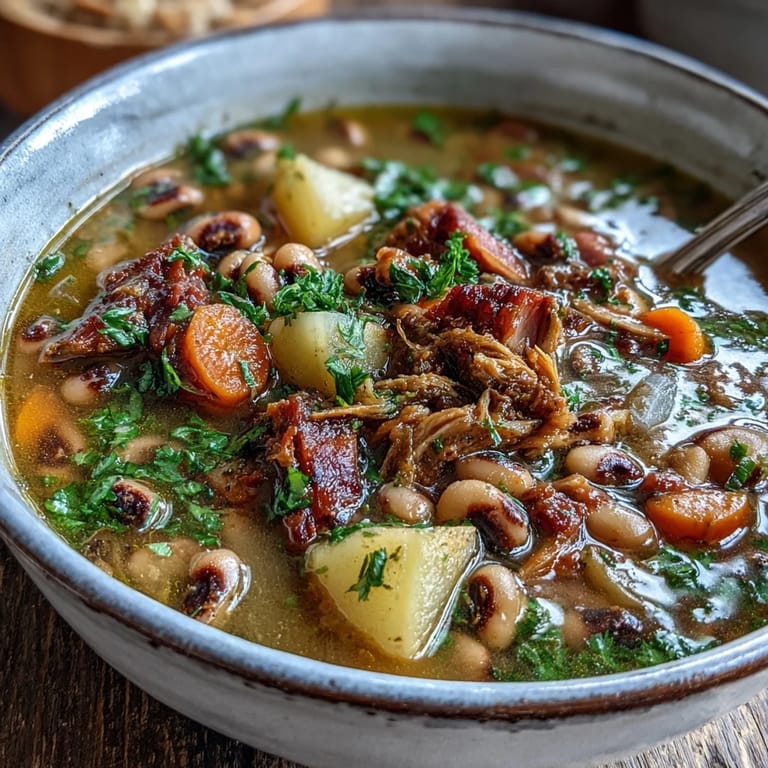
Save This is the kind of recipe you make when you want to say something without words—when you want someone to know they matter, that their comfort matters. That's what keeps me coming back to it.
Recipe FAQ
- → Do I need to soak dried black-eyed peas overnight?
Yes, soaking dried black-eyed peas overnight ensures even cooking and tender texture. If you're short on time, you can use canned black-eyed peas instead—just rinse and drain them before adding to the pot.
- → Can I make this stew in a slow cooker?
Absolutely. Sauté the vegetables first, then transfer everything to your slow cooker. Cook on low for 7-8 hours or high for 4-5 hours until the peas are tender and the ham is falling off the bone.
- → What's the best way to serve this stew?
It pairs beautifully with cornbread or steamed rice for a classic Southern meal. A splash of hot sauce and fresh parsley garnish adds brightness and complements the smoky, savory flavors.
- → How long do leftovers keep?
Leftovers improve in flavor as they sit and will keep well refrigerated for up to 3 days. The flavors continue to develop, making it an excellent option for meal prep or making ahead.
- → Can I make this vegetarian?
Yes, simply omit the ham hocks and use vegetable broth instead of chicken broth. Add extra smoked paprika or a few drops of liquid smoke to maintain that smoky depth of flavor.
- → Why do I need to remove the ham hocks and shred the meat?
Removing the ham hocks allows you to discard the skin, bones, and excess fat, then return just the tender, flavorful meat to the stew. This ensures the best texture and eating experience.