 Save
Save My sister called on December 30th asking what I was bringing to our New Year's dinner, and I realized I'd been overthinking it for weeks. Standing at my kitchen counter, I spotted a can of chickpeas and remembered my grandmother's Hoppin' John—that Southern superstition about black-eyed peas for luck and prosperity. But instead of the traditional heavy rice dish, I wanted something bright and alive, something that tasted like hope instead of obligation. This salad emerged that afternoon, and honestly, it felt like the right way to start fresh.
I made this for our actual New Year's Eve gathering, and something unexpected happened—people kept coming back for more, even after the main courses were cleared. My brother, who usually skips salads entirely, actually asked for seconds and wanted to know what made the dressing taste so creamy. That moment, watching people genuinely enjoy something I'd invented on a whim, felt like the kind of luck the black-eyed peas were supposed to bring.
Ingredients
- Black-eyed peas (1 cup dried or 1 can): The heart of this dish and the lucky charm of the New Year—if using dried, soak overnight for faster cooking, but canned works beautifully when you're short on time.
- Chickpeas (1 can, 15 oz): These add protein and earthiness, turning the salad into something that actually fills you up.
- Long-grain rice (1 cup cooked, cooled): Day-old rice works best here because the grains separate more easily and absorb the dressing better.
- Red bell pepper (1 small, diced): The sweetness cuts through the tahini and keeps things bright.
- Celery stalk (1 small, diced): This gives you that traditional Hoppin' John crunch in every bite.
- Red onion (1/2 small, finely chopped): Sharp and slightly sweet, it adds a depth that makes people wonder what's in the salad.
- Cherry tomatoes (1 cup, halved): They burst when you toss everything together, releasing little bursts of acid that balance the richness.
- Green onions (2, sliced): Scatter these on top right before serving so they stay crisp and peppery.
- Fresh parsley (1/4 cup, chopped): The fresh herbaceousness keeps this from feeling heavy despite all the legumes.
- Tahini (1/4 cup): This is the secret—it's nutty and silky and makes the dressing feel special without cream or mayo.
- Lemon juice (2 tablespoons): Brightens everything and prevents the tahini from tasting flat.
- Apple cider vinegar (1 tablespoon): The slight funk of ACV against the sweetness of maple syrup is what makes this dressing sing.
- Olive oil (1 tablespoon): Just enough to round out the dressing without making it greasy.
- Maple syrup or agave (1 teaspoon): A whisper of sweetness that nobody will identify but everyone will taste.
- Garlic (1 clove, minced): Fresh garlic here, not powder—it stays sharp and alive in the cold dressing.
- Water (2–3 tablespoons): Add this slowly while whisking; it's the difference between a thick paste and a pourable dressing.
- Salt and black pepper (1/2 teaspoon and 1/4 teaspoon): Taste as you go because the acid in the lemon and vinegar can change how salty everything needs to be.
- Smoked paprika (1/4 teaspoon, optional): If you add this, it brings a whisper of smoke that makes the salad taste deeper and more intentional.
Tired of Takeout? 🥡
Get 10 meals you can make faster than delivery arrives. Seriously.
One email. No spam. Unsubscribe anytime.
Instructions
- Prepare the black-eyed peas if using dried:
- Rinse them under cold water, then soak in plenty of water for at least 4 hours or overnight—this step matters because it breaks down the compounds that make legumes hard to digest. Drain the soaking water, add fresh water to a pot, and simmer for 30 to 40 minutes until they're tender but not mushy, then drain and let them cool while you prep everything else.
- Combine the salad base:
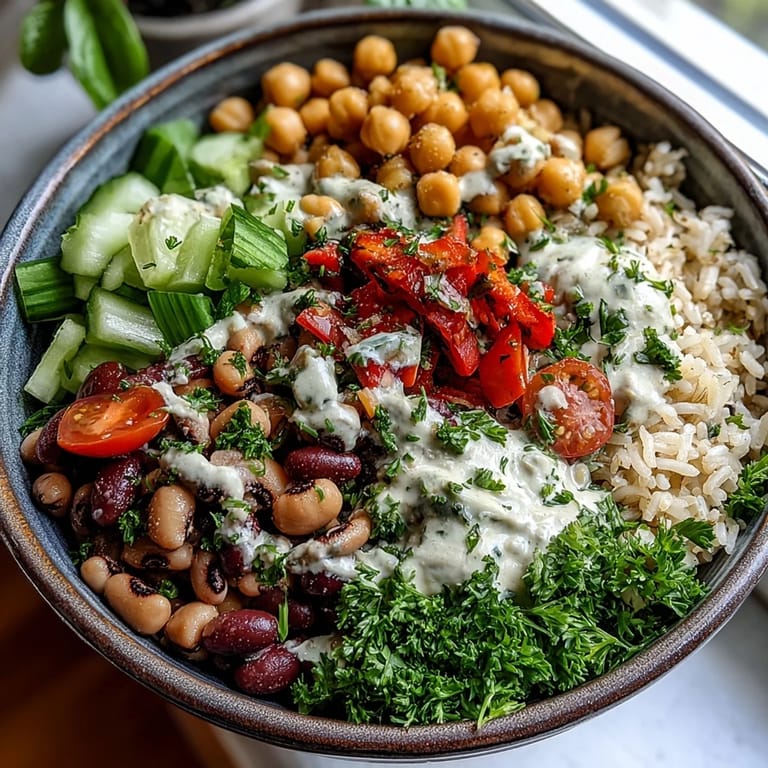
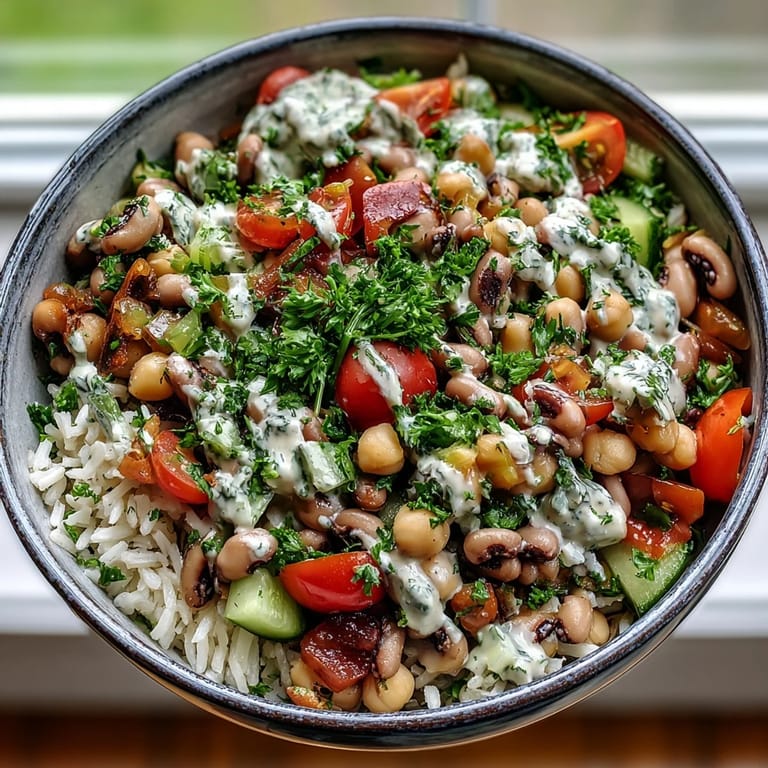
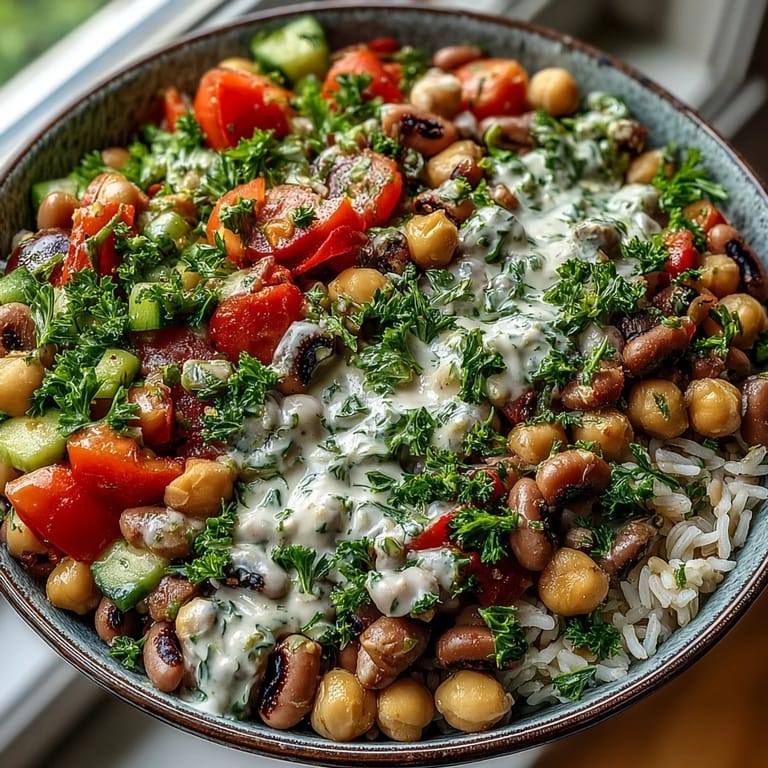
- In a large bowl, toss together the cooled black-eyed peas, chickpeas, rice, bell pepper, celery, red onion, cherry tomatoes, green onions, and parsley—this is where the salad comes alive, when you see all those colors and textures together. Don't be shy about mixing; you want everything distributed evenly so every spoonful tastes balanced.
- Make the tahini dressing:
- In a small bowl, whisk together tahini, lemon juice, apple cider vinegar, olive oil, maple syrup, and minced garlic until it looks like rough sand. Add the water one tablespoon at a time while whisking constantly, and watch as it suddenly transforms into something silky and pourable—it's almost magical how tahini behaves once it loosens up.
- Season and finish the dressing:
- Whisk in the salt, black pepper, and smoked paprika if you're using it, then taste it straight from the whisk. The dressing should taste bold and slightly too salty because it's going into a bowl full of mild grains and beans that will absorb the flavor.
- Dress and rest the salad:
- Pour the dressing over the salad and toss everything together gently but thoroughly—you want the dressing to coat every piece without breaking up the tomatoes or crushing the beans. If you have time, let it sit in the fridge for an hour so the flavors meld and the salad softens slightly, but honestly, it's also delicious served right away if you're hungry.
 Save
Save There's something about serving this salad that changed how I think about New Year's traditions. Instead of feeling trapped by what I was supposed to make, I got to honor the superstition while making something completely my own, something that reflected who I actually am in the kitchen. That felt like the real luck.
Why This Salad Works for New Year's
Every culture has their own way of eating for luck and prosperity on January 1st, and black-eyed peas are the Southern version—something about their round shape and the tradition of eating them has stuck around for centuries. But this salad honors that history while being something you'd actually want to eat in modern life, something with enough vegetables and bright flavors that it doesn't feel like you're checking a box. It's traditional without being stuck in the past, which feels like the right metaphor for starting over.
The Tahini Dressing Is Everything
I've made tahini dressing dozens of times since, and I've learned that the key is patience with the water—it seems stubborn at first, like it's never going to thin out, and then suddenly it breaks and becomes creamy. The acid from the lemon and vinegar is what makes this work without any cream, so don't be tempted to skip either one. This dressing is also incredible on roasted vegetables, grain bowls, or even as a sandwich spread if you make it slightly thicker by using less water.
Storage and Variations
This salad keeps beautifully in the fridge for 3 days, though the vegetables will gradually soften and release water—which is actually fine because it means the salad gets more flavorful as it sits. If you want to make it heartier, dice up some avocado and fold it in just before serving, or add a handful of chopped kale or spinach for more greens without changing the character of the dish. For heat, jalapeños or a pinch of cayenne in the dressing transform this into something with a little kick, which pairs surprisingly well with the earthiness of the beans.
 Save
Save Making this salad has become my January tradition now, proof that sometimes the best ways to honor the past are by making something new. Every time I make it, I think about that moment my brother came back for seconds, and I remember that food is really about making people feel something.
Recipe FAQ
- → Why is Hoppin' John traditionally eaten on New Year's Day?
Black-eyed peas symbolize luck and prosperity in Southern folklore, while the rice represents abundance. Eating this dish on January 1st is believed to bring good fortune and financial success for the coming year.
- → Can I use dried black-eyed peas instead of canned?
Absolutely. Soak dried peas overnight, then simmer for 30-40 minutes until tender. Let them cool completely before tossing with the other ingredients to prevent wilting the fresh vegetables.
- → How long does this keep in the refrigerator?
The flavors actually improve after chilling. Store in an airtight container for up to 3 days. The vegetables stay crisp, and the tahini dressing helps keep everything moist and flavorful.
- → What can I substitute for tahini?
Creamy almond butter or sunflower seed butter work well for a similar nutty richness. For a lighter version, use Greek yogurt or a cashew cream base, adjusting the lemon juice accordingly.
- → Is this dish gluten-free?
Yes, as written this bowl is naturally gluten-free. Just verify that your rice and tahini are certified gluten-free if you have severe sensitivities, as cross-contamination can occur during processing.
- → Can I add other vegetables to this bowl?
This versatile base welcomes additions like diced cucumber, shredded carrots, baby spinach, or roasted sweet potatoes. Avocado adds creaminess while kale provides extra nutrition and texture.