 Save
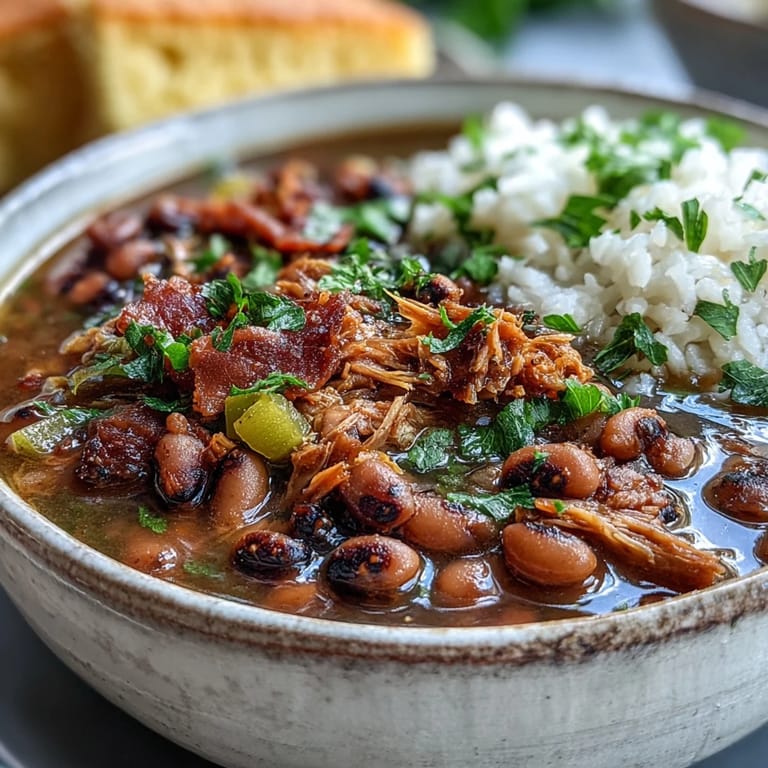
Save My grandmother used to say that black-eyed peas on New Years Day weren't just about tradition—they were insurance. I didn't understand it as a kid, watching her tend that big pot on the stove while the rest of the house was still quiet, but somewhere between the steam rising and the smell of smoked pork filling the kitchen, I realized she was doing something sacred. This dish has a way of making you feel held, like you're eating good fortune straight from the bowl.
I made this for the first time as an adult on a snowy New Years Eve when everything felt uncertain, and somehow stirring that pot became meditative. My partner came in asking what smelled so good, and by the time we sat down to eat, the whole mood had shifted—from anxious to hopeful. That's when I understood what Grandma meant about the luck being real, even if it's the kind you make yourself.
Ingredients
- Black-eyed peas (1 pound): These little legumes are the heart of the dish, and soaking them overnight makes all the difference in texture—they become tender without falling apart, which is harder than it sounds.
- Smoked pork neck bones (1½ pounds): Don't skip the smoke here; it's what gives the entire pot its soul, infusing every single pea with savory depth that regular pork can't match.
- Onion, celery, and bell pepper (1 large onion, 1 celery stalk, 1 green bell pepper): This trio is your flavor foundation, and chopping them fine means they'll meld into the broth rather than stay separate.
- Garlic (4 cloves): Mince it small so it distributes evenly and doesn't overpower in any single bite.
- Water or chicken broth (7 cups): Broth adds richness, but water lets the pork and spices shine if that's what you prefer.
- Creole seasoning (1½ teaspoons): This is your spice shortcut—it carries paprika, cayenne, and other warm notes that make the whole pot sing without you having to measure five different things.
- Bay leaf, thyme, smoked paprika, black pepper, and salt: These layer complexity; the smoked paprika especially echoes the pork in a way that feels intentional rather than accidental.
- Fresh parsley and hot sauce (optional garnish): Parsley adds brightness at the end, and hot sauce lets each person customize their heat level.
Tired of Takeout? 🥡
Get 10 meals you can make faster than delivery arrives. Seriously.
One email. No spam. Unsubscribe anytime.
Instructions
- Soak the peas thoughtfully:
- Pour your rinsed peas into a large bowl and cover them generously with water the night before—this hydrates them evenly so they cook at the same rate. If you're short on time, the quick soak works too: boiling water, one hour of sitting, then drain and you're ready to go.
- Build your flavor base:
- Heat a splash of oil in your Dutch oven over medium heat, then add the onion, celery, and bell pepper. Let them soften for about five minutes, stirring occasionally—you want them tender and just beginning to caramelize at the edges, not mushy.
- Wake up the aromatics:
- Add your minced garlic and cook for exactly one minute, just until you can smell that sweet, pungent aroma rising from the pot. Any longer and it starts to brown, which is bitter.
- Combine everything:
- Stir in your drained peas, the smoked pork, all your liquid, and every spice. This is when the pot transforms from separate ingredients into a unified dish, so take a moment to really mix it all together.
- Simmer low and long:
- Bring it to a boil first so you know it's activated, then drop the heat down low, cover it, and let it bubble gently for about an hour and a half. Stir every twenty minutes or so—not because you have to, but because the smell is irresistible and checking on it gives you something meditative to do.
- Finish and serve:
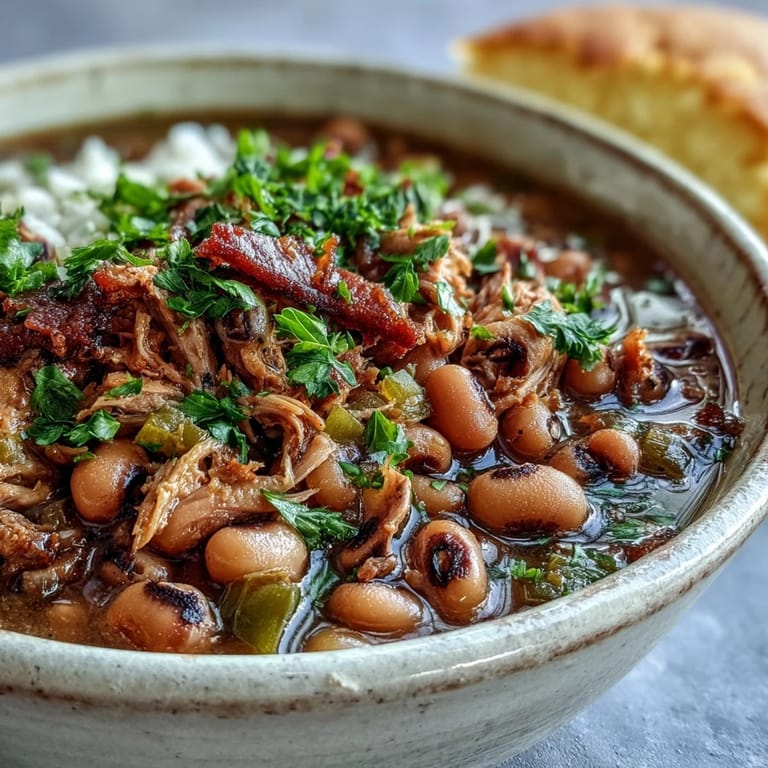
- Once the peas are tender enough to break between your teeth with barely any pressure, pull out the pork bones, shred any meat clinging to them, and return just the meat to the pot. Taste, adjust salt, fish out the bay leaf, and you're done.
 Save
Save Years later, I learned that my grandmother would taste the broth halfway through cooking and adjust the Creole seasoning based on her mood that day—more heat when she wanted to feel bold, less when she wanted comfort. I do that now too, and it makes me feel connected to her in a way that no recipe book ever could.
The Ritual of New Years Cooking
There's something about making this dish on New Years Day that transforms cooking from a chore into a ceremony. The slow simmer gives you time to think, plan, or just be present in your kitchen. Many Southern families swear that the act of cooking it together—even if it's just one person—sets the intention for the year ahead, and whether you believe in luck or not, there's power in that intentionality.
Serving Traditions That Matter
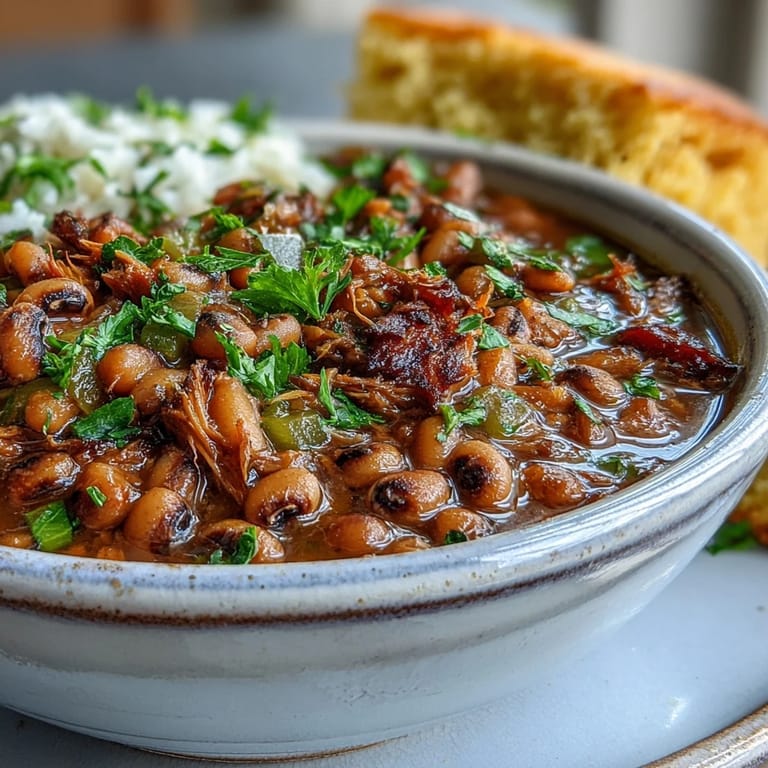
Traditionally this dish never stands alone; it's served alongside collard greens (for paper money, supposedly) and cornbread (for gold). Together they create a meal that feels complete, both nutritionally and spiritually. The rice or cornbread underneath soaks up all that beautiful broth, so don't skip those sides—they're part of the conversation the dish is having.
Make It Your Own
The beauty of this recipe is that it's flexible enough to become yours. Some families add a splash of hot sauce directly into the pot, others stir in a little apple cider vinegar at the end for brightness, and a few adventurous cooks have added diced tomatoes or even a touch of molasses. The core stays the same, but the edges can shift based on what you have and what you're craving.
- If you want it vegetarian, skip the pork and add an extra teaspoon of smoked paprika plus a teaspoon of liquid smoke to keep that deep, savory quality alive.
- Leftovers taste even better the next day after the flavors have had time to marry and deepen—reheat gently on the stovetop with a splash of broth if needed.
- Freeze portions in containers for up to three months, and you'll have New Years luck stored in your freezer year-round.
 Save
Save Every time I make this, I'm reminded that the best recipes are the ones that connect us to something bigger than ourselves. This dish is meant to be shared, remembered, and passed along.
Recipe FAQ
- → Why do people eat black-eyed peas on New Years?
Black-eyed peas are traditionally eaten on New Years Day in the South because they symbolize coins and prosperity. When cooked, they swell, representing abundance and good fortune for the coming year.
- → Do I need to soak black-eyed peas before cooking?
Yes, soaking helps them cook evenly and tenderly. You can soak them overnight in cold water, or use the quick method by covering with boiling water for 1 hour before draining and cooking.
- → Can I make this vegetarian?
Absolutely. Simply omit the smoked pork bones and add extra smoked paprika along with a splash of liquid smoke to maintain that characteristic smoky depth of flavor.
- → What should I serve with black-eyed peas?
Traditionally, they're served over steamed white rice or with cornbread and collard greens. This trio represents luck (peas), wealth (greens), and gold (cornbread).
- → How long do leftovers last?
Cooked black-eyed peas freeze beautifully for up to 3 months. They actually taste even better the next day as the flavors continue to develop and meld together.
- → Can I use canned black-eyed peas instead?
You can substitute canned peas, but reduce the cooking time to about 30 minutes and adjust liquid accordingly. However, dried beans yield better texture and absorb more flavor from the smoked meat.