 Save
Save My cousin texted me from Atlanta last spring asking if I'd ever made Hoppin John without the ham hock, and honestly, I hadn't thought much about it until that moment. Growing up, I'd always assumed this Southern staple needed meat to have any soul, but she swore by her vegetarian version and insisted I try it. That first pot I made filled my kitchen with such a warm, complex smell—all that smoked paprika and thyme doing the heavy lifting—that I realized right then the dish didn't need anything else to be complete.
I made this for a potluck at work where half the table was suddenly vegetarian, and I kept waiting for someone to say it was missing something. Instead, people came back for seconds, and my coworker Marcus asked for the recipe right there by the dessert table. That's when I knew this wasn't a compromise version—it was just genuinely delicious on its own terms.
Ingredients
- Olive oil: Use a tablespoon to start your soffritto base, the foundation that everything else builds on.
- Onion, green bell pepper, and celery: This trio is your flavor backbone—dice them roughly even, about the size of your pinky nail, and don't rush the sautéing.
- Garlic: Three cloves minced fine, added after the vegetables soften so it doesn't burn and turn bitter.
- Black-eyed peas: Drain and rinse your canned peas thoroughly to cut down on sodium and that tinny taste.
- Smoked paprika: This is the secret weapon—it's what makes people ask if there's bacon in here.
- Dried thyme, oregano, and cumin: Toast these briefly in the hot pan with the smoked paprika to wake them up.
- Cayenne pepper: Optional, but a pinch adds a gentle warmth that builds as you eat.
- Bay leaves: Two leaves simmered in the pot, then removed before serving—don't skip this step.
- Vegetable broth: Use low-sodium so you control the salt level yourself.
- Soy sauce or tamari: A tablespoon adds umami depth that rounds out all the other flavors.
- Rice: Cook your rice separately and keep it warm; it's the bed everything sits on.
- Fresh parsley or cilantro: Chop it just before serving so it stays bright and won't wilt into the dish.
- Green onions and lemon wedges: These finishing touches add freshness that cuts through the richness.
Tired of Takeout? 🥡
Get 10 meals you can make faster than delivery arrives. Seriously.
One email. No spam. Unsubscribe anytime.
Instructions
- Build your flavor base:
- Heat olive oil over medium in a large pot until it shimmers slightly, then add your diced onion, bell pepper, and celery. Watch them soften for about five to six minutes—you want them tender but not collapsing, and the kitchen will start to smell amazing.
- Wake up the garlic:
- Stir in your minced garlic and let it cook just one minute, stirring constantly so it doesn't stick or brown.
- Toast the spices:
- Add smoked paprika, thyme, oregano, cumin, cayenne if using, black pepper, and salt all at once, then stir everything together for about 30 seconds. You'll notice the smell shift as the spices toast in the hot oil.
- Combine everything:
- Pour in your drained black-eyed peas, vegetable broth, soy sauce, and drop in those two bay leaves. Stir well so nothing sticks to the bottom.
- Let it simmer:
- Bring the pot to a gentle simmer, then reduce heat to medium-low and cook uncovered for 20 to 25 minutes, stirring occasionally. The mixture will thicken as the liquid reduces and the flavors meld together.
- Taste and adjust:
- Remove the bay leaves and taste a spoonful. If it needs more salt or heat, now's your moment to fix it.
- Finish and serve:
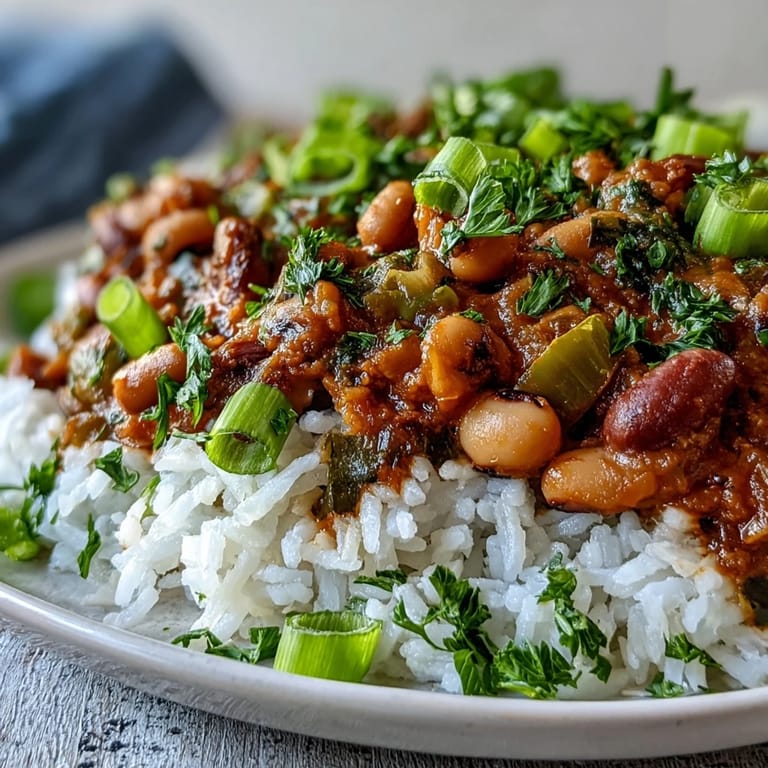
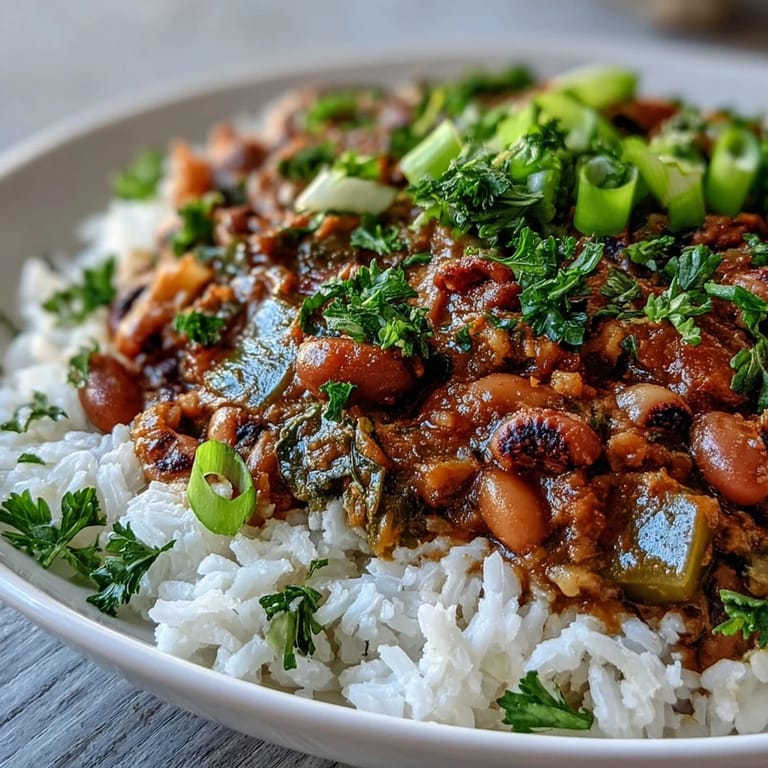
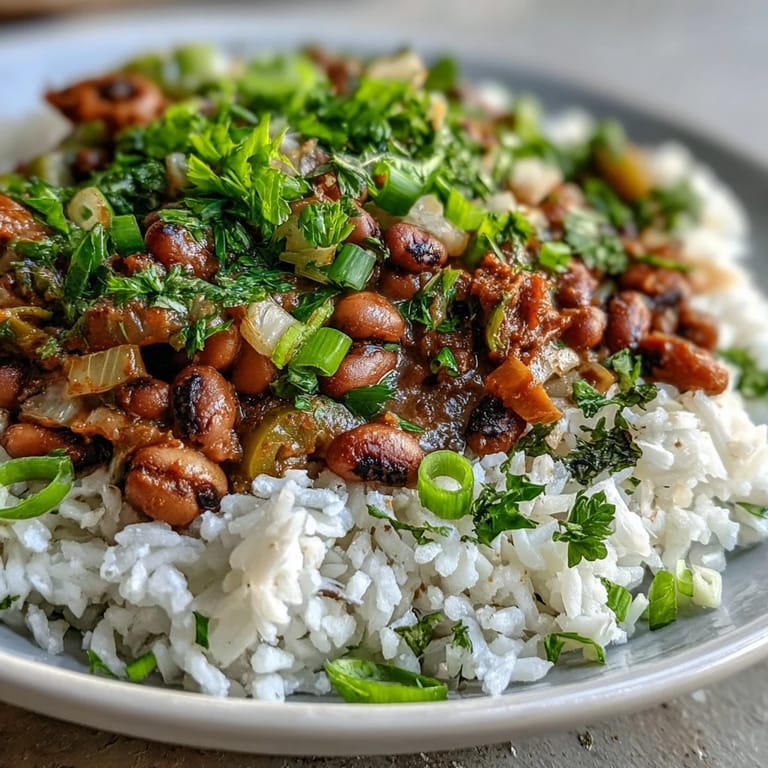
- Spoon the Hoppin John over your warm rice and top with fresh parsley or cilantro, sliced green onions, and a squeeze of lemon if you like.
 Save
Save There's something about serving this dish that feels like passing on a tradition, even though I'm doing it my own way. My neighbor came over for lunch, took one bite, and said it tasted like someone's grandmother made it, and that might be the best compliment food can get.
The Soul of Vegetarian Soul Food
Southern food gets called soul food because it's built on love and intention, not because of what meat you throw in. Once I understood that, this vegetarian version started making perfect sense—the long simmer, the layered spices, the way it gets better as it sits—that's all soul, and it has nothing to do with whether there's ham in the pot. The smoked paprika and soy sauce do their job so well that you stop thinking about what's missing and just start enjoying what's there.
Timing and Make-Ahead Wisdom
This entire dish comes together in under an hour, which makes it perfect for a weeknight dinner that feels special without requiring hours of planning. I've also made it on Sunday and eaten it all week—it actually tastes better the next day because the flavors have more time to get cozy with each other, and you can simply reheat it gently in a pot with a splash of water if it seems dry.
Serving Suggestions and Flavor Combos
Hoppin John is flexible enough to fit into your meal however you want, whether that's a main course with a green salad or the centerpiece of a full Southern spread. I like pairing it with something acidic or spicy on the side to balance the richness—hot sauce, pickled vegetables, or even a simple slaw work beautifully. The lemon wedges matter more than you'd think; a squeeze at the end brightens everything up and makes each bite feel fresher than the last.
- Serve alongside collard greens or another hearty green for the full experience.
- A bottle of hot sauce at the table lets everyone customize their heat level.
- Leftovers make an excellent filling for a wrap or grain bowl the next day.
 Save
Save This dish proved to me that you don't have to follow tradition exactly to honor it. I'm grateful every time I make it, and I think you will be too.
Recipe FAQ
- → What makes this dish traditionally Southern?
Hoppin' John originated in the Southern United States and is traditionally made with black-eyed peas, rice, and pork. This version maintains the authentic flavor profile through smoked paprika and aromatic vegetables while keeping it plant-based.
- → Can I use dried black-eyed peas instead of canned?
Yes, you can use dried peas. Soak them overnight, then cook for about 45-60 minutes until tender before adding them to the vegetables and spices. Adjust the broth amount as needed since dried peas absorb more liquid.
- → How do I store and reheat leftovers?
Store in an airtight container in the refrigerator for up to 5 days. Reheat gently on the stovetop with a splash of water or broth to restore moisture. The flavors often develop and improve after a day or two.
- → What can I serve alongside this dish?
Collard greens, cornbread, or a simple green salad pair beautifully. For extra heat, offer hot sauce on the side. Roasted sweet potatoes or okra also complement the Southern flavors well.
- → Is this dish freezer-friendly?
Absolutely. Cool completely before transferring to freezer-safe containers. It will keep for up to 3 months. Thaw overnight in the refrigerator and reheat on the stovetop, adding a little liquid if needed.
- → How can I add more protein?
Consider serving with a side of roasted tofu, adding a dollop of Greek-style yogurt, or incorporating chopped walnuts or pecans for crunch. The black-eyed peas already provide 13g of protein per serving.