 Save
Save The first time I made bulgogi, my kitchen smelled like caramelized beef and toasted sesame for hours afterward, and I couldn't stop thinking about how such simple ingredients created something so craveable. I'd watched a friend in Seoul whip one together between work meetings, and I was convinced I'd need special equipment or restaurant secrets to replicate it. Turns out, the magic lives in that marinade—the pear breaking down the beef's fibers while the brown sugar and soy sauce build this sweet-savory glaze that makes you question why you ever order takeout. Now it's become my answer to "what should we have for dinner tonight?" because it's ready in 30 minutes flat.
I made this for my sister's unexpected dinner party once, having only discovered the beef sitting in my freezer an hour before guests arrived. She watched from the kitchen counter, convinced I was pulling off some culinary miracle, but really I was just letting a bowl do most of the work while I prepped vegetables and reheated rice. The moment everyone took their first bite and went quiet—that's when I knew this recipe had something special.
Ingredients
- Beef sirloin or ribeye, thinly sliced: The thin cut is everything here; it cooks in minutes and absorbs the marinade like a dream, so ask your butcher to slice it or partially freeze your beef and use a sharp knife to get those paper-thin pieces.
- Soy sauce: This is your umami backbone, and the saltiness works with the sugar to build that caramelized surface everyone loves.
- Brown sugar: Sweet without being cloying, it caramelizes against the beef and balances the salty-savory elements beautifully.
- Sesame oil: Use the toasted kind for that nutty depth; it's worth seeking out because the difference is honestly night-and-day.
- Rice vinegar: Adds a bright note that cuts through the richness and keeps the whole dish from feeling heavy.
- Garlic and ginger: Both minced and fresh, they're the aromatic foundation that makes this taste authentic rather than just sweet beef.
- Grated pear: This is the secret weapon—the natural enzymes tenderize the beef while adding subtle sweetness that regular marinades don't have.
- Gochujang (optional): The Korean chili paste adds a fermented depth and gentle heat; leave it out if you prefer mild, but don't skip it if you like a little kick.
- Scallions and sesame seeds: These aren't afterthoughts; they add freshness and toasted nuttiness that tie everything together.
- Jasmine or short-grain rice: Short-grain rice holds the sauce better than long-grain, and jasmine adds a subtle floral note that pairs perfectly.
- Fresh vegetables (carrot, cucumber, bean sprouts): These stay crisp and bright, providing contrast to the warm, glossy beef.
Tired of Takeout? 🥡
Get 10 meals you can make faster than delivery arrives. Seriously.
One email. No spam. Unsubscribe anytime.
Instructions
- Build the Marinade:
- Whisk together soy sauce, brown sugar, sesame oil, rice vinegar, minced garlic, grated ginger, and grated pear in a large bowl. You're creating a glossy, aromatic paste that smells incredible—that's how you know you're on the right track.
- Marinate the Beef:
- Toss your thinly sliced beef into the marinade, making sure every piece gets coated, then cover and let it sit for at least 15 minutes. If you have time, let it go for an hour—the pear enzymes keep working, and the flavors meld even deeper.
- High-Heat Sear:
- Heat your skillet or wok until it's smoking hot, then add the beef in batches so you don't crowd the pan. You want a quick, aggressive sear that caramelizes the edges in about 2 to 3 minutes; the beef will be tender and slightly charred, which is exactly what you're after.
- Assemble the Bowl:
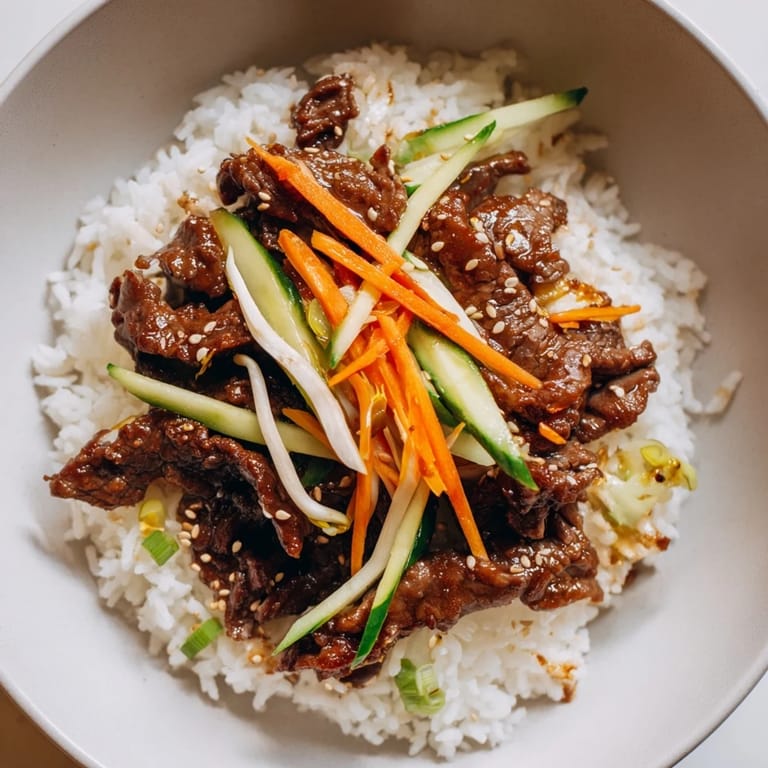
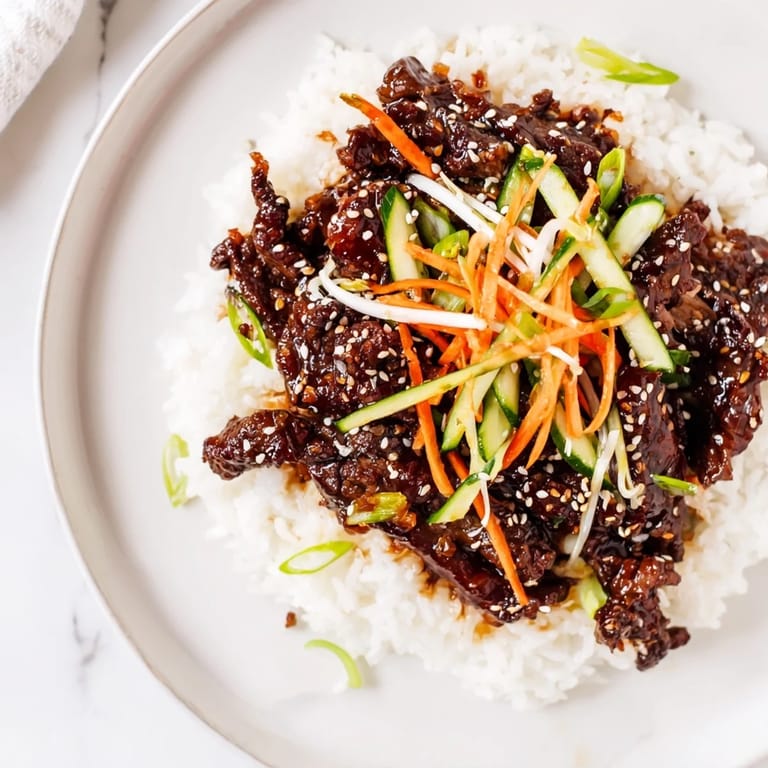
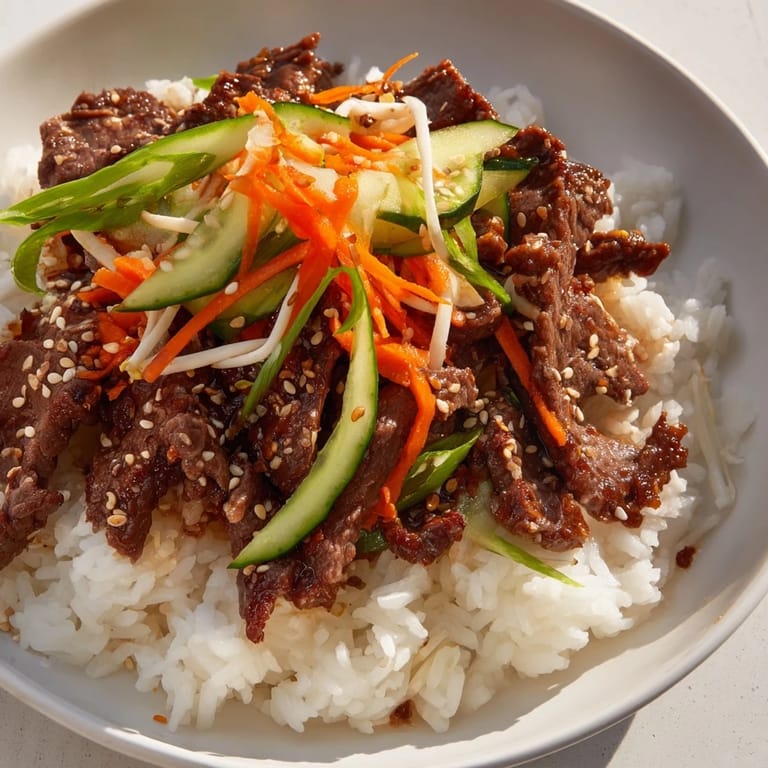
- Divide cooked rice among bowls, then arrange the warm beef and all your crisp vegetables on top in colorful stripes. The warm beef will slightly soften the vegetables while they stay bright and crunchy—textural perfection.
- Final Touch:
- Scatter extra scallions and sesame seeds over everything, and serve immediately while the beef is still warm and the vegetables are still crisp.
 Save
Save There's a moment when you finish plating everything—the golden beef glistening against the white rice, vegetables arranged in neat little piles—and you realize you've made something that looks like it came from a restaurant, but tastes like home because you made it. That feeling never gets old.
Making This Recipe Your Own
The beauty of a bulgogi bowl is that it's endlessly customizable without losing its soul. I've added a soft-fried egg on top for richness on mornings when I was cooking dinner for breakfast, swapped regular rice for cauliflower rice to keep things lighter, and once threw in some quick-pickled radishes because I had them sitting around. The core—the marinade and the beef—stays consistent, but everything else can shift based on what you're craving or what's in your kitchen.
Timing and Make-Ahead Strategy
The entire dish comes together in 30 minutes, but you can prep elements ahead if you're planning dinner during a busy week. I often marinate the beef in the morning or even overnight—it only gets better—then just cook it and prep fresh vegetables when I get home. The rice cooker sits in the background doing its thing while you handle everything else, which means you can literally be eating in under 15 minutes once you're ready to cook.
The Ingredient Swaps That Actually Work
While the core marinade is what makes this special, I've found that certain substitutions don't compromise the dish at all. You can use tamari instead of soy sauce if you need gluten-free, or swap the pear for grated apple in a pinch—though the texture difference is subtle, the flavor shift is barely noticeable. The vegetables are your playground; whatever looks good at the market, whatever you have on hand, will work beautifully alongside that glossy beef.
- Ribeye is more forgiving than sirloin if you accidentally cook it a bit longer, so choose based on what's available and your comfort level.
- Bean sprouts can be raw if you prefer them crunchier, or blanched if you like them slightly softer and warmer.
- Kimchi is optional but adds a fermented bite that ties everything together—honestly, I rarely skip it anymore.
 Save
Save This bowl became my go-to when I needed to feed people quickly without feeling like I was taking shortcuts. It's proof that simple, quality ingredients and a little technique go further than complicated recipes ever will.
Recipe FAQ
- → What cut of beef works best for this dish?
Thinly sliced ribeye or sirloin offers tenderness and cooks quickly, ideal for stir-frying.
- → Can I make this dish spicy?
Yes, adding gochujang, a Korean chili paste, introduces a mild to moderate heat level.
- → How long should the beef marinate?
At least 15 minutes to absorb flavors, though marinating up to an hour deepens taste.
- → What alternatives are there to serve instead of rice?
Cauliflower rice can be used for a low-carb option without compromising texture.
- → Which vegetables complement the beef bowl?
Julienned carrots, cucumber sticks, bean sprouts, and kimchi add crunch and freshness.
- → Are there any allergens in this dish?
Contains soy and sesame; gluten may be present depending on soy sauce and gochujang used.