 Save
Save There's something about the smell of sesame oil hitting a hot pan that makes me nostalgic for summers at my aunt's house, where she'd whip up these cold noodle salads whenever the temperature climbed past bearable. She never measured anything—just threw in what felt right, and somehow it always tasted balanced, bright, alive. One afternoon, I watched her hands move through the motions so naturally that I realized I'd been overthinking the whole thing. It turns out the magic isn't in precision; it's in letting yourself taste and adjust as you go.
I made this for a picnic last summer where someone forgot to bring the main dish, and this salad essentially saved the day. People kept coming back for seconds, asking what was in the dressing, and I felt this quiet satisfaction watching someone discover that cold noodles could be this interesting. That's when I knew this wasn't just a recipe—it was a conversation starter.
Ingredients
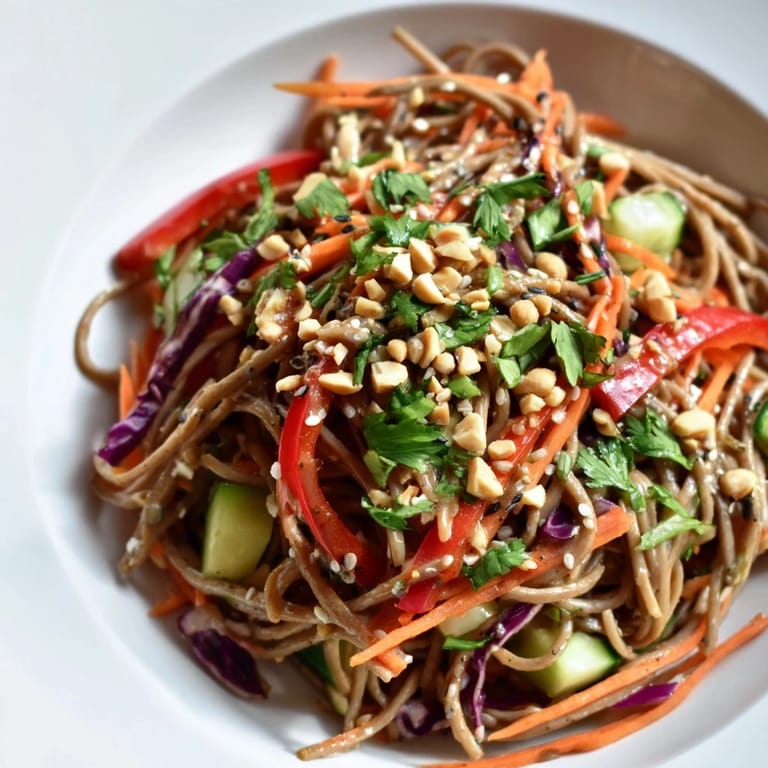
- Dried soba or rice noodles (250g): Soba brings an earthy depth, but rice noodles work just as well if you're avoiding wheat—the real key is rinsing them thoroughly under cold water so they don't clump together.
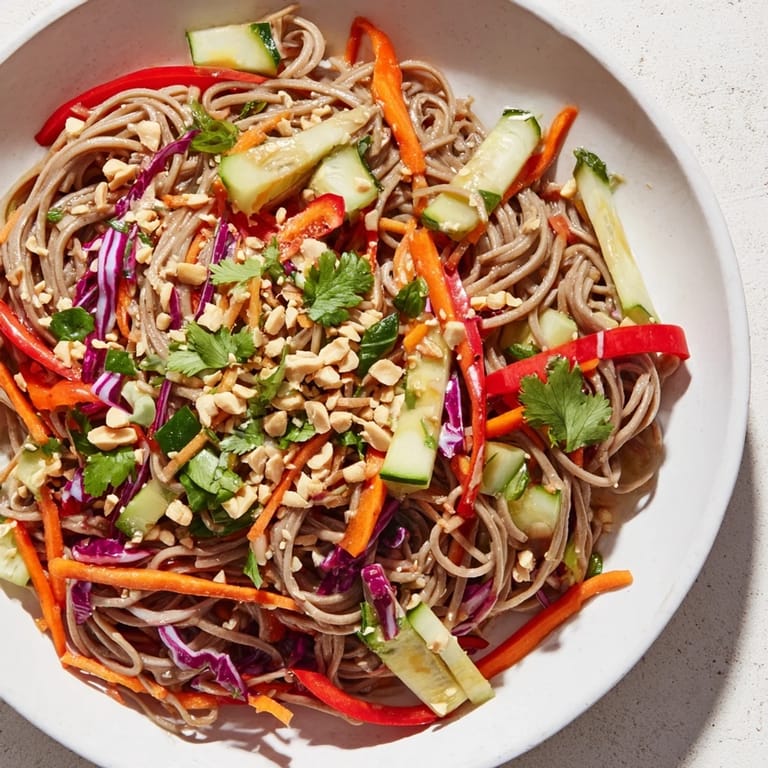
- Carrot, julienned: The sweetness balances the savory dressing, and cutting them thin enough to bend slightly makes them easier to twirl onto your fork.
- Red bell pepper, thinly sliced: Choose one that feels heavy and firm; those tend to have thicker walls and stay crisp longer in the dressing.
- Cucumber, seeded and julienned: Seeding prevents the salad from getting watery as it sits, which I learned the hard way after a soggy picnic incident.
- Spring onions, finely sliced: They add a gentle onion bite without overpowering; I usually use both the white and green parts for flavor layers.
- Red cabbage, thinly shredded: Its natural sweetness and crunch make it work harder than you'd expect, and it holds its texture even after a few hours of sitting.
- Fresh cilantro, chopped: This is optional if you're in the camp that thinks cilantro tastes like soap, but it really does brighten everything.
- Soy sauce (3 tbsp): Use a good-quality one if possible—cheap soy sauce tastes thin and salty, while better versions have real complexity.
- Rice vinegar (2 tbsp): The gentle acidity keeps everything tasting fresh without that aggressive bite you'd get from regular vinegar.
- Toasted sesame oil (2 tbsp): This is non-negotiable and non-substitutable; regular sesame oil tastes almost nothing like it, and toasted sesame oil is where the magic lives.
- Honey or maple syrup (1 tbsp): Just enough sweetness to round out the sharp edges, but not so much that it masks the other flavors.
- Fresh ginger, finely grated (1 tbsp): Use a microplane if you have one; it distributes the ginger evenly instead of creating little pockets of intense heat.
- Garlic clove, minced: One is usually enough unless you're a true garlic devotee, in which case add half more and don't tell anyone I said so.
- Sriracha or chili sauce (1 tsp, optional): I add this when the mood strikes, especially if I'm cooking for people who like a little warmth without commitment.
- Toasted sesame seeds (1 tbsp in dressing, plus more for garnish): Toast them yourself if you have five minutes—the difference between raw and toasted sesame seeds is the difference between meh and memorable.
- Roasted peanuts or cashews, roughly chopped: The crunch here is essential; without it, the whole thing feels a bit soft and uniform, and you lose that textural interest.
Tired of Takeout? 🥡
Get 10 meals you can make faster than delivery arrives. Seriously.
One email. No spam. Unsubscribe anytime.
Instructions
- Cook your noodles until just tender:
- Bring a large pot of water to a rolling boil and add the noodles, stirring occasionally so they don't stick to the bottom. Most dried noodles take 8–10 minutes, but check the package and taste one a minute before the suggested time—overcooked noodles will turn mushy when dressed. Drain them immediately and run cold water over them until they're completely cool to the touch, then toss with a tiny drizzle of sesame oil so they don't clump together while you prep everything else.
- Prep your vegetables:
- This is where mise en place becomes your best friend—have everything cut and sitting in separate little piles before you touch the dressing. The psychology of cooking becomes so much easier when you're not scrambling to slice a pepper while something else is waiting.
- Build your dressing in a small bowl:
- Whisk the soy sauce, rice vinegar, sesame oil, honey, ginger, garlic, and Sriracha together until the honey dissolves completely and everything looks glossy and unified. Taste it on a noodle before committing—this is your moment to adjust the balance, adding more vinegar if it feels too salty or a touch more honey if the ginger is too aggressive.
- Combine everything in a large bowl:
- Add the cooled noodles, all your prepped vegetables, cilantro, and the sesame seeds from your dressing ingredients. Pour the dressing over the top and toss gently but thoroughly, using salad tongs or two forks to make sure every noodle gets coated without breaking them apart.
- Serve or chill:
- You can eat this immediately if you're hungry, but I promise it tastes better after an hour in the fridge when all the flavors have gotten to know each other. Divide into bowls and top with those roasted nuts and extra sesame seeds right before serving.
 Save
Save There was a moment at that picnic when someone closed their eyes after the first bite, like they'd just tasted something that transported them somewhere. I realized that food doesn't have to be complicated to mean something; it just has to be made with intention and a genuine desire to feed people well.
The Sesame Oil Question
I used to think all sesame oil was created equal until I tasted the difference between the pale, raw kind and the deep amber, toasted variety. Toasted sesame oil has this warm, almost caramel-like depth that rounds out the sharp edges of vinegar and ginger, while raw sesame oil tastes flattand grassy by comparison. It's one of those ingredients where quality matters enough to justify spending a bit more—a good bottle lasts for months because you only use it in small amounts, and it transforms everything it touches. Keep it in a cool, dark place or even the fridge, because the volatile oils in toasted sesame oil can turn rancid more quickly than other cooking oils.
Temperature and Timing
Letting this salad sit in the fridge before serving feels like magic—the noodles absorb the dressing slowly, the vegetables soften just enough to become tender rather than crispy, and all the flavors blur together into something more cohesive than the sum of their parts. I usually make it a couple of hours before I want to eat it, which gives me time to chill the serving bowls too, so the whole experience feels cool and refreshing rather than room-temperature and a bit sad. If you're serving it immediately, at least chill your bowls in the freezer for five minutes while you're tossing everything together.
Ways to Make It Your Own
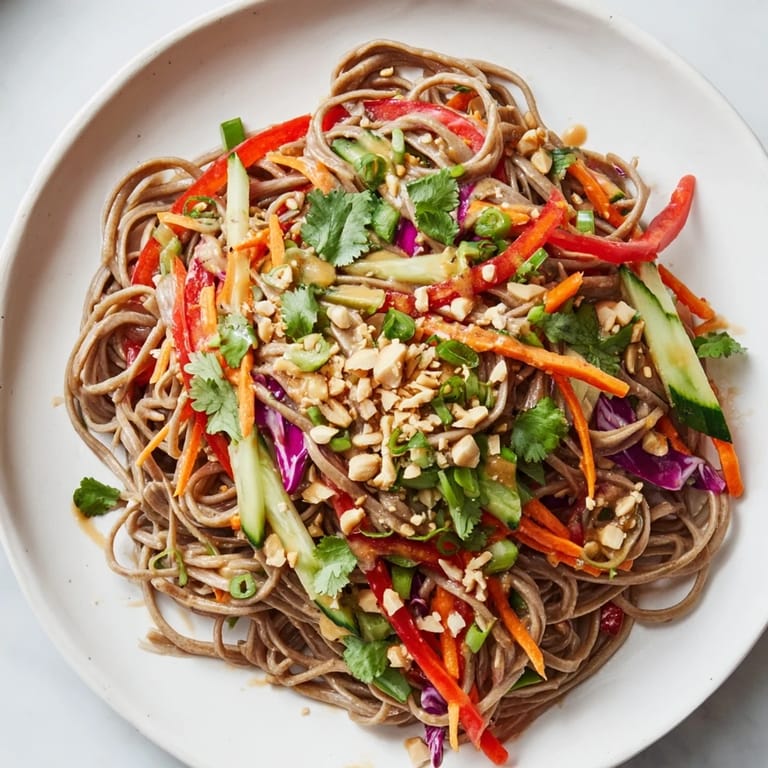
This recipe is more of a template than a dictation, which is why I love it so much. Swap the vegetables for whatever is crisp and calling to you from the market—snap peas, shredded radishes, thinly sliced mushrooms, or shredded kohlrabi all work beautifully. You can add protein by tossing in chilled shrimp, sliced grilled chicken, or crumbled tofu, which transforms it from a side dish into a complete meal. If nuts aren't your thing or you have allergies, swap them for sunflower seeds, pumpkin seeds, or even crispy chickpeas for that textural contrast your mouth is craving.
- A poached egg or soft-boiled egg sliced on top adds richness and makes it feel more substantial without feeling heavy.
- Swap half the regular vinegar for unseasoned rice vinegar mixed with a tiny splash of mirin if you want the dressing to lean more sweet than sharp.
- Stir in a spoonful of peanut or tahini for a creamier, more luxurious dressing that coats everything more evenly.
 Save
Save This is the kind of dish that feeds both your body and your mood on a sweltering afternoon, asking for nothing more than your attention and a willingness to taste as you go. Make it once, make it ten times, and it'll never be quite the same—and that's exactly how it should be.
Recipe FAQ
- → What type of noodles work best for this salad?
Soba noodles and rice noodles both work well. Choose gluten-free rice noodles if needed.
- → Can I prepare the dressing in advance?
Yes, the sesame-ginger dressing can be made ahead and stored in the refrigerator for up to 3 days.
- → How long should the noodles be chilled?
After cooking, rinse noodles under cold water and chill for at least 30 minutes for best texture and flavor.
- → Are there protein options to add to this dish?
Cooked shrimp, grilled chicken, or tofu can be added to boost protein and make the dish more filling.
- → What are good substitutions for nuts with allergies?
For nut allergies, try substituting roasted crunchy seeds like pumpkin or sunflower seeds to maintain texture.
- → Is this salad suitable for vegetarians?
Yes, this dish is vegetarian-friendly and can be kept vegan by using maple syrup instead of honey in the dressing.