 Save
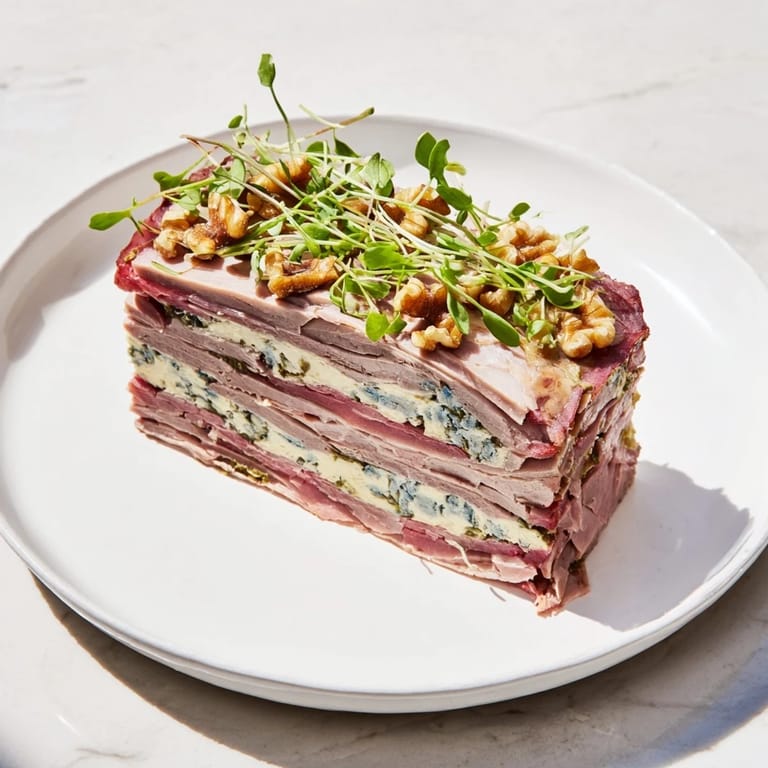
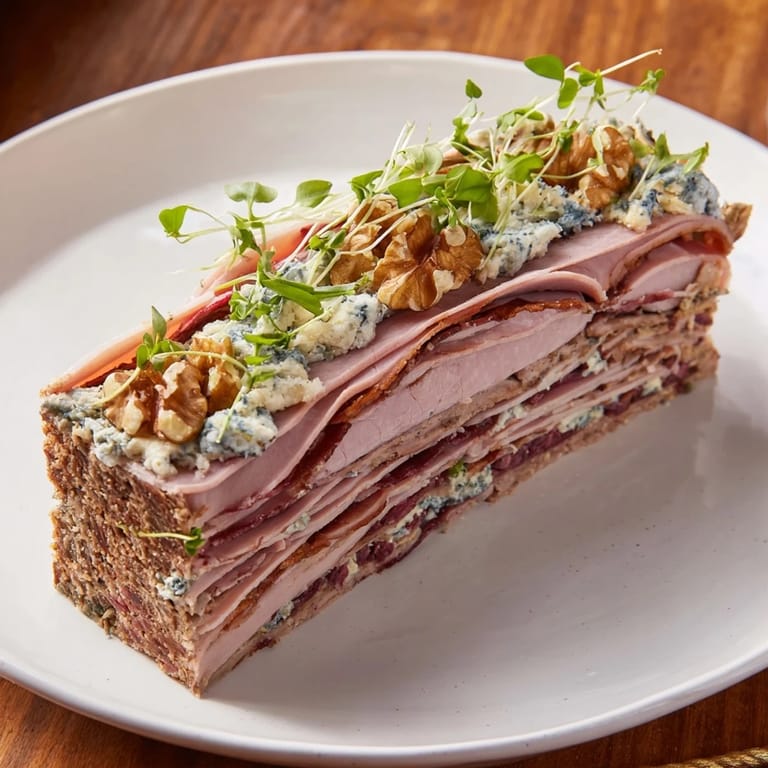
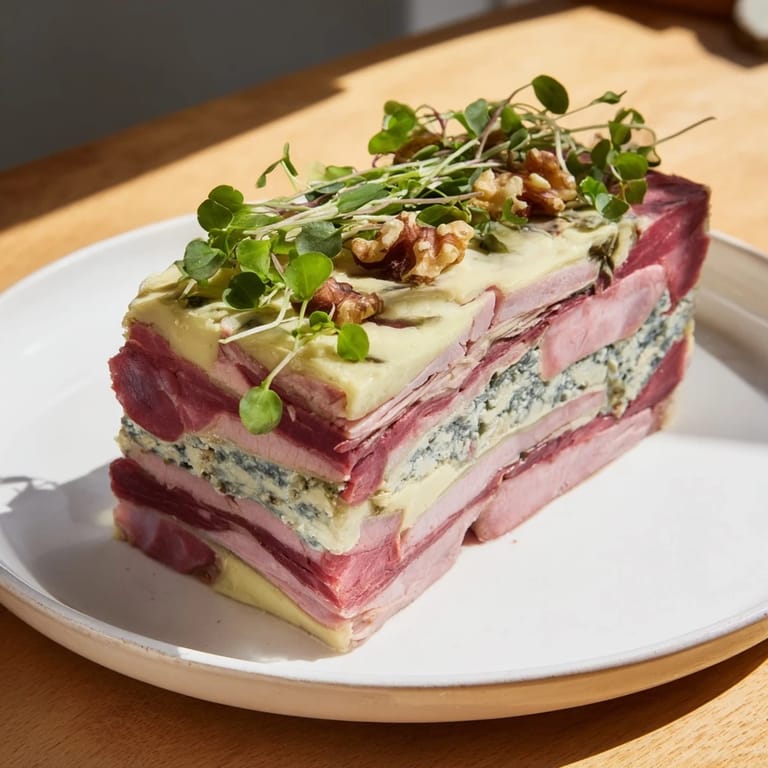
Save I stumbled onto the idea for this terrine during a road trip out West, standing at the South Rim at sunset and watching the light paint those impossible layers of rust and gold and shadow. There was something about the geological drama of it all that made me think: what if I could capture that visual intensity on a plate? The real breakthrough came months later in my kitchen, when I realized that a vibrant blue cheese mousse could flow through the center like a river carving through stone, creating something both striking and genuinely delicious.
I made this for a dinner party on a cold November evening, and I'll never forget how quiet the table went when I brought out the first slices. Someone asked if it was store-bought—and then everyone laughed when I explained I'd built it myself. That moment of their faces discovering the blue cheese river running through the meat layers made every minute of preparation worth it.
Ingredients
- Beef sirloin, thinly sliced (300g): This gives you a deep color and rich, beefy foundation that anchors the whole composition; ask your butcher to slice it thin so it layers gracefully without gaps.
- Turkey breast, thinly sliced (250g): The pale meat creates beautiful visual contrast and keeps the overall richness balanced since you're working with so many proteins.
- Smoked ham, thinly sliced (200g): This adds a subtle smokiness that prevents the terrine from feeling one-note; don't skip it even if you think it's redundant.
- Pork loin, thinly sliced (200g): The gentle flavor and delicate texture make it easy to work with and it photographs beautifully when sliced.
- Blue cheese, crumbled (150g): This is your river, so choose one you actually enjoy eating—pungent and bold works best here.
- Cream cheese, softened (100g): It acts as a binder for the blue cheese mixture, making it spreadable and luxurious without being too thick.
- Heavy cream (30ml for mousse): Whip this gently with the cheeses to create an almost mousse-like texture that feels silky between the meat layers.
- Fresh chives, finely chopped (1 tbsp): These add a whisper of onion flavor that brightens the richness without overwhelming it.
- Fresh parsley, finely chopped (1 tbsp): A small amount keeps things fresh and prevents the whole thing from feeling too heavy.
- Eggs (4 large), milk (120ml), heavy cream (60ml), salt and pepper: This binding layer is your glue—don't skip it or the layers will slip apart when you unmold.
- Microgreens, edible flowers, and toasted walnut pieces (optional): Save these for the top; they add texture and remind people this is intentional theater, not accident.
Tired of Takeout? 🥡
Get 10 meals you can make faster than delivery arrives. Seriously.
One email. No spam. Unsubscribe anytime.
Instructions
- Set up your stage:
- Preheat your oven to 160°C and line a loaf pan with plastic wrap, leaving enough overhang to tuck over the top later. This plastic wrap is your safety net—it keeps the whole thing from sticking and lets you unmold it cleanly.
- Make your binding and river:
- Whisk eggs with milk, cream, salt, and pepper until smooth, then set aside. In another bowl, blend the blue cheese, cream cheese, heavy cream, chives, parsley, and black pepper until it's thick but spreadable—this is your river, so taste it and adjust the seasoning if needed.
- Build your canyon walls:
- Start layering beef along one side of the pan, overlapping the slices slightly so they create a foundation. Add turkey, then ham, then pork, letting each layer slope slightly downward to mimic the angled cliffs of the canyon itself.
- Bind as you go:
- After every 2 or 3 meat layers, brush lightly with that egg mixture—just enough to coat, not soak. This glue is what keeps everything from falling apart when you unmold.
- Carve your river:
- About halfway up the pan, spoon that blue cheese mixture in a thick stripe down the center, then continue layering meats around it and over it, keeping that cliff-like diagonal effect going.
- Seal and bake:
- Fold the plastic wrap over the top, then cover the whole thing tightly with foil. Set the loaf pan inside a larger roasting dish and pour hot water halfway up its sides—this water bath keeps the whole terrine tender and even.
- Let time do its work:
- Bake for 1 hour 15 minutes, then let it cool completely before refrigerating for at least 4 hours, overnight if you can. This rest time is crucial—it lets everything set so the layers stay distinct when you slice.
- The big reveal:
- Unmold onto a serving platter and slice thickly to show off those gorgeous layers and that blue cheese river. Garnish with microgreens, edible flowers, and toasted walnuts if you're feeling fancy.
 Save
Save What struck me most wasn't just how good it tasted, but how quiet and reverent people became when they saw that blue cheese river bisecting all those meat layers. Food that makes people pause and pay attention feels like magic.
Sourcing Your Meats Matters
I learned this the hard way when I used supermarket deli meat once and the whole thing tasted flat and salty. Now I ask the butcher counter to slice whatever I'm buying specifically for this dish, not pre-packaged. The difference is shocking—fresher meats have a delicate flavor that actually lets the blue cheese shine instead of fighting for attention. If you can find a good butcher who'll slice to order, that one change elevates this from impressive to genuinely memorable.
Flavor Variations and Swaps
The beauty of this structure is that it's flexible without being fussy. I've subbed in smoked duck for some of the ham when I felt like a deeper, gamier note, and it worked beautifully. The blue cheese river is equally negotiable—a herbed goat cheese makes it lighter and more delicate if you have guests who find blue cheese aggressive, and honestly, both versions are worth trying. The architectural concept is what matters; the specifics can bend to what you have and what you love.
- Try swapping the blue cheese for a creamy chèvre mixed with fresh herbs if you want something more subtle.
- Prosciutto can replace any of the milder meats for a boost of concentrated flavor.
- Adding a thin layer of pâté between meat layers creates extra depth if you're feeling adventurous.
Serving and Pairing
I used to serve this with nothing but a knife and a plate, which was a mistake—it needs something to cut through the richness. Crispy toasted brioche or a thick slice of crusty bread is essential, and a sharp, peppery salad with a bright vinaigrette on the side feels like an absolute necessity in hindsight. For wine, I lean toward something with acidity and body: a light red like a Pinot Noir keeps things elegant, but a crisp white like a Sauvignon Blanc works just as well and feels less heavy after a long meal.
 Save
Save This recipe is proof that the most memorable dishes don't have to be complicated—they just have to be thoughtful and look like you actually tried. Every time I make it, it feels like I'm building something, not just cooking.
Recipe FAQ
- → How do I achieve the layered canyon effect?
Arrange thin slices of beef, turkey, smoked ham, and pork in overlapping layers shaped to mimic canyon slopes, brushing with egg mixture between layers to bind.
- → What is the purpose of the blue cheese mousse?
The blue cheese mousse creates a colorful and flavorful river in the center, balancing the rich meat layers with creamy, herbaceous notes.
- → Why use a bain-marie for baking?
Baking the terrine in a water bath ensures even heat distribution and prevents drying, resulting in a tender, moist texture.
- → Can the blue cheese be substituted?
Yes, herbed goat cheese is a good alternative for a milder flavor, maintaining the creamy texture of the mousse.
- → How long should the terrine chill before serving?
Chill the terrine for at least four hours, preferably overnight, to fully set and develop its flavors for clean slicing.
- → What garnishes complement this dish?
Microgreens, edible flowers, and toasted walnut pieces provide fresh, crunchy accents that enhance both flavor and presentation.