 Save
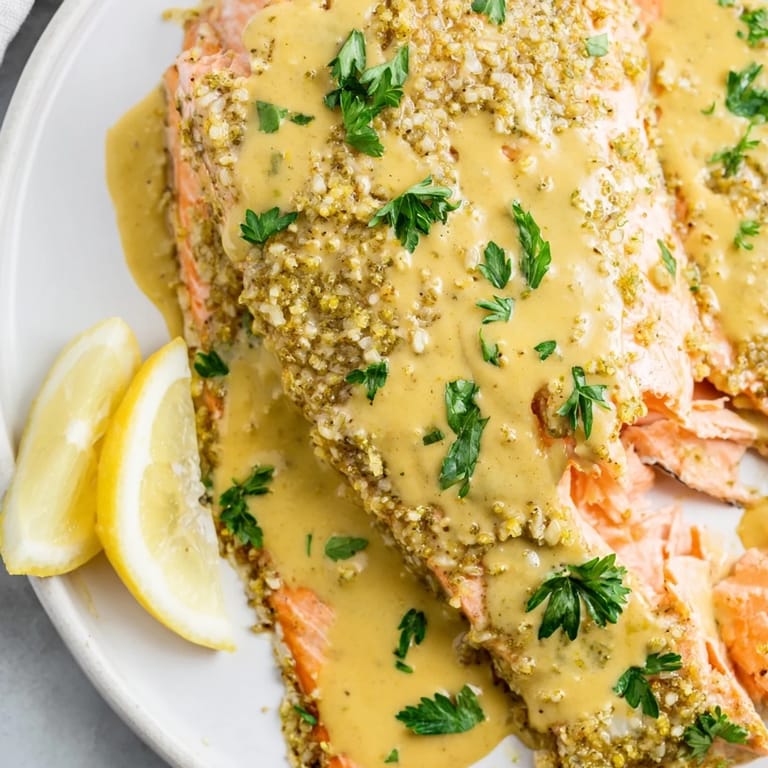
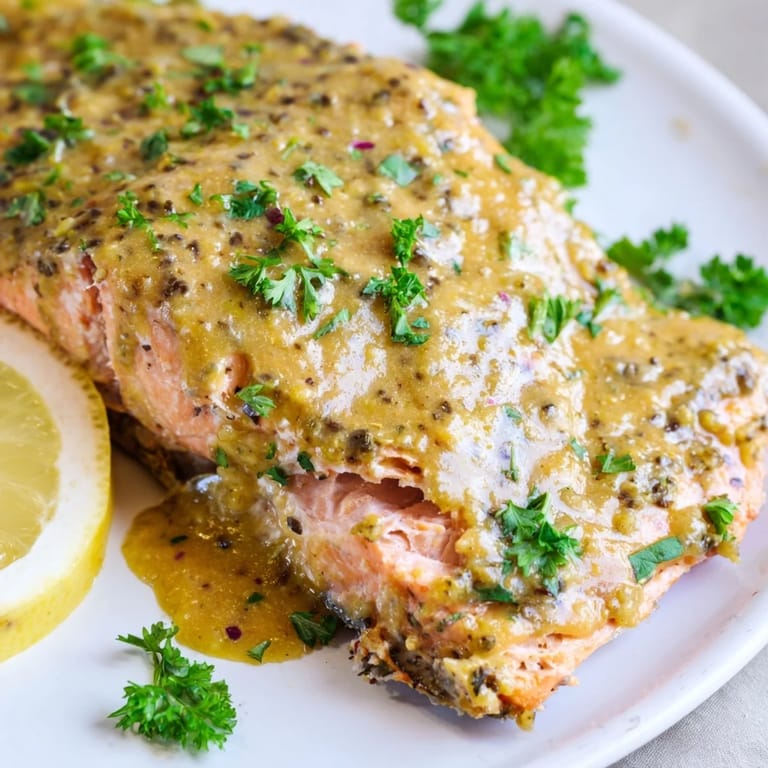
Save There's something about the way honey and mustard dance together that stops you mid-bite. My mom made this salmon one Tuesday night when I was home from college, and I remember standing in the kitchen watching the glaze turn golden under the oven light, thinking this couldn't possibly be a 30-minute dinner. She plated it with lemon wedges and some parsley, and suddenly everything felt less rushed, less ordinary.
I made this for someone I was trying to impress once, and I was so worried about overcooking the salmon that I checked it three times before the timer went off. When I pulled it out and it was perfect, flaky and tender, I realized the real trick wasn't technique at all—it was just trusting that something so simple could work.
Ingredients
- Salmon fillets, 6 oz each: Skin-on holds better in the pan and adds flavor, but skinless works just fine if that's what you prefer or have on hand.
- Dijon mustard: The sharp, slightly grainy version keeps things interesting rather than flat.
- Whole grain mustard: This is the texture player—it keeps the sauce from turning into a thin glaze.
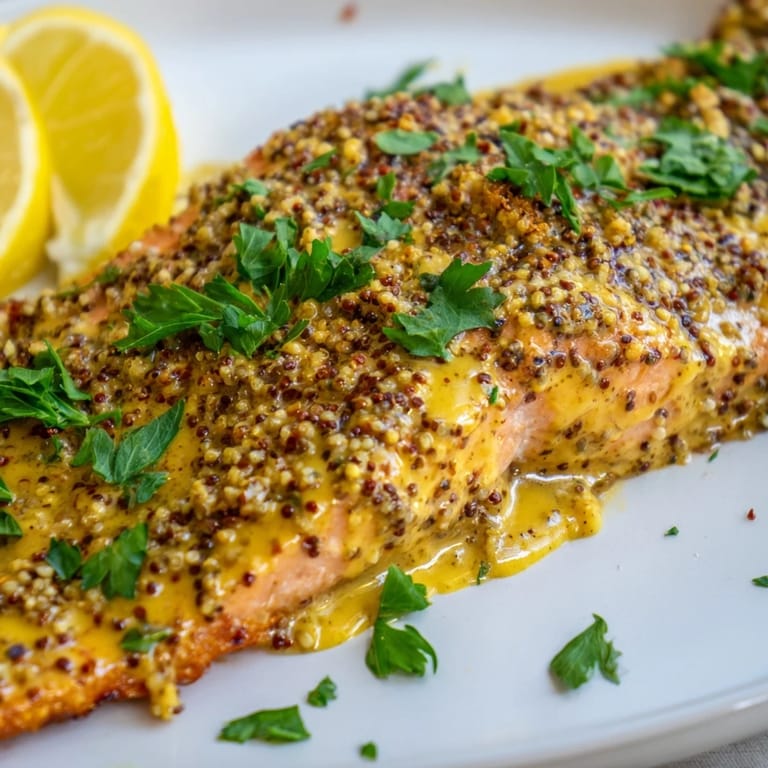
- Honey: It balances the mustard's bite and catches the heat of the oven to create that caramelized edge everyone notices.
- Olive oil: Just enough to bind everything and prevent the sauce from drying out on the fish.
- Lemon juice: A small amount keeps the sweetness honest and brightens the whole dish.
- Garlic, minced: Two cloves disappear into the sauce but remind you this is savory, not just sweet.
- Salt and black pepper: Don't skip these—they make everything taste like itself.
Tired of Takeout? 🥡
Get 10 meals you can make faster than delivery arrives. Seriously.
One email. No spam. Unsubscribe anytime.
Instructions
- Get everything ready:
- Preheat your oven to 400°F and line a baking sheet with parchment paper if you have it—it makes cleanup effortless. Dry your salmon fillets with paper towels so the sauce grabs onto them properly.
- Make the sauce:
- Whisk the Dijon, whole grain mustard, honey, olive oil, lemon juice, and minced garlic in a small bowl until it looks like a glossy, cohesive glaze. This takes about a minute if you're paying attention.
- Coat the salmon:
- Arrange the fillets on your prepared sheet and spoon the sauce generously over each one, spreading it so it covers the top. Don't be timid here—the sauce is doing most of the work.
- Bake until it's ready:
- Slide everything into the oven and bake for 15 to 20 minutes, until the salmon flakes easily with a fork and looks opaque in the thickest part. Start checking around 15 minutes so you don't accidentally cook it past tender.
- Finish and serve:
- Pull it out, scatter fresh parsley on top if you have it, and serve with lemon wedges so people can add brightness if they want. The whole thing comes together in the time it takes to set a table.
 Save
Save The best part of this recipe isn't actually the taste, though that matters. It's the moment when you realize you've made something that looks like you spent an afternoon on it, and nobody has to know you didn't.
What to Serve Alongside
Rice soaks up the extra glaze and turns it into something more, or quinoa if you want protein to feel stacked. Roasted vegetables—carrots, broccoli, Brussels sprouts—become sweeter when they cook near the salmon's honey and mustard. A simple green salad with vinaigrette cuts through the richness and leaves you feeling balanced instead of heavy.
How to Adapt It
If you have regular yellow mustard instead of Dijon, use it—the flavor will be gentler and more familiar, which isn't worse, just different. For a dairy-free meal, check your mustards and honey labels, but they're usually fine. You could swap the honey for maple syrup if that's what's in your cabinet, and it would taste like autumn.
Small Moments That Matter
The smell when you open the oven door at the 15-minute mark is worth remembering. Watch for that amber glaze on the edges of the salmon—that's where the flavor lives.
- Taste the sauce before spreading it if you want to know if you need more lemon or honey to balance your particular palate.
- Keep the salmon fillets roughly the same thickness so they finish at the same time without one drying out.
- Let the fish rest for a minute after coming out of the oven so everything stays tender and juicy.
 Save
Save This recipe taught me that the best meals aren't the complicated ones—they're the ones that feel relaxed and honest. Make this whenever you need to remember that.
Recipe FAQ
- → What type of salmon is best for this dish?
Fresh or frozen salmon fillets, skin-on or skinless, work well. Skin-on helps retain moisture during baking.
- → Can I adjust the sweetness of the honey mustard glaze?
Yes, increase or reduce honey to balance sweetness according to your taste preferences.
- → How do I know when the salmon is cooked perfectly?
Salmon is done when it flakes easily with a fork and is opaque throughout but still moist inside.
- → What are good side dishes to serve with the salmon?
Rice, quinoa, roasted vegetables, or a fresh salad complement the flavors and textures nicely.
- → Can I prepare the honey mustard sauce in advance?
Yes, the sauce can be mixed ahead and stored refrigerated for up to one day for convenience.