 Save
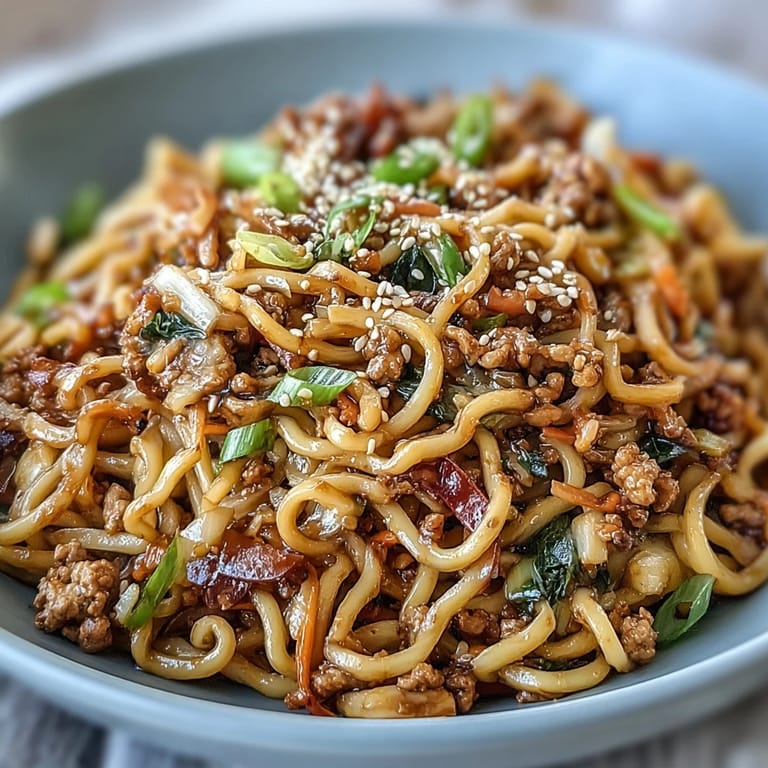
Save There's something about the sizzle of ground turkey hitting a hot wok that makes a Tuesday night feel like an occasion. I discovered this Korean-inspired noodle dish during a phase where I was desperately trying to make weeknight dinners feel less routine, and somehow the combination of gochujang's funky heat with the sweetness of brown sugar just clicked. The noodles bounce around in the pan, soaking up every bit of that glossy sauce, and suddenly you've got something that tastes like you spent hours perfecting it when really it took barely thirty minutes.
I made this for a friend who'd just moved into a tiny apartment with barely any kitchen equipment, and watching her face light up when she realized she could create restaurant-quality food in one wok on a single burner felt like a small victory. She's made it probably twenty times since, each version slightly different depending on what vegetables were on sale that week, which is exactly how comfort food should work.
Ingredients
- Fresh or dried wheat noodles (300g): Ramen or udon work beautifully here because they have enough body to hold the sauce without turning mushy—I've learned that rinsing them with cold water after cooking stops them from clumping together.
- Soy sauce (3 tbsp): This is your umami anchor, so don't skip it or use the cheap bottle gathering dust in the back of your cabinet.
- Gochujang (2 tbsp): Korean chili paste is the whole reason this dish tastes Korean and not just generally Asian, and honestly it's become one of my kitchen staples because it adds depth to so many things.
- Brown sugar (1 tbsp): This mellows out the heat from the gochujang and creates that glossy sauce texture that clings to every noodle.
- Rice vinegar (1 tbsp): A touch of acidity brightens everything and prevents the sauce from tasting flat or one-dimensional.
- Sesame oil (1 tbsp): Use the good stuff here—toasted sesame oil—because a little goes a long way and it's what makes this taste authentically Korean.
- Ground turkey (400g): Lean but still flavorful enough to stand up to the bold sauce, and it browns quickly without needing constant attention.
- Vegetable oil (2 tbsp): Neutral oil for cooking because you want the sesame oil's flavor to shine in the sauce, not get lost in the cooking.
- Garlic and ginger (3 cloves and 1 tbsp): Minced fine, these two create an aromatic base that smells incredible and tastes even better after just thirty seconds in a hot pan.
- Yellow onion (1 medium): Thinly sliced so it softens quickly without falling apart into mush.
- Carrot (1 medium): Julienned thin so it cooks through in the same time everything else does, adding sweetness and color.
- Red bell pepper (1 medium): Sliced thin for the same reason—even cooking means no crunchy surprises in certain bites.
- Shiitake mushrooms (100g): Sliced thin, they develop a slight char in the wok and add an earthy quality that makes the whole dish feel more complex.
- Spring onions (2, plus more for garnish): Fresh and bright, they're stirred in at the end so they stay slightly crisp and add that oniony bite that cuts through the richness.
- Toasted sesame seeds (1 tbsp): The finishing touch that adds nutty flavor and keeps the dish from feeling one-dimensional.
Tired of Takeout? 🥡
Get 10 meals you can make faster than delivery arrives. Seriously.
One email. No spam. Unsubscribe anytime.
Instructions
- Prepare your noodles first:
- Follow the package timing—fresh noodles usually need just two or three minutes, while dried ones might take five to seven. Drain them in a colander and rinse with cold water, which stops the cooking process and prevents them from clumping into an unusable mass.
- Make your sauce while everything else waits:
- In a small bowl, whisk soy sauce, gochujang, brown sugar, rice vinegar, and sesame oil together until the brown sugar dissolves and the gochujang loosens into a cohesive mixture. This is the moment where you can taste and adjust if it needs more heat or a touch more sweetness.
- Brown the turkey first:
- Heat one tablespoon of oil in a large wok or skillet over medium-high heat until it's almost shimmering. Add the ground turkey, breaking it up immediately with your spoon or spatula so it browns evenly rather than forming one giant clump, which takes about five minutes.
- Sauté your aromatic base:
- Add the remaining tablespoon of oil to the now-empty pan, then immediately add minced garlic and ginger. The kitchen will smell incredible within thirty seconds—that's exactly when you know the heat is right. Keep everything moving so the garlic doesn't burn.
- Stir-fry the vegetables:
- Add onion, carrot, bell pepper, and mushrooms all at once, keeping the heat high so they develop some color rather than steam. Three to four minutes of constant stirring will give you vegetables that are tender but still have some texture.
- Bring everything together:
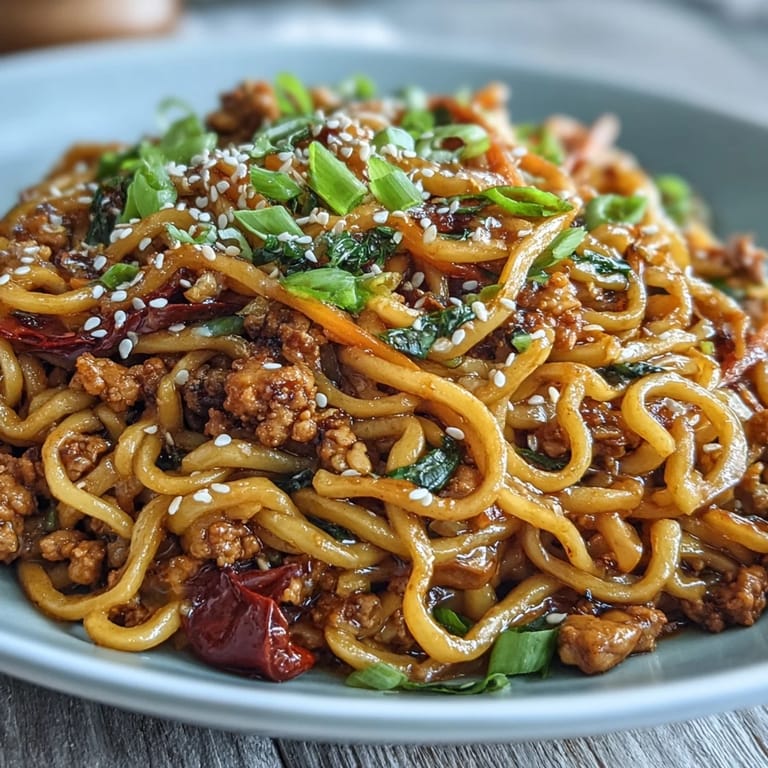
- Return the cooked turkey to the pan, add your noodles and the sauce, then toss everything over high heat for two to three minutes. You'll see the noodles transform from plain to glossy as the sauce coats everything.
- Finish with the spring onions:
- Stir them in right at the end so they stay fresh and slightly crisp rather than wilting into nothing, which is what makes them taste bright instead of invisible.
- Plate and garnish:
- Divide among bowls and scatter toasted sesame seeds and extra spring onions over top, which adds texture and makes each bite feel intentional rather than just grabbing whatever lands on your spoon first.
 Save
Save My partner once made this on a Sunday afternoon when we were in a weird mood about cooking—nothing in the fridge seemed exciting until she remembered this recipe and suddenly we were laughing about how four simple vegetables and some ground turkey could taste like something we'd never be able to recreate. By the time we sat down to eat, the kitchen smelled so good that the entire mood had shifted, and that's when I realized this dish does something beyond just being efficient weeknight food.
Why This Sauce Works So Well
The genius of this sauce is that it borrows from Korean flavors without being overly traditional—gochujang brings heat and complexity, but the brown sugar keeps it from being one-note spicy, and the rice vinegar stops everything from tasting heavy. I've learned that the sesame oil is what makes people taste this and immediately know it's something special, even if they can't quite name what makes it different from generic stir-fry sauce. The sauce-to-noodle ratio matters too, so don't drain any extra liquid from the pan thinking you're being careful—let it all coat the noodles because that's where the flavor lives.
Flexibility and Substitutions
Ground chicken and ground beef both work beautifully if turkey isn't your thing, though beef will be slightly richer and chicken will taste a bit lighter. The vegetables aren't sacred either—snap peas, zucchini, and spinach all work if that's what you have on hand, and honestly some of my best versions have come from just using whatever was about to go soft in the vegetable drawer. I once threw in some leftover cooked broccoli and it was unexpectedly perfect, which taught me that this dish is forgiving enough to adapt to whatever your kitchen situation is that particular evening.
Making It Your Own
The real magic is in understanding that this is a framework, not a rulebook written in stone. Once you've made it once and feel confident about the technique, you can play with heat levels, vegetable combinations, and even the protein without losing the soul of the dish. Some people serve it with a side of kimchi for extra funk, others add a fried egg on top for richness, and I once met someone who added a splash of soju to theirs because they wanted it to taste more authentically Korean. The point is that after you've made this a few times, it becomes the kind of dish you stop consulting recipes for because you've internalized it.
- For extra heat, add a sliced red chili or a quarter teaspoon of chili flakes to the sauce before cooking.
- A fried egg on top transforms this from dinner into something that feels borderline indulgent.
- If you make extra sauce and store it in the fridge, you'll find yourself pulling it out weeks later to dress everything from roasted vegetables to grilled chicken.
 Save
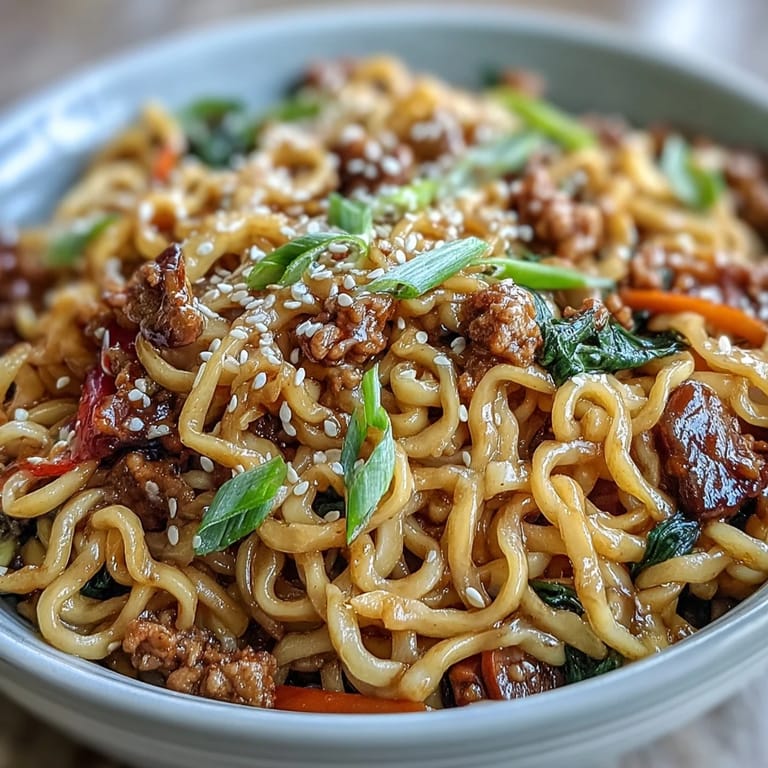
Save This dish proves that weeknight cooking doesn't have to feel like a compromise, and that sometimes the fastest meals are the ones that taste most worth celebrating. I hope it becomes one of those recipes you make so often that you stop checking the measurements and just know, the way you know how to make a perfect cup of coffee or your favorite sandwich.
Recipe FAQ
- → Can I use different types of noodles?
Yes, you can substitute udon or ramen with other wheat noodles like lo mein, soba, or even spaghetti. Fresh noodles work best for that bouncy texture, but dried noodles are perfectly fine when cooked according to package instructions.
- → Is gochujang very spicy?
Gochujang has a mild to medium heat level with a rich, fermented flavor. You can adjust the amount to your taste preference. For more heat, add sliced chili peppers or red pepper flakes.
- → Can I make this dish ahead of time?
The sauce can be prepared up to 3 days in advance and stored in the refrigerator. The dish is best enjoyed fresh, but leftovers will keep for 2-3 days in an airtight container. Reheat gently in a pan with a splash of water.
- → What can I serve with these noodles?
Kimchi is the classic accompaniment for authentic Korean flavor. You can also serve with steamed rice, a fresh cucumber salad, or pickled vegetables. For drinks, try a light lager or chilled soju.
- → How do I prevent the noodles from sticking together?
After cooking, rinse the noodles thoroughly with cold water to remove excess starch and stop the cooking process. Toss them with a small amount of sesame oil before adding to the stir-fry to keep them separate.
- → Can I make this gluten-free?
Use gluten-free noodles like rice noodles or buckwheat soba. Substitute regular soy sauce with tamari or coconut aminos, and ensure your gochujang is gluten-free as some brands contain wheat.