 Save
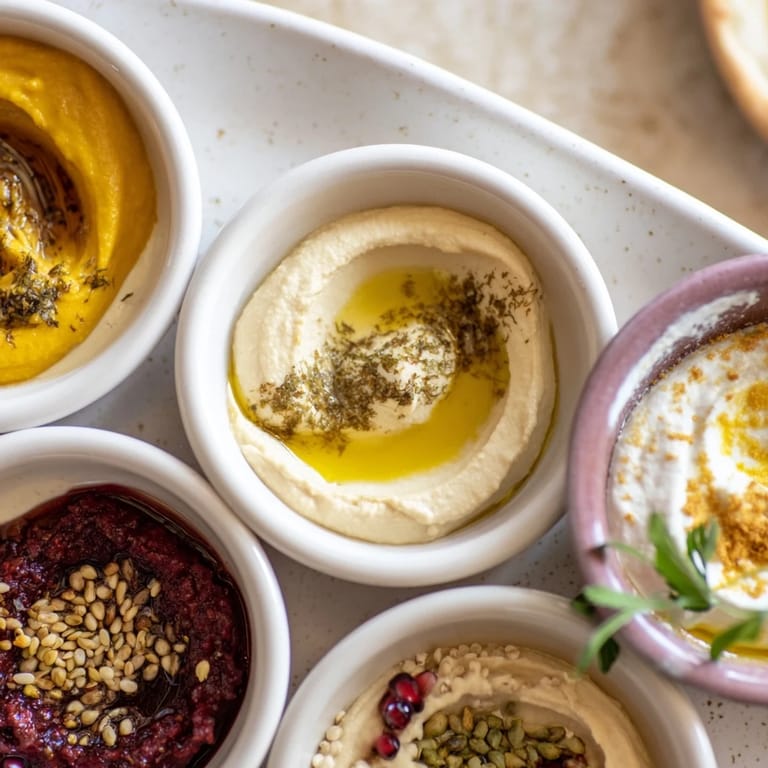
Save I remember the first time I stepped into a riad in Marrakech, and the host brought out this breathtaking platter of small bowls arranged like a living mosaic. Each color told a story—crimson muhammara next to emerald herbs, golden nuts scattered like precious jewels. I realized then that this wasn't just food; it was an invitation to slow down, to gather close, and to taste the world in one sitting. Now, whenever I recreate this Moroccan Tile Mosaic at home, I'm transported back to that moment of pure joy.
I'll never forget the dinner party where my friend Sarah arrived skeptical about 'just appetizers' being enough for dinner. By the end of the evening, she'd tried every combination, discovered she loved preserved lemon (something she'd never had before), and asked for the recipe three times. That's when I knew this platter wasn't about quantity—it was about creating a moment where people actually talk and taste and connect.
Ingredients
- Classic hummus: The creamy anchor of your mosaic. If you make your own, you'll taste the difference—nutty tahini and a whisper of garlic transform this from good to unforgettable.
- Baba ganoush: Silky eggplant dip that tastes like smoke and earth. The charred flavor is where the magic lives.
- Muhammara: Sweet red peppers and walnuts create this jewel-toned dip. It's slightly spicy, slightly sweet, completely addictive.
- Labneh or Greek yogurt with zaatar: The tangy element that brightens everything around it. That sprinkle of zaatar—with its sumac and thyme—adds complexity.
- Roasted red peppers: Look for ones packed in glass, not oil, if you want to control the final result. They should be silky enough to melt on your tongue.
- Marinated artichoke hearts: Tender and briny, they add that Mediterranean punch that says 'I know my flavors.'
- Moroccan carrot salad: Raw shredded carrots with lemon and cumin create brightness and crunch. The lemon juice prevents the carrots from browning and adds a gentle acid.
- Preserved lemons: This is the soul of North African cooking. Their salty, funky intensity changes everything they touch. If you can't find them, lemon zest mixed with salt works in a pinch, though it's not quite the same magic.
- Mixed Moroccan olives: Seek out varieties with different brines and sizes. The variety in texture and flavor is what makes this platter sing.
- Quick-pickled red onions: Sharp and bright, they're the surprise element that makes people ask 'what is that?' Don't skip the 30 minutes of pickling time—that's when they transform.
- Cornichons or baby gherkins: Tiny and crunchy, they add textural contrast and that pickle snap.
- Roasted almonds and pistachios: Toast your own if you can. Warm nuts from the oven taste completely different from ones that have been sitting in a package for months.
- Toasted sesame seeds: Just a quarter cup, but these little golden beads add nuttiness and elegance.
- Good bread: A proper baguette toasted until it's just crispy, or warm pita that's still soft enough to scoop dip. Stale bread can ruin the experience.
- Pomegranate seeds: Not just for color—their tart pop and jewel-like appearance make the platter a work of art.
- Fresh mint and cilantro: These aren't afterthoughts. They're flavor bridges that tie everything together and add that garden-fresh moment.
- Sumac: A pinch of this tangy spice scattered across the dips adds a flavor note that people can't quite identify but makes them keep reaching for more.
- Extra virgin olive oil: Use one you'd actually taste on its own. This final drizzle is seen and tasted by everyone.
Tired of Takeout? 🥡
Get 10 meals you can make faster than delivery arrives. Seriously.
One email. No spam. Unsubscribe anytime.
Instructions
- Create your canvas with the dips:
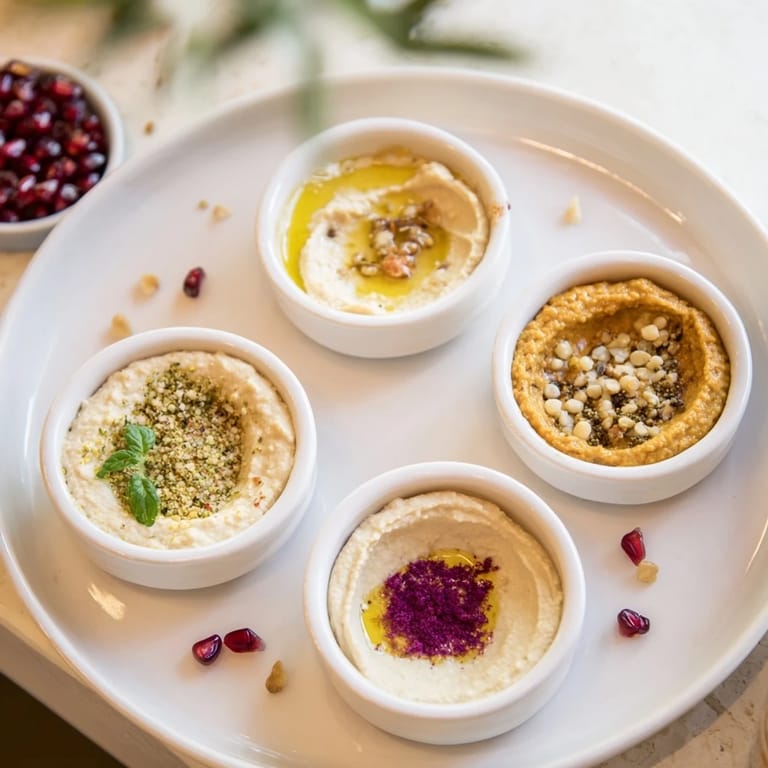
- Make or gather your four main dips and place each in its own small, colorful bowl. Let me share a secret I learned the hard way: do this at least a few hours before serving, even the night before. The dips need time to get to know each other in your fridge, and their flavors deepen and calm down. When you're ready to serve, let them sit out for 15 minutes so they're no longer cold and stiff.
- Prepare the supporting cast:
- In separate bowls, arrange your marinated vegetables, pickles, olives, nuts, and seeds. This looks like busy work, but here's what I've learned: the more organized you are now, the more relaxed you'll be when guests arrive. Plus, smaller portions in individual bowls look far more intentional than one big pile.
- Toast your bread with intention:
- Slice your baguette on a slight bias—it looks fancier and holds dips better. Toast until golden and just beginning to crisp. The timing here is crucial. Too light and it feels unfinished; too dark and it overpowers the delicate dips. I aim for the moment when the kitchen smells like toasted wheat and the edges are just starting to turn golden brown.
- Build your mosaic with the platter as your canvas:
- This is where your platter becomes art. Start with the dips arranged in a circle or pattern that pleases your eye. Then nestle the bowls of vegetables, olives, and nuts around them, creating rhythm and balance. Leave strategic gaps—these are where the fresh herbs, pomegranate seeds, and garnishes go. Stand back and look at it like a painter. You want colors to echo and contrast, warm tones next to cool ones.
- Add the finishing touches like you're signing a masterpiece:
- Scatter the pomegranate seeds so they catch the light. Toss the mint and cilantro in loose piles that look almost careless but aren't. Dust the sumac across the dips in a light hand—it should look like autumn dust, not like you've covered everything. Finally, drizzle olive oil over the dips and vegetables, making those drizzles visible and beautiful. This final step isn't just functional; it's decoration.
- Serve with an invitation to play:
- Bring it to the table while everything is still arranged perfectly, and then encourage people to mix and match. The beauty of this platter is that there's no wrong way to eat it. Someone might put preserved lemon on muhammara and discover their new favorite bite. Another person might combine three things you never thought of. That's the whole point—it's an edible conversation.
 Save
Save The most beautiful moment came when my eight-year-old nephew built his own combination: hummus, preserved lemon, a piece of toasted bread, a mint leaf, and a pomegranate seed. He declared it 'the best thing I've ever tasted' and made three more of the exact same thing. That's when I realized this recipe isn't about impressing people with your culinary skills—it's about giving them permission to play, explore, and discover flavors on their own terms.
Building Your Own Moroccan Story
The magic of this platter is that it's a template, not a rule book. I once made it with added roasted cauliflower and charred beets because that's what I had in my garden. Another time, a friend brought merguez sausage, and we added that too. The core of the platter—the dips, the preserved lemon, the fresh herbs—these stay constant because they're the backbone. But everything else? It's an invitation to make it yours. Think about what flavors excite you, what textures you crave, what colors sing in your kitchen light. That's where your version of this recipe comes alive.
The Timing Game and Why It Matters
Here's something I wish I'd known earlier: this platter is one of the most forgiving recipes for entertaining. Most of the components can be made days ahead. The dips taste better after a day of rest. The pickled onions are actually better after sitting for a few days. The nuts can be toasted a week in advance and stored in an airtight container. The only things you do the day of are toast the bread and arrange everything on your platter. This means you can entertain without that frantic day-of stress. You can actually enjoy your guests instead of being stuck in the kitchen. I've learned to start my prep the day before, which transforms this from 'ambitious dinner party idea' to 'something I can actually pull off looking calm and collected.'
Pairing and Serving Moments
This platter isn't meant to stand alone in the traditional sense. It's meant to be accompanied—either as the entire meal for a relaxed gathering, or as the opening act for something more substantial. I've served it before grilled fish and flatbread in summer. I've made it the entire meal for a book club, letting people graze through the evening. I've even served it alongside soup in winter, where the platter provided brightness and textural contrast. The real gift of this recipe is its flexibility. It works with Moroccan mint tea in the afternoon, crisp white wine in the evening, or sparkling water with lemon anytime. What matters is that you're creating a moment where people can linger, taste, and connect—and that's something no single dish can do alone.
- Chill your serving platter or board lightly before assembling if it's summer—this keeps dips from getting too warm too quickly.
- Keep small serving spoons handy for the dips; let guests serve themselves rather than you serving for them.
- If you're serving this over several hours, do a quick refresh midway through—straighten scattered herbs, refill any bowls that are getting low, and drizzle a bit more olive oil over the dips to keep them looking fresh.
 Save
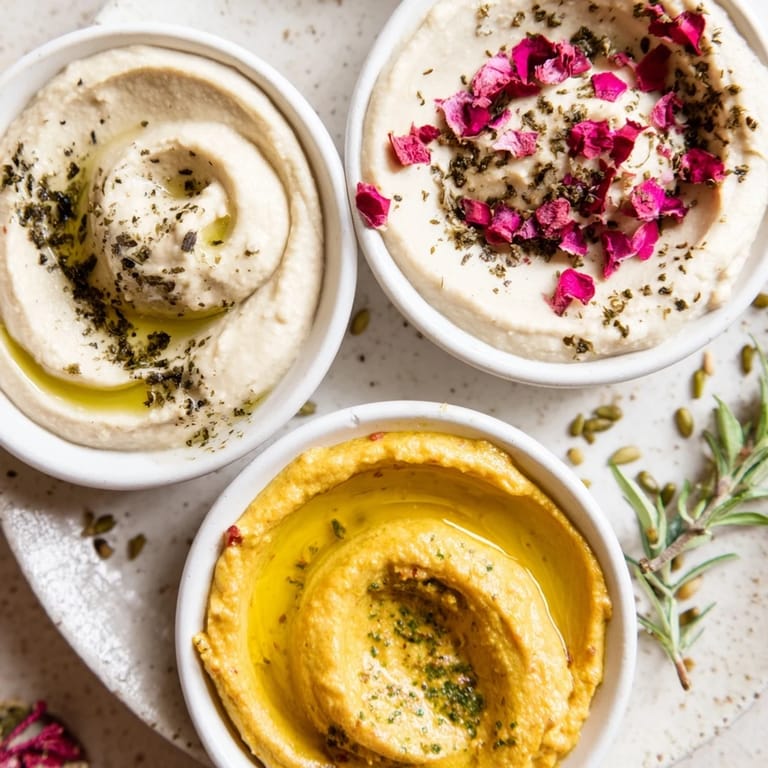
Save This Moroccan Tile Mosaic is about more than food—it's about creating a space where people slow down and truly taste. Every time I set one out, I'm reminded that the best meals are the ones where you lose track of time.
Recipe FAQ
- → What dips are included in the Moroccan tile mosaic?
It includes classic hummus, baba ganoush, muhammara, and labneh or Greek yogurt drizzled with olive oil and zaatar.
- → How should the mosaic platter be arranged?
Arrange the dips, marinated vegetables, pickles, olives, nuts, and seeds in small colorful bowls on a large tray to mimic a vibrant mosaic pattern.
- → Can this platter accommodate dietary restrictions?
Yes, it is vegetarian and can be gluten-free if served with gluten-free bread or crackers. Labneh can be swapped for plant-based yogurt for a vegan version.
- → What garnishes enhance the platter's flavor?
Fresh mint, cilantro leaves, pomegranate seeds, sumac, and extra virgin olive oil add aromatic and zesty notes.
- → What are some serving suggestions for this platter?
Serve immediately and encourage guests to mix and match flavors, pairing well with Moroccan mint tea or crisp white wine.
- → Are there any allergen considerations?
The platter contains nuts like walnuts, almonds, pistachios, and sesame in dips and seeds. Dairy is in labneh or yogurt but can be substituted as needed.