 Save
Save My mother always said the best desserts are the ones that make people pause mid-conversation to ask for the recipe. When I discovered pavlova years ago, I understood exactly what she meant—that crispy-yet-pillowy meringue, the cloud of cream, the burst of fresh berries in every bite. It's the kind of dish that feels impossibly fancy but actually rewards patience more than skill. Now whenever Mother's Day rolls around, this is what I make, watching her eyes light up as she takes that first forkful.
I'll never forget when my sister brought her partner to Mother's Day dinner and I served this pavlova. He took one bite, closed his eyes for a full five seconds, and said, "I didn't know you could do this at home." That's when I realized this dessert isn't just about taste—it's about creating a moment of genuine surprise and joy at the table.
Ingredients
- Egg whites (4 large, room temperature): Cold eggs won't whip properly, so pull them from the fridge about 30 minutes before starting—this single step changed everything for my pavlovas.
- Superfine sugar (1 cup): Regular granulated sugar works but takes longer to dissolve; superfine dissolves faster and creates that glossy, glass-like finish you're after.
- Cornstarch (1 tsp): This tiny amount prevents the meringue from cracking as it cools, a trick I learned after my first pavlova looked like it had been through an earthquake.
- White vinegar (1 tsp): It stabilizes the whites and keeps the interior soft while the outside crisps up—don't skip it.
- Vanilla extract (1 tsp): Pure vanilla makes a noticeable difference in flavor, especially with such a simple meringue base.
- Heavy whipping cream (1 cup), chilled: Keep this cold and use it the same day you assemble; it whips faster and holds its peaks better.
- Mixed berries (4 cups total): Use whatever's freshest at your market—I've made this with strawberries, raspberries, blueberries, and blackberries, and each combination feels like a new discovery.
- Fresh mint and powdered sugar: The mint adds brightness while the sugar dust gives it that elegant bakery appearance.
Tired of Takeout? 🥡
Get 10 meals you can make faster than delivery arrives. Seriously.
One email. No spam. Unsubscribe anytime.
Instructions
- Set up your station:
- Preheat to 250°F and line your baking sheet with parchment paper, tracing a 9-inch circle as a guide so your pavlova has a neat shape. Having everything ready before you start beating eggs means you won't waste time while the meringue deflates.
- Beat the egg whites:
- In a completely dry, clean bowl (any grease will sabotage you), whip the egg whites with salt until soft peaks form—you should be able to lift the beaters and see peaks that curl over slightly. This takes about 2-3 minutes with an electric mixer.
- Add sugar gradually:
- Sprinkle in the superfine sugar one tablespoon at a time while beating constantly, which usually takes 5-6 minutes total. You'll watch the mixture transform from cloudy to glossy and white, becoming stiff enough that peaks stand straight up when you lift the beaters.
- Fold in the secret ingredients:
- Gently fold in the cornstarch, vinegar, and vanilla using a spatula with as few strokes as possible—you want to keep all that air you've beaten in. This is where patience pays off; rough folding deflates everything you've worked for.
- Shape and bake:
- Spoon the meringue onto parchment, creating a circle with slightly raised edges like a nest, then bake for 1 hour 15 minutes until the outside is pale and crisp. The pavlova will look done when it sounds hollow if you tap it gently.
- Cool with the door ajar:
- Turn off the oven and crack the door open about 2 inches, leaving the pavlova inside for at least 30 minutes as it cools gradually—this prevents sudden cracking. I usually leave mine in there for an hour because I like the extra insurance.
- Whip the cream:
- While the meringue cools, whip your cold cream with powdered sugar and vanilla until soft peaks form, which takes just a few minutes. Don't overbeat or you'll end up with sweet butter instead of cream.
- Assemble with care:
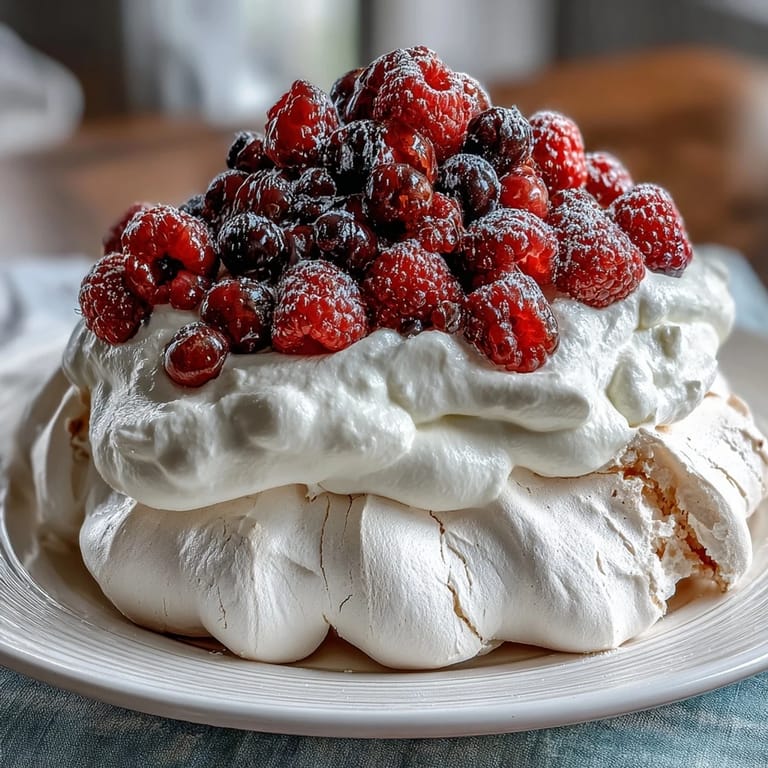
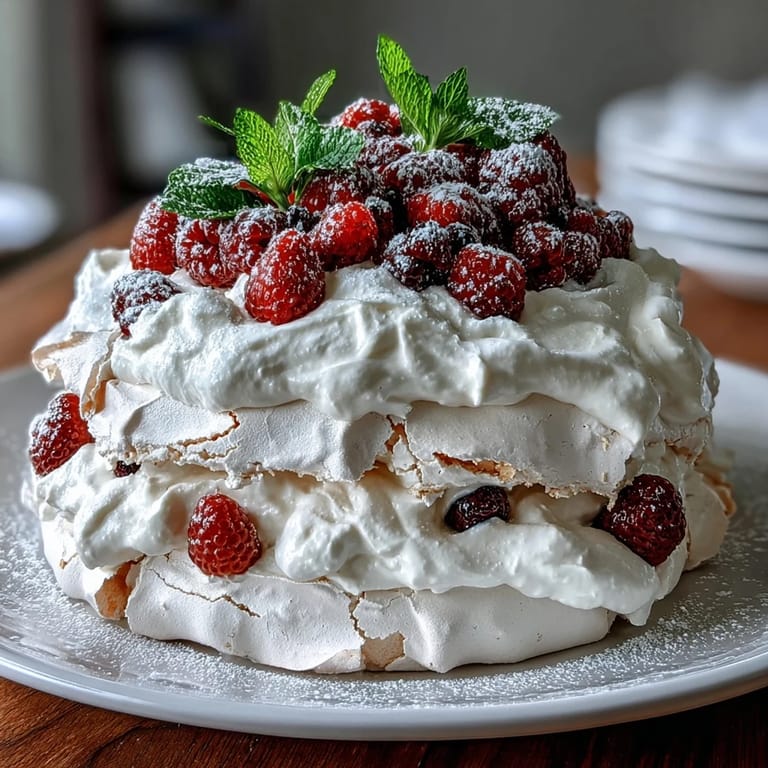
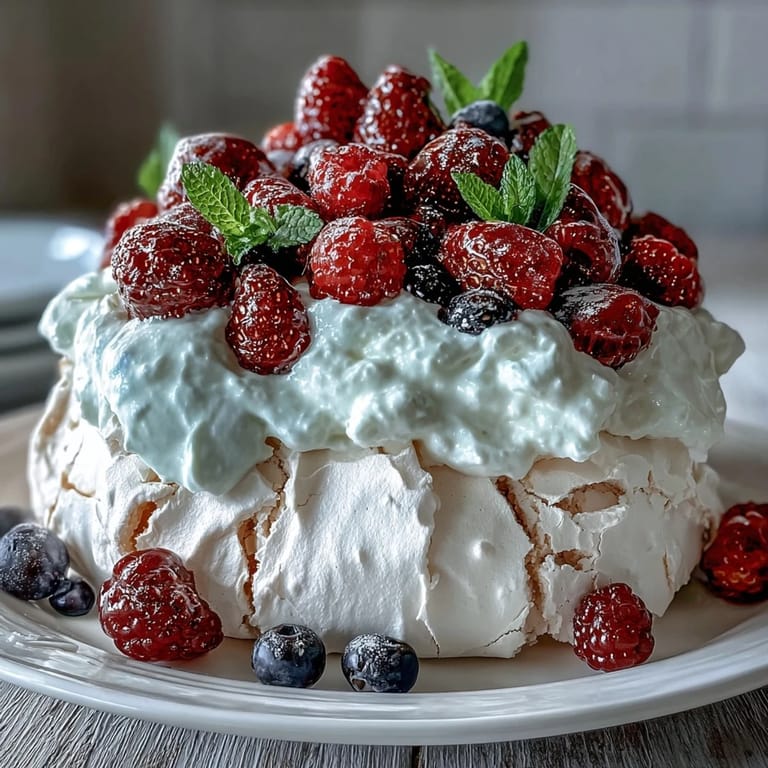
- Transfer the cool meringue to your serving platter, top with whipped cream, arrange berries in a way that makes you happy, and scatter mint leaves. Dust with powdered sugar just before serving so it doesn't dissolve into the cream.
 Save
Save There's something deeply satisfying about serving a pavlova at the table and having people lean in to examine it, almost afraid to cut into something so beautiful. It reminds me why I love cooking—it's not just about feeding people, it's about giving them a moment where the world feels a little more elegant.
Timing and Make-Ahead Strategy
The genius of pavlova is that you can bake the meringue shell up to two days in advance and store it in an airtight container, which takes so much pressure off Mother's Day morning. I usually prepare the berries a few hours before serving, keeping them in the fridge so they stay plump and cold, then whip the cream no more than an hour before assembly. This way you're not frantically whisking cream while everything else is happening.
Flavor Variations Worth Trying
Once you master the basic pavlova, the door opens to endless possibilities. I've layered in fresh lemon zest for brightness, folded cocoa powder for a mocha twist, and even added a few tablespoons of crushed pistachios before baking for unexpected crunch and earthiness. The meringue is a blank canvas, and berries are just the beginning—you could top it with passion fruit curd, fresh figs, or roasted stone fruits depending on the season.
Why This Dessert Wins Mother's Day
Pavlova feels like a celebration in dessert form because it's elegant, impressive, and ultimately about bringing joy to the table. It's not overly complicated, which means you can focus on the people you're celebrating rather than stressing over a finicky recipe. The combination of textures, the beauty of fresh berries, and the pure indulgence of cream and meringue make it feel special without requiring you to be a pastry chef.
- Make sure your mixing bowl and beaters are completely grease-free, or the egg whites won't whip properly no matter how long you beat them.
- If your pavlova cracks slightly during cooling, just pile the whipped cream and berries generously—no one will know or care once they're eating it.
- Serve the pavlova within a few hours of assembly so the meringue stays crisp on the outside while the cream stays fluffy on top.
 Save
Save Making pavlova for someone you love is a small act that carries surprising weight. It says, "I took time, I paid attention, I made something beautiful just for you."
Recipe FAQ
- → What temperature is best for baking pavlova?
It's ideal to bake pavlova at a low temperature, around 120°C (250°F), to slowly dry out the meringue without browning it.
- → How do I achieve stiff peaks when whipping egg whites?
Beat egg whites in a clean, dry bowl at room temperature until they hold glossy, stiff peaks for the perfect meringue base.
- → Can I substitute the mixed berries with other fruits?
Yes, seasonal fruits like kiwi, peaches, or passionfruit can be used to top the pavlova for different flavors.
- → What is the role of vinegar and cornstarch in the meringue?
Vinegar adds acidity to stabilize the meringue, while cornstarch helps create a marshmallow-like center.
- → How should pavlova be cooled after baking?
Turn off the oven and leave the pavlova inside with the door slightly open to cool slowly and prevent cracking.
- → Is this pavlova suitable for gluten-free diets?
Yes, the pavlova contains no gluten ingredients, making it suitable for gluten-free diets.