 Save
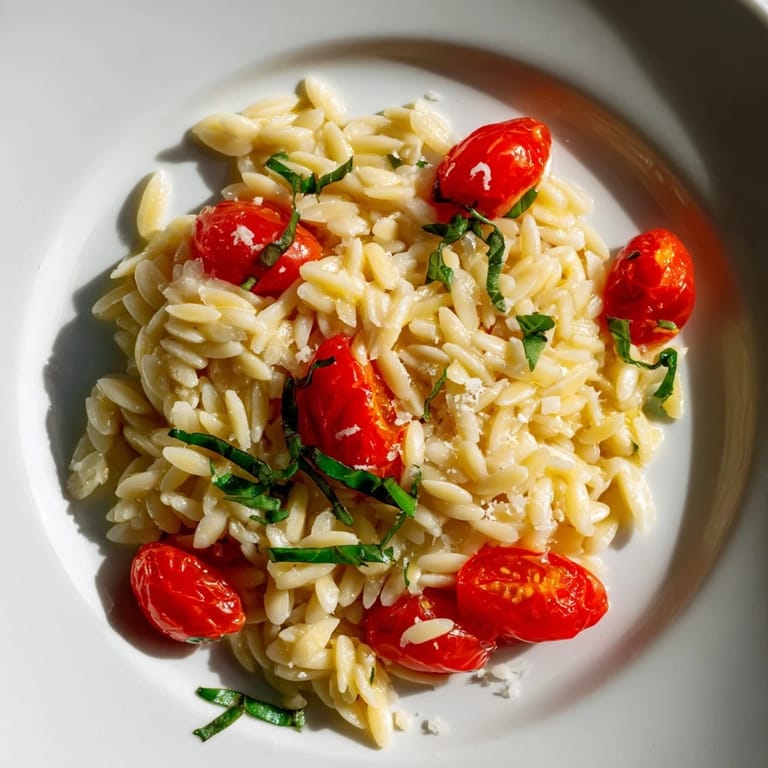
Save There's something almost magical about the way cherry tomatoes collapse into jammy sweetness when they hit a hot pan. I discovered this orzo dish on a Tuesday evening when I had exactly three ingredients and stubbornness in equal measure—the kind of night where you refuse to order takeout and instead create something that tastes like you planned it all along. The first time I served it, my partner asked if I'd been holding out on cooking skills, and I couldn't help but smile because the truth was simpler: sometimes the best meals come from working with what's in front of you and letting each ingredient do what it does best.
I made this for my friend Sarah when she was going through one of those phases where everything felt heavy and complicated. She'd mentioned wanting something light, and watching her face brighten at the first bite—how the basil hit you first, then the savory umami of the cheese—reminded me that food doesn't need to be fussy to matter. We sat on the balcony eating straight from the skillet, and it became one of those meals you remember not for the ingredients but for the ease of it.
Ingredients
- Orzo pasta (250 g): This rice-shaped pasta is the unsung hero—it soaks up the tomato juices and olive oil in a way regular pasta can't, creating these little pockets of flavor in every bite.
- Cherry tomatoes (300 g, halved): Don't skip the halving step; it exposes more surface area and lets them release their juice faster, which becomes your sauce.
- Fresh basil (2 tbsp, chopped): Add it at the end when the pan is off the heat so it stays bright green and doesn't turn into an unappetizing mush.
- Garlic (2 cloves, finely minced): The finer you mince it, the more evenly it distributes, and you won't bite into a harsh chunk halfway through.
- Parmesan cheese (60 g, freshly grated): This makes a difference—pre-shredded cheese has anti-caking agents that prevent it from melting as smoothly into the warm pasta.
- Extra-virgin olive oil (3 tbsp): Use one you actually like tasting, because it's doing real work here, not just cooking.
- Black pepper and salt: Taste as you go; the pasta water is already salted, so you're really just finishing the seasoning.
Tired of Takeout? 🥡
Get 10 meals you can make faster than delivery arrives. Seriously.
One email. No spam. Unsubscribe anytime.
Instructions
- Get your water boiling:
- Fill a large pot with water, salt it generously so it tastes like the sea, and let it come to a rolling boil. This is your flavor foundation, so don't rush it.
- Cook the orzo:
- Add the pasta and stir immediately so it doesn't clump. Check the package time, but taste a grain a minute before it says—you want it tender but with the slightest resistance. Before you drain it, grab a mug and scoop out about 1/4 cup of that starchy cooking water; you'll thank yourself in a moment.
- Start the tomatoes:
- While the pasta finishes, warm 2 tablespoons of olive oil in a large skillet over medium heat. Let it shimmer just slightly—this is hot enough but not so hot that you burn the garlic.
- Sauté the garlic:
- Add your minced garlic and listen for the gentle sizzle. Let it go for just 30 seconds, maybe 45 if you're being cautious, until your kitchen smells like someone's making something real.
- Toast the tomatoes:
- Throw in those halved tomatoes and give them a gentle stir. Let them cook for 3 to 4 minutes, stirring every now and then, until they start to soften and their juices pool at the bottom of the pan—that's your signal they're ready.
- Bring it together:
- Add the drained orzo to the skillet along with that reserved pasta water. Toss everything gently for 1 to 2 minutes, letting the heat bring it all together.
- Finish with care:
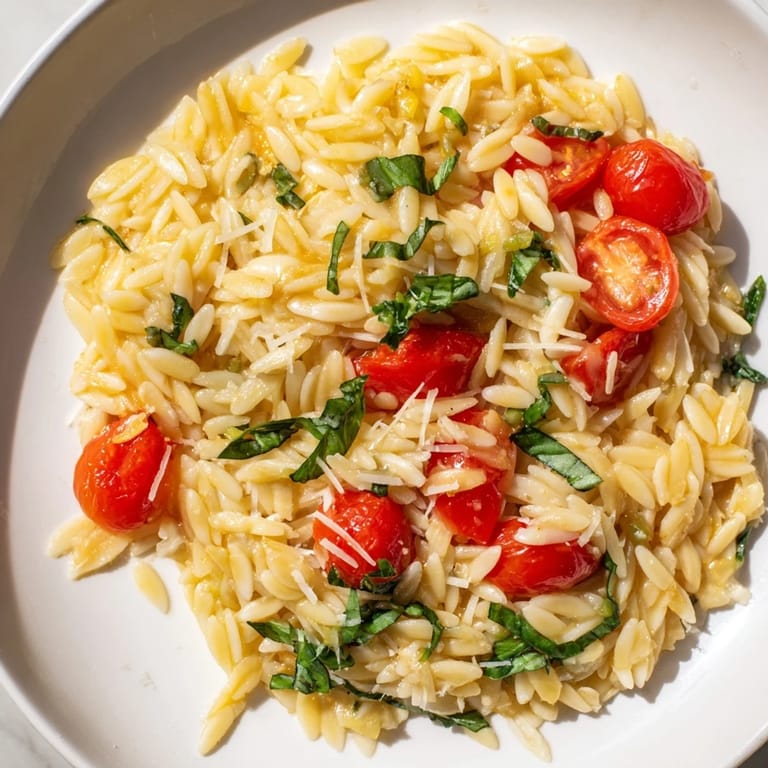
- Remove the pan from heat. This is important because you're about to add delicate things—stir in the remaining tablespoon of olive oil, most of the Parmesan, the basil, and a pinch of black pepper. Taste it and adjust the salt.
- Serve it warm:
- Divide it into bowls while it still has some heat, then top each one with extra Parmesan and a few more basil leaves for color and aroma.
 Save
Save My neighbor Marco once watched me make this and said it reminded him of how his grandmother cooked—not with technique or precise measurements, but by listening to what the ingredients needed. That stuck with me. This dish has a quietness to it, the way the tomatoes whisper their sweetness into the warm pasta, and somehow that simplicity is exactly why people come back to it.
When to Make This
This is perfect for those nights when you want something that feels intentional but doesn't demand hours at the stove. It's equally at home as a weeknight dinner or a side dish that steals the show at a gathering. Summer is its obvious season, but I've found it's comforting even in the cold months when you need reminding that bright, fresh food still exists outside.
Variations That Actually Work
The beauty of this dish is that it's flexible without becoming chaotic. I've added everything from a handful of spinach sautéed separately to a few anchovies minced into the oil at the start, and each time it's been an improvement in its own way. The structure stays the same—warm pasta, cooked tomatoes, good oil, cheese—and everything else is just conversation with your ingredients.
The Little Secrets That Matter
Temperature control is everything here. You're not trying to brown things aggressively; you're coaxing flavors out gently. The tomatoes soften better at medium heat than high, and adding the basil off heat preserves its color and fresh bite. This dish teaches you something about restraint in cooking, about knowing when to push and when to let things be.
- If your tomatoes are mealy or flavorless, add a small pinch of sugar to the pan to coax out sweetness—it won't taste sweet, just more tomatoey.
- Keep the pasta water nearby because you can always add more if it seems dry, but you can't take it back.
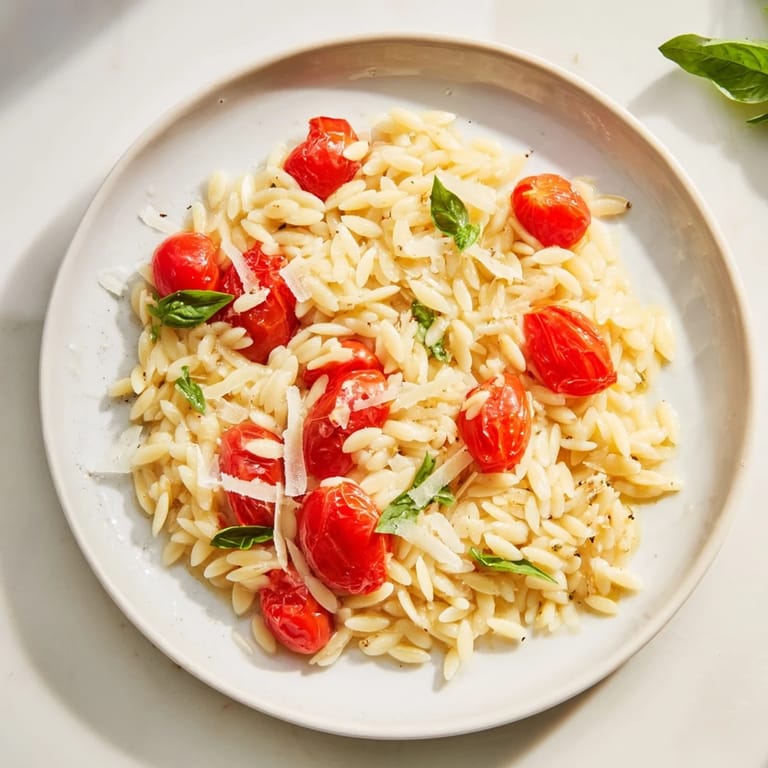
- Serve this immediately while it's still warm and the flavors are bright; it doesn't love sitting around.
 Save
Save This orzo has become the kind of dish I reach for when I want to cook something that feels both simple and special. It's one of those recipes that reminds you that sometimes the best food comes from respecting good ingredients and not overthinking it.
Recipe FAQ
- → What type of pasta is used?
Orzo pasta, a small rice-shaped variety, is used for its tender texture and quick cooking time.
- → How do you prevent the dish from becoming dry?
Reserving a bit of the pasta cooking water and tossing it with the orzo and tomatoes helps maintain a creamy texture.
- → Can I add heat to this dish?
Yes, sprinkling red pepper flakes while sautéing garlic adds a subtle spicy kick without overpowering the flavors.
- → What alternatives exist for Parmesan cheese?
Pecorino Romano cheese offers a sharper taste, and vegan Parmesan substitutes can be used for dairy-free options.
- → Is this dish suitable for gluten-free diets?
Using gluten-free orzo pasta makes the dish appropriate for those avoiding gluten.
- → How can I incorporate more greens?
Sautéed spinach or arugula can be added during the tomato cooking step to boost nutrition and color.