 Save
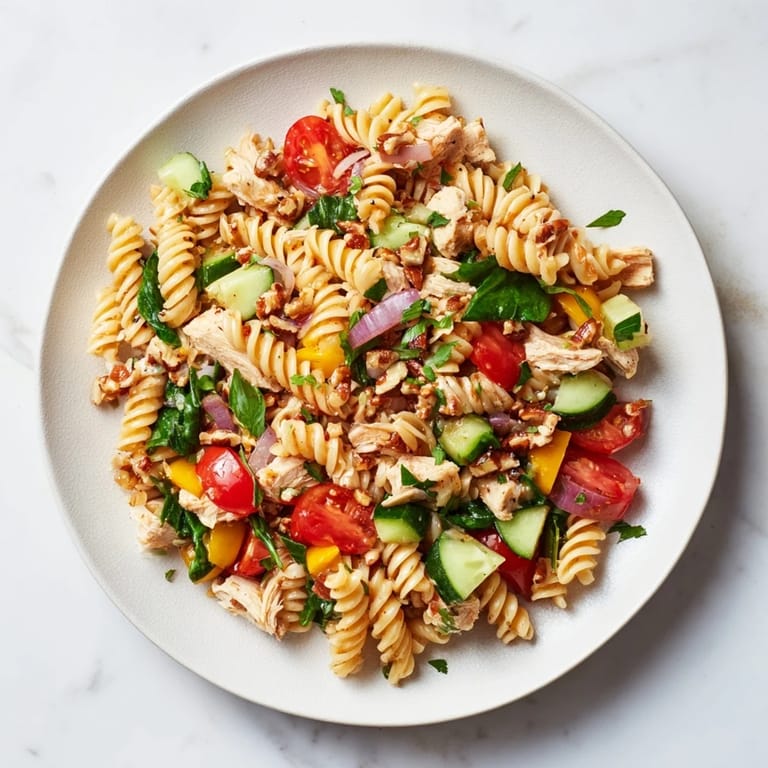
Save There's something wonderfully resourceful about transforming a half-empty jar of cranberry sauce left over from the holidays into something entirely new. I was standing in my kitchen one January afternoon, staring at that crimson sauce, and suddenly thought: what if this became the backbone of a vinaigrette? The tartness, the slight sweetness—it felt like it wanted to dance with fresh vegetables and pasta. That moment of kitchen improvisation led to this salad, which has somehow become the dish people request when they come over.
I served this to friends during a casual summer lunch, and someone asked for the recipe right there at the table with their fork still in hand. That's when I knew it wasn't just my kitchen experiment anymore—it was something worth sharing. The way the cranberry vinaigrette clung to the rotini and coated each vegetable felt like proof that resourcefulness in cooking almost always pays off.
Ingredients
- Rotini pasta (300g): The twists catch and hold the vinaigrette better than straight pasta would, so every bite feels intentional.
- Cooked chicken breast (2 cups, diced or shredded): Use rotisserie chicken if you want to skip the cooking step entirely—no one will judge you.
- Cherry tomatoes (1 cup, halved): Their natural sweetness balances the tartness of the cranberry sauce perfectly.
- Cucumber (1 cup, diced): This keeps everything crisp and fresh, even if the salad sits for a while.
- Red bell pepper (½ cup, diced): Sweet peppers add color and a subtle crunch that matters more than you'd think.
- Red onion (¼ cup, finely chopped): The sharpness cuts through the richness and keeps your palate honest.
- Baby spinach (2 cups, roughly chopped): It wilts slightly when tossed with the warm pasta, becoming almost creamy without any cream.
- Leftover cranberry sauce (⅓ cup): Smooth or chunky, it doesn't matter—this is the soul of the whole thing.
- Extra-virgin olive oil (3 tbsp): Don't skimp here; it emulsifies with the vinegar and creates a proper vinaigrette.
- Apple cider vinegar (2 tbsp): The acidity makes everything taste brighter and more alive.
- Honey or maple syrup (1 tbsp, optional): Only add this if your cranberry sauce tastes like it's puckering your mouth.
- Dijon mustard (1 tsp): This is the quiet hero that helps bind the vinaigrette together.
- Salt and black pepper: Taste as you go—your palate knows better than any recipe.
- Toasted pecans or walnuts (¼ cup, chopped): Toast them yourself if you can; the smell alone makes this dish feel special.
- Fresh parsley (2 tbsp, chopped): It's the final punctuation mark, bright and herbaceous.
Tired of Takeout? 🥡
Get 10 meals you can make faster than delivery arrives. Seriously.
One email. No spam. Unsubscribe anytime.
Instructions
- Boil the pasta until it's just tender:
- Cook the rotini in salted boiling water according to the package, but taste it early—you want al dente, when there's still the slightest resistance. Drain it and run it under cold water while you work on everything else; the cold water stops the cooking and keeps the pasta from clumping.
- Build your base in a large bowl:
- Toss the cooled pasta with the chicken, tomatoes, cucumber, bell pepper, red onion, and spinach. Don't be timid with the spinach—it will soften slightly and become part of the whole, not a separate element.
- Make the vinaigrette in a separate bowl:
- Whisk the cranberry sauce, olive oil, vinegar, mustard, and that optional honey together until it looks smooth and emulsified. If it breaks apart or looks separated, it's fine—just keep whisking and it will come back together.
- Dress the salad gently:
- Pour the vinaigrette over the pasta mixture and toss with confidence, making sure the dressing reaches all the corners. Some pieces will be well-coated, some lightly—that variation is what makes it interesting.
- Taste and adjust:
- This is the moment that separates good salads from forgettable ones. Add more salt, pepper, or vinegar if needed, then trust your instincts.
- Finish with the good stuff:
- Right before serving, scatter the toasted nuts and fresh parsley over the top so they stay crisp and don't get lost in the dressing.
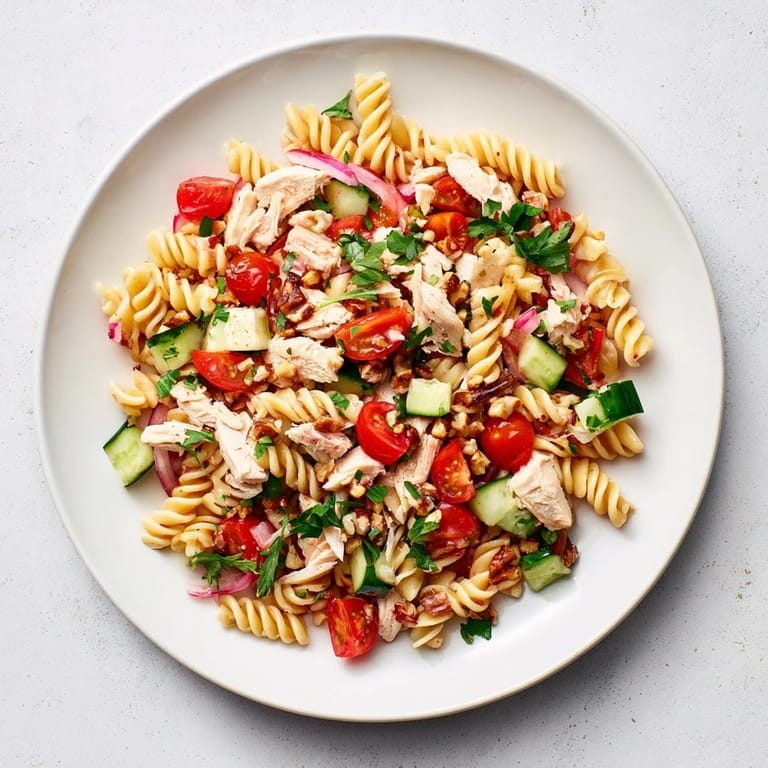 Save
Save What made this recipe stick with me wasn't just how it tasted, but how it solved a real problem—the feeling of opening the refrigerator and wondering what to do with good ingredients that didn't quite feel like a full meal on their own. Somehow, when they came together with that surprising cranberry vinaigrette, they became something greater than the sum of their parts.
Why This Vinaigrette Works
Cranberry sauce is already cooked and broken down, which means it emulsifies beautifully with oil and vinegar—it doesn't need any coaxing. The natural pectin in the cranberries helps hold the dressing together, and the fruit's tartness means you don't need as much vinegar as you'd normally use. This makes the salad feel more refined and less aggressively acidic than a standard vinaigrette. The Dijon mustard acts as an emulsifier, helping oil and vinegar stay married rather than drift apart. There's a kitchen wisdom in using what you already have, and cranberry sauce is one of those ingredients that feels like it was waiting to become something unexpected.
Timing and Make-Ahead Strategy
This salad is forgiving in ways that many salads aren't. You can cook the pasta and chop the vegetables several hours ahead, keeping them separate and covered. The chicken can be cooked the night before. The vinaigrette will last up to three days in a jar in the refrigerator, getting more flavorful as the ingredients get to know each other. The only real rule is to keep everything separate until the moment before you eat, so the pasta doesn't turn into a sad, soggy mass. If you're bringing this to a potluck or a picnic, pack the dressing in a separate container and toss everything together when you arrive—your future self will be grateful.
Variations and Swaps
This recipe is a skeleton that invites improvisation. If you don't have rotini, any pasta shape that's sturdy enough to hold dressing works—fusilli, penne, even farro if you're feeling that direction. The chicken can be replaced with shredded turkey, roasted chickpeas for vegetarian protein, or even hard-boiled eggs if you're in the mood for something different. Beyond the core vegetables, you could add diced apple for sweetness, crumbled goat cheese or feta for tanginess, dried cranberries for chewiness, or walnuts if pecans aren't your thing. The point isn't to follow instructions religiously—it's to understand why each component is there and then make it your own.
- Toasted sunflower seeds or pumpkin seeds add crunch and are cheaper than nuts if you're feeding a crowd.
- A handful of fresh mint can replace the parsley for a cooler, brighter finish.
- If you have fresh cranberries instead of sauce, cook them down with a little water and sugar first, then proceed as normal.
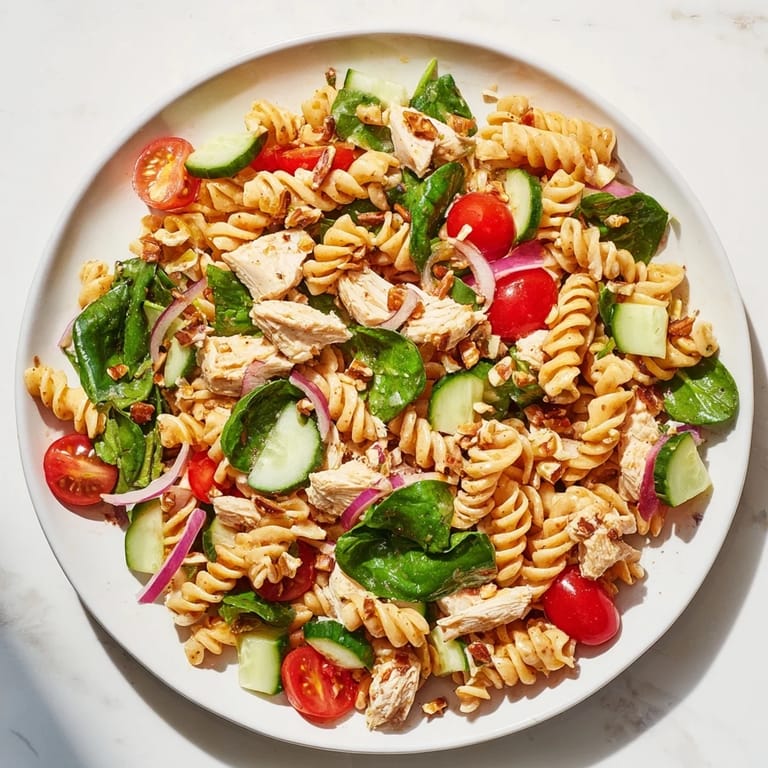 Save
Save There's a satisfaction in turning leftovers into something people actually want to eat. This salad taught me that sometimes the best dishes come from working with what you have rather than shopping for what you think you need.
Recipe FAQ
- → Can I prepare the salad ahead of time?
Yes, you can prepare the components in advance. Keep the cranberry vinaigrette separate until just before serving to maintain freshness and texture.
- → What can I substitute for chicken?
For a vegetarian option, replace chicken with chickpeas or feta cheese to maintain protein and add texture.
- → How do I prevent pasta from clumping?
After cooking, rinse the pasta under cold water to cool and stop cooking. This also helps prevent sticking when mixed with other ingredients.
- → Can I use different nuts for garnish?
Yes, toasted pecans or walnuts work well, adding a pleasant crunch and nutty flavor. You can also omit nuts if preferred.
- → What wine pairs well with this dish?
A crisp Sauvignon Blanc or a fruity rosé complements the tart and tangy notes of the cranberry vinaigrette beautifully.
- → Is this salad suitable for gluten-free diets?
Use certified gluten-free pasta to make this salad suitable for gluten-free dietary needs.