 Save
Save There's something about the smell of garlic hitting hot oil that instantly puts me in the right headspace. One Tuesday evening, I had exactly twenty minutes before my family wanted dinner, and all I had was a jar of marinara, a handful of spinach, and some dried pasta. What started as improvisation became something we now request by name. The best dishes, I've learned, aren't always the ones that take hours—they're the ones that taste like someone cared enough to get it right, even when time was tight.
I made this the night my daughter decided she wanted to help cook, and instead of the usual chaos, she stood on a stool and watched the spinach transform from a dense pile to something soft and integrated into the sauce. She asked why it worked that way, and I realized I'd never really thought about explaining it—I just knew it happened. That's when cooking stops being about following steps and becomes about understanding why things work.
Ingredients
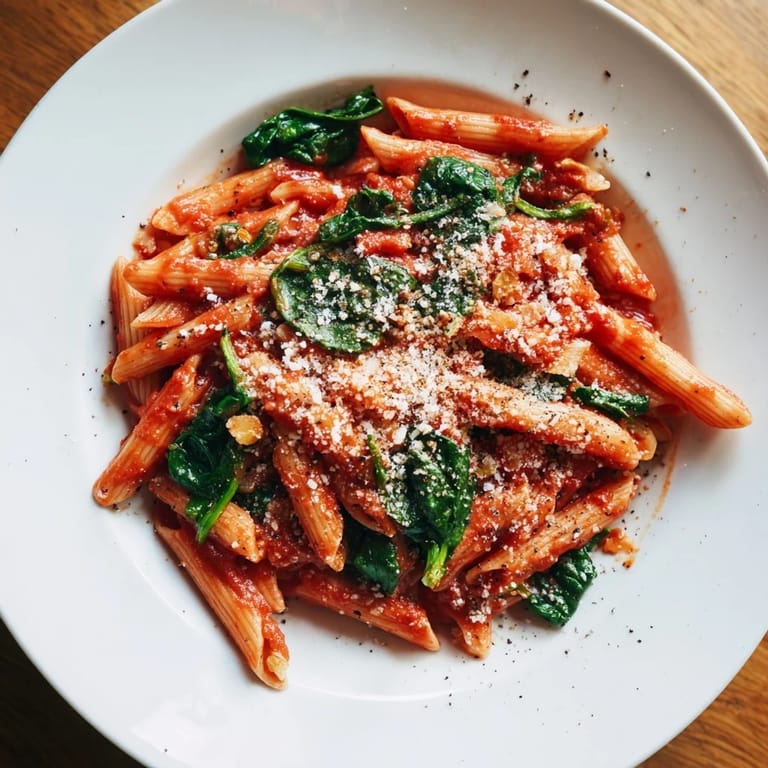
- Dried spaghetti or penne (12 oz): Either shape works beautifully here; spaghetti catches the sauce along its length, while penne cups it in each tube.
- Olive oil (2 tbsp): Good quality makes a noticeable difference when it's this prominent—don't reach for the cheapest bottle.
- Garlic (3 cloves, minced): Mince it fresh right before cooking so it's at its most fragrant and lively.
- Jarred marinara sauce (24 oz): Choose one with a short ingredient list; you'll taste the difference between a simple sauce and one loaded with extras.
- Fresh baby spinach (5 oz): Baby spinach wilts faster and more evenly than mature leaves, which matters when you're working with minutes.
- Red pepper flakes (1/2 tsp, optional): A whisper of heat lifts everything, but skip it if spice isn't your thing.
- Parmesan cheese (1/4 cup grated): Grate it yourself if you can; pre-shredded versions have anti-caking agents that keep it from melting as smoothly.
- Fresh basil (optional): A handful torn at the end brings brightness that feels like a small luxury.
Tired of Takeout? 🥡
Get 10 meals you can make faster than delivery arrives. Seriously.
One email. No spam. Unsubscribe anytime.
Instructions
- Get the water ready:
- Fill a large pot with water, salt it generously (it should taste like the sea), and bring it to a rolling boil. This is where flavor begins for the pasta, so don't skip this step or rush it.
- Cook the pasta:
- Add your pasta and stir occasionally as it cooks to package directions until it's tender but still has a slight bite. Before draining, scoop out about half a cup of the starchy cooking water and set it aside—this liquid gold is what ties everything together at the end.
- Start the sauce:
- While the pasta cooks, warm olive oil in a large skillet over medium heat until it shimmers slightly. Add your minced garlic and listen for that gentle sizzle; once you smell it, you've got about thirty seconds before it's time to move on.
- Build flavor:
- Pour in your marinara sauce and let it come to a gentle simmer, stirring occasionally. If you're using red pepper flakes, add them now so the heat distributes throughout.
- Wilt the spinach:
- Stir in the fresh spinach a handful at a time, letting each addition soften before adding more. Within a couple of minutes, it'll transform from bright green to a silky part of the sauce.
- Bring it together:
- Add your drained pasta directly to the sauce and toss everything to coat. The pasta should be glossy and comfortable, not drowning; add splashes of that reserved pasta water if it looks thick or dry.
- Finish strong:
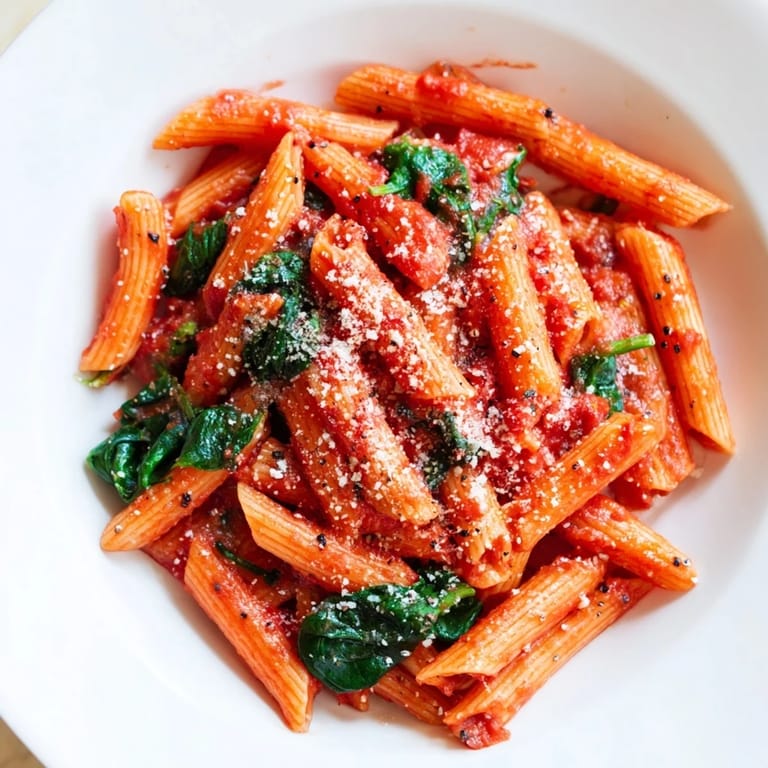
- Stir in your grated Parmesan and a few grinds of black pepper. Taste it and adjust seasoning as needed—it should feel balanced and complete.
 Save
Save My neighbor once asked what made this different from just heating jarred sauce over pasta, and I realized the answer was presence. The garlic wakes everything up, the spinach adds texture and nutrition, and the technique of finishing it all together instead of serving separately makes it feel intentional. It's still easy, still quick, but it tastes like you actually cooked.
Why Pasta Water Is Your Secret Weapon
I used to drain pasta and toss it immediately with sauce, wondering why restaurant versions always looked smoother and more luxurious. The difference was that reserved starchy water. When you add just enough back to the skillet, it creates an emulsion with the olive oil and sauce, coating every strand evenly. It's a small thing that changes everything about how the dish comes together.
Spinach as More Than Just a Side Note
Fresh spinach transforms when it hits hot sauce—it loses its rawness and becomes almost creamy, adding substance without heaviness. The wilting happens so fast that you can watch it happen, which makes this dish feel more interactive than throwing everything in a pot and waiting. Plus, you're tucking in leafy greens without it feeling like something you're doing for your health.
Making This Moment Your Own
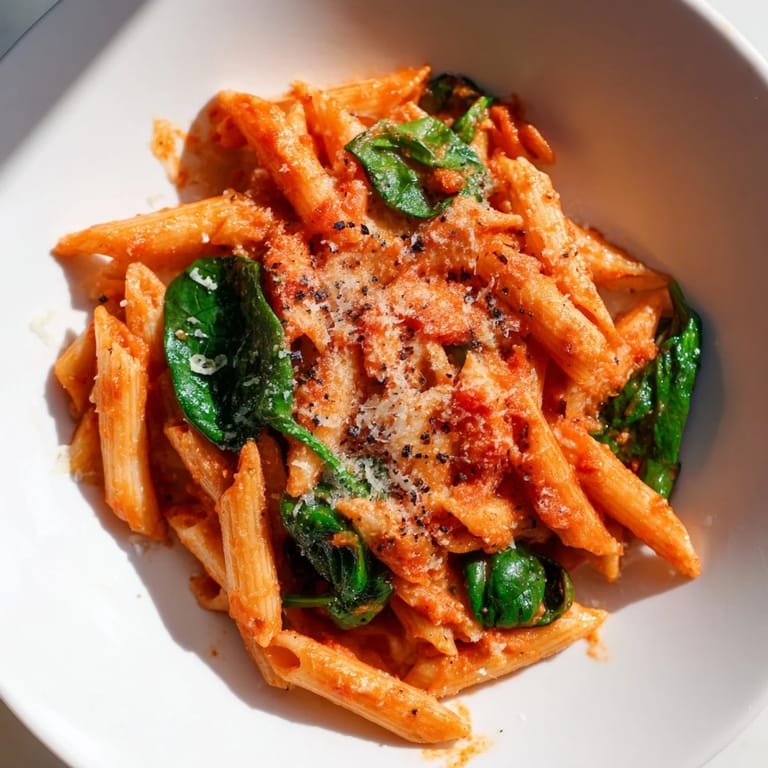
This recipe is a base, not a rulebook, and the best versions come from what you actually have on hand and what you love. I've added cooked white beans for protein, thin-sliced mushrooms for earthiness, and even a splash of heavy cream when I wanted something richer. The structure stays the same—garlic, sauce, spinach, pasta—but the personality shifts with what you bring to it. The basil at the end is optional, but that moment of tearing it and watching the scent rise is worth keeping.
- Fresh basil torn just before serving adds brightness that tastes expensive but costs almost nothing.
- A pinch of red pepper flakes can stay subtle or become the main character depending on your mood.
- Grated Parmesan at the table lets everyone dial in their own preference without overthinking it.
 Save
Save Twenty minutes becomes something special when you approach it with intention. This is the kind of meal that feels effortless to make but tastes like you cared, which is exactly when food becomes worth remembering.
Recipe FAQ
- → Can I use fresh marinara sauce instead of jarred?
Yes, fresh marinara works well and can enhance the flavor, though cooking time may vary slightly.
- → How do I avoid overcooking the spinach?
Stir the spinach until just wilted, about 2-3 minutes, to retain its vibrant texture and nutrients.
- → What pasta types work best for this dish?
Spaghetti or penne are ideal as they hold the sauce well, but feel free to use your favorite shapes.
- → How can I make this dish vegan?
Simply omit the Parmesan cheese or substitute with a plant-based alternative for a vegan-friendly meal.
- → Can I store leftovers safely?
Store in an airtight container in the refrigerator for up to 3 days. Reheat gently to maintain texture.