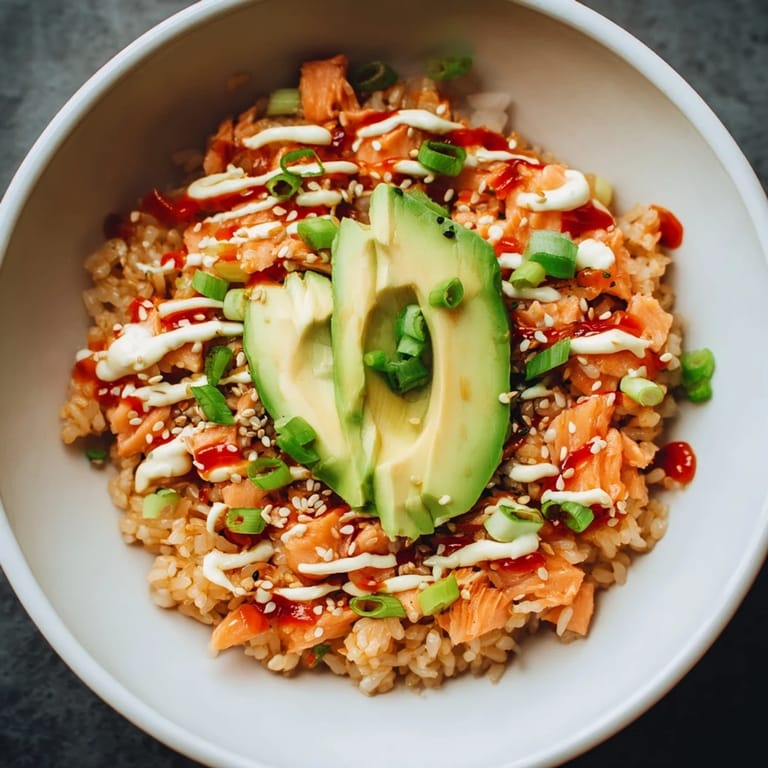
 Save
Save I discovered this bowl during a late-night scroll through TikTok, watching Emily Mariko assemble her signature salmon rice creation with such casual ease that it felt like she was cooking for a friend. There was something magnetic about the way she draped those mayonnaise lines across warm rice, the gentle sizzle when salmon met heat, the satisfying crunch of seaweed sheets wrapped around each bite. I decided to make it the next evening after work, and within twenty-five minutes I had something that tasted like a sushi restaurant but felt entirely mine—customizable, forgiving, and impossibly comforting.
The first time I made this for someone else was on a Tuesday when my partner came home exhausted, and I wanted to serve something that felt thoughtful without demanding much energy from me. Watching them wrap that first bite in seaweed, the way their whole face changed when they tasted the combination of spicy mayo and flaky salmon—that's when I understood why this bowl went viral. It wasn't just delicious; it made people feel like they were part of something, like eating could be playful.
Ingredients
- Cooked salmon fillet (6 oz): Use high-quality salmon if you can; the flakes should be tender and never dry, so if cooking fresh, don't overcook.
- Short-grain rice (2 cups cooked): Day-old chilled rice gives the best texture, staying separate instead of mushy when heated.
- Japanese mayonnaise: Kewpie's richness and slight sweetness make a real difference; regular mayo feels flat by comparison.
- Soy sauce (2 tablespoons): Split between the rice layer and the final drizzle for layered saltiness.
- Sriracha sauce (1 tablespoon): This provides the kick; adjust based on heat preference or swap for something milder if needed.
- Ripe avocado: Add it last so it stays creamy; slice it just before serving to prevent browning.
- Green onion: A small amount gives freshness and color without overpowering the dish.
- Toasted sesame seeds (1 teaspoon): Buy them already toasted to skip a step and guarantee nutty flavor.
- Roasted seaweed sheets (6–8): These snack-size sheets are essential for the hand-roll experience; don't skip them.
Tired of Takeout? 🥡
Get 10 meals you can make faster than delivery arrives. Seriously.
One email. No spam. Unsubscribe anytime.
Instructions
- Prep your canvas:
- Scoop your chilled rice into a microwave-safe bowl and create a small well in the center. This isn't about perfection; you're just building layers that will warm together beautifully.
- Layer and heat the salmon:
- Top the rice with your flaked salmon and sprinkle it with 1 tablespoon of soy sauce, letting those savory drops sink into the grains. Cover loosely with parchment or a microwave lid and heat for 1–2 minutes on high until everything is warm and steaming.
- Dress it with personality:
- Drizzle the warm bowl with Japanese mayonnaise in thin lines and add sriracha to taste, then add the remaining soy sauce if your palate wants more salt. The warmth of the rice will slightly melt the mayo, creating a creamy sauce.
- Mix gently:
- Using a fork or rice paddle, fold everything together until the salmon, rice, and sauces are evenly distributed. Don't crush the grains; keep things light and loose.
- Finish with brightness:
- Top with sliced avocado, a sprinkle of green onion, and toasted sesame seeds. These final toppings add texture and freshness that make each bite interesting.
- Eat like a hand roll:
- Serve the seaweed sheets on the side and scoop a generous spoonful of the rice mixture onto each sheet, then fold and eat. It's interactive and fun, making the meal feel less like eating alone and more like you're in on a secret.
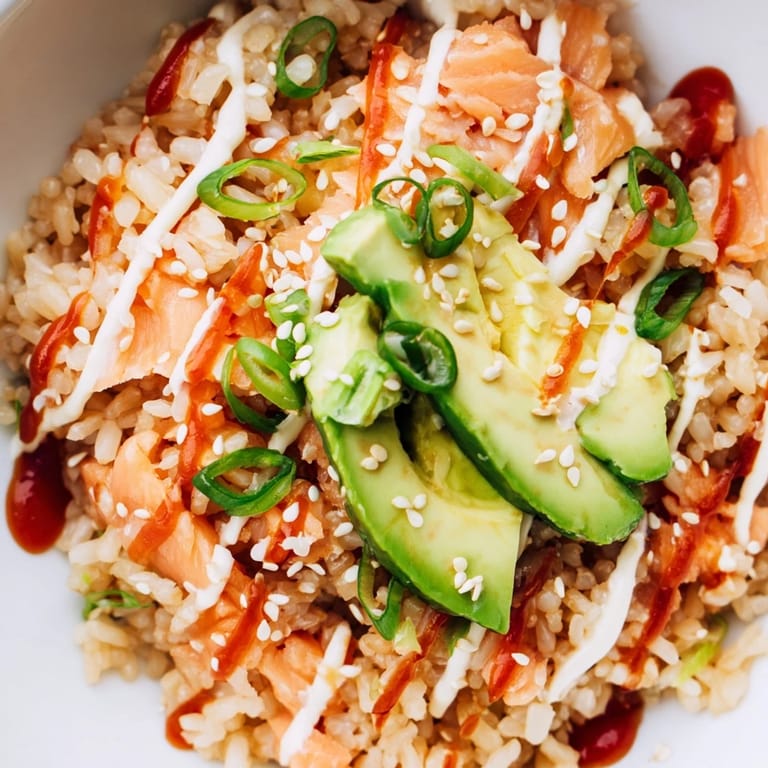 Save
Save There was a moment last month when I made this for myself on a quiet Sunday morning, eating straight from the bowl while standing at my kitchen counter, wrapping each bite in seaweed and feeling completely satisfied. That's when I realized this wasn't just a viral trend recipe—it had become genuine comfort food, the kind I'd reach for when I needed something that felt nourishing and fun at the same time.
Playing with Heat and Flavor
The beauty of this bowl is that it's a canvas for your spice tolerance and flavor preferences. I've made it with chili crisp instead of sriracha on nights when I wanted a different kind of crunch, and it was equally satisfying; I've also toned down the heat entirely for friends who prefer milder foods, and the salmon and mayo combination still shines. The important thing is that you're not locked into one version—this recipe invites you to adjust as you go, tasting and tweaking until it feels right for you.
Upgrades and Swaps That Work
If you're using canned salmon, drain it well and flake it just like fresh, and honestly, it works beautifully because the warm rice and sauces mask any tinned taste. Cooked tuna is an excellent swap if salmon isn't available or fits your budget better. I've also added cucumber ribbons for extra crunch, scattered crispy shallots from a jar for depth, or drizzled with a touch of rice vinegar when I want something brighter and more sushi-forward.
Rice, Seaweed, and the Magic of Assembly
What makes this bowl feel special is the ritual of assembling it—the visual appeal of organized layers, the way each component plays a role. The seaweed sheets transform this from a bowl into an interactive meal, giving you permission to eat with your hands and make each bite exactly what you want. Rice vinegar or furikake can be sprinkled over the warm rice for extra flavor depth, turning something already delicious into something you'll crave repeatedly.
- Furikake (the seasoning blend) adds umami and nori flavor without extra effort.
- A tiny drizzle of rice vinegar before the mayo brings everything into sharper focus.
- Keep extra seaweed sheets nearby because you'll inevitably want more than you planned.
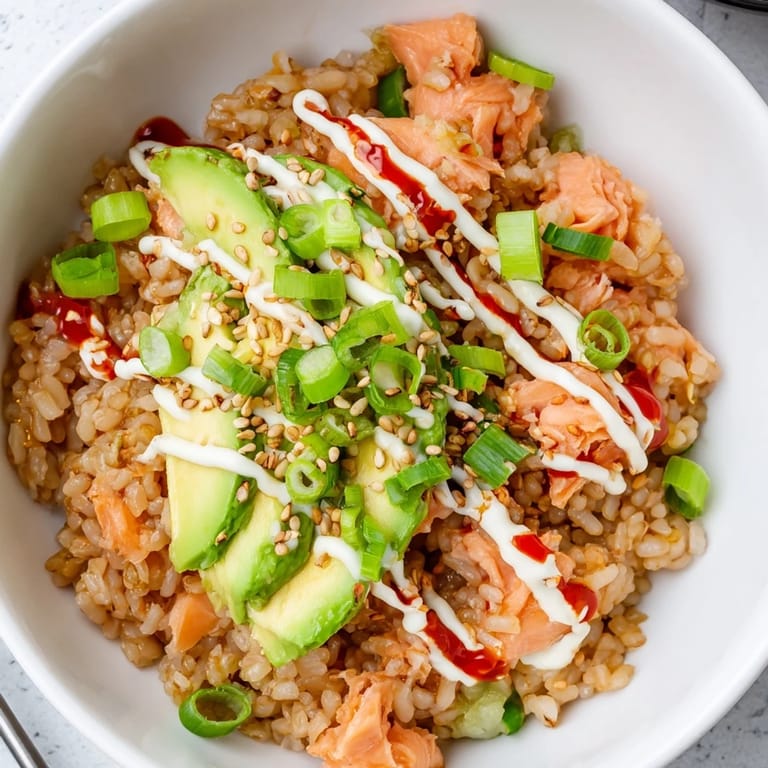 Save
Save This bowl proves that the most satisfying meals don't require complicated technique or impossible-to-find ingredients—they just need fresh components assembled with intention and eaten with joy. Make it tonight, adjust it next time, and know that you're creating something genuinely nourishing and delicious.
Recipe FAQ
- → What type of salmon works best for this bowl?
Cooked salmon fillet, skin removed and flaked, is ideal, but canned salmon or cooked tuna can be substituted for convenience.
- → Can I use fresh rice instead of leftover rice?
Chilled, day-old short-grain rice provides the best texture, but freshly cooked rice can be used if allowed to cool slightly.
- → How do I adjust the spice level?
Adjust the amount of sriracha or swap it with chili crisp or your preferred hot sauce to control heat.
- → Are there any recommended garnishes?
Sliced avocado, toasted sesame seeds, and thinly sliced green onions add creaminess, nuttiness, and freshness respectively.
- → What’s the best way to eat this bowl?
Scoop the salmon and rice mixture onto roasted seaweed sheets and enjoy it like a sushi hand roll for a fun, interactive experience.
- → Can I add extra flavor enhancements?
A few drops of rice vinegar or a sprinkle of furikake over the rice enhance depth and complement the savory elements.