 Save
Save The first time I made these noodles was on a Tuesday night when my roommate came home with that look—hungry and tired and in desperate need of something warming. I'd just bought a jar of peanut butter on impulse, and somehow it ended up in a bowl with soy sauce and ginger, the kind of kitchen accident that actually works. Twenty minutes later, we were sitting on the kitchen counter with chopsticks, burning our mouths and laughing, and I realized I'd stumbled onto something I'd be making constantly.
I made this for a potluck once thinking nobody would touch vegetarian noodles, and instead I watched people go back for thirds while standing around the kitchen talking. That's when I understood it wasn't about the ingredients being fancy—it was about how the flavors came together, how the creamy sauce coated each strand, how a squeeze of lime changed everything at the last second.
Ingredients
- 12 oz dried rice noodles or spaghetti: Rice noodles have a silkier texture when cold, but spaghetti works beautifully if that's what you have on hand.
- 1/2 cup creamy peanut butter: The real thing, not the natural stuff with the oil layer unless you like stirring; it's the base note that makes everything sing.
- 1/4 cup soy sauce: This is where the umami lives; don't skimp on quality here.
- 2 tbsp rice vinegar: The bright note that keeps it from tasting heavy, even though it's peanut sauce.
- 1 tbsp toasted sesame oil: A little goes a long way—this stuff is liquid gold, and it makes people ask what your secret is.
- 2 tbsp honey or maple syrup: I use whatever I grabbed last, and both are equally good at balancing the heat.
- 2–3 tbsp sriracha or chili garlic sauce: Start with less if you're unsure about your spice threshold; you can always add more, never remove it.
- 2 cloves garlic and 1 tbsp fresh ginger: Minced small enough that they dissolve into the sauce rather than sit there as obvious chunks.
- 1/4 cup warm water: Your sauce consistency controller—add it slowly while whisking until it pours like silk.
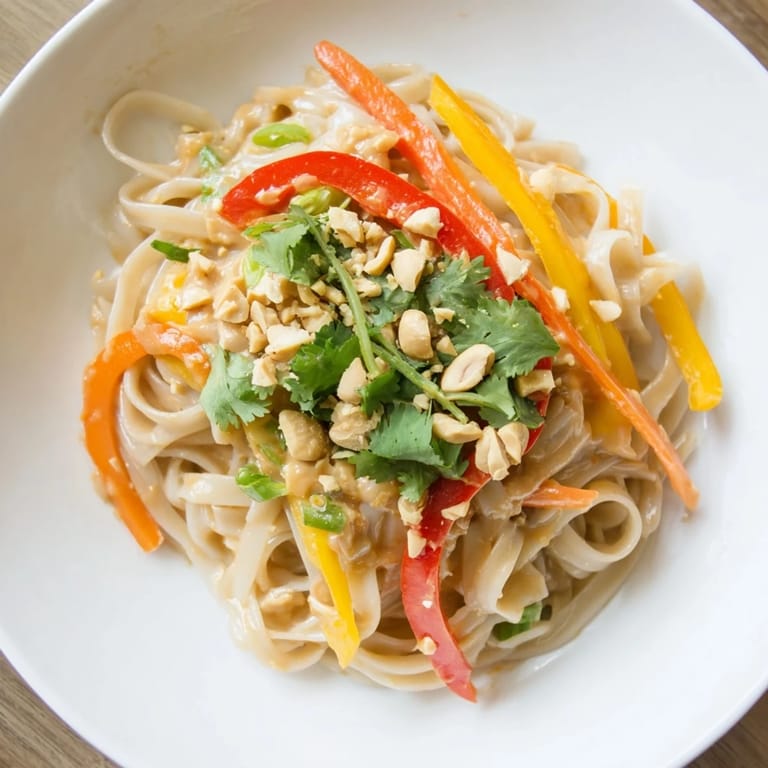
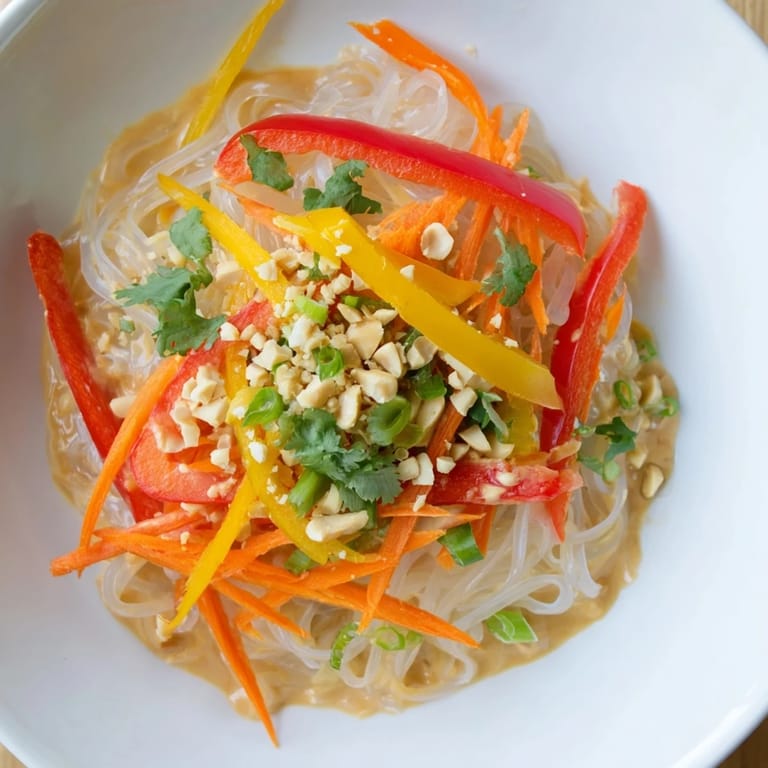
- 1 cup shredded carrots and 1 cup sliced bell pepper: The vegetables that actually add crunch and color; slice them thin so they play nicely with the noodles.
- 2 scallions, roasted peanuts, fresh cilantro, and lime: The final flourishes that make it taste like you knew what you were doing.
Tired of Takeout? 🥡
Get 10 meals you can make faster than delivery arrives. Seriously.
One email. No spam. Unsubscribe anytime.
Instructions
- Get Your Noodles Ready:
- Boil a big pot of salted water and cook the noodles until they're just tender—don't let them turn to mush. Drain them, rinse under cold water until they're cool enough to touch, and they'll stop cooking right there.
- Build the Sauce:
- In a medium bowl, whisk the peanut butter, soy sauce, vinegar, sesame oil, honey, and sriracha together, then add the minced garlic and ginger. It'll look thick at first, but when you add the warm water bit by bit and keep whisking, it turns into something pourable and glossy—adjust the water until it feels right.
- Bring It Together:
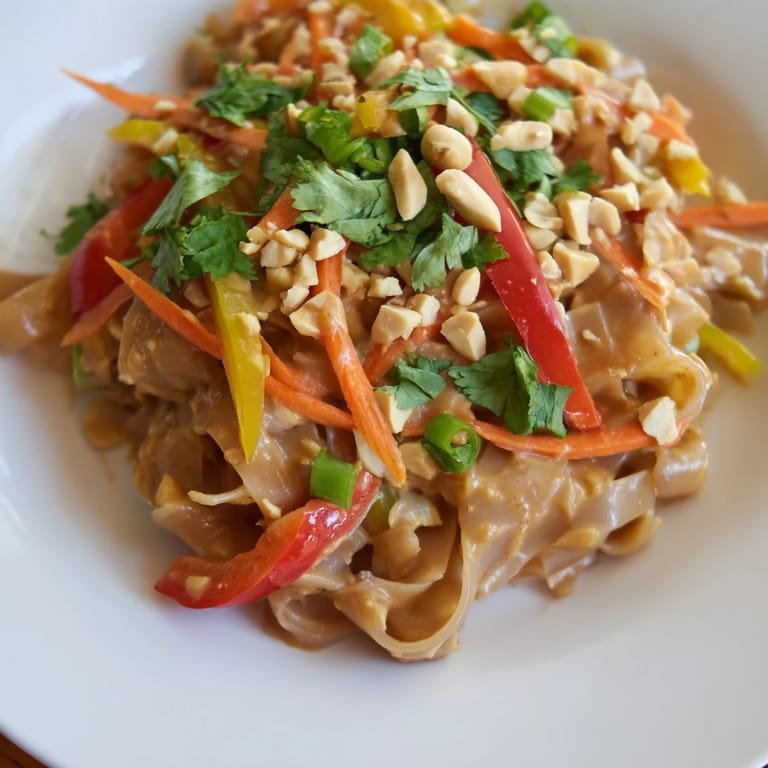
- Toss the cooled noodles with the carrots and bell pepper in a large bowl, then pour that peanut sauce over everything and stir until every strand is coated and glistening. This is where it stops being separate ingredients and becomes something whole.
- Finish and Serve:
- Divide into bowls and top with scallions, peanuts, and cilantro while the noodles are still warm, then squeeze lime over everything right before you eat. The lime is not optional—it's the reason people ask for the recipe.
 Save
Save There was this one time I made it without the sesame oil because I thought I was out, and someone actually said it tasted fine but not quite right—I hadn't even mentioned leaving it out. That's when I learned that the little things aren't really little; they're the things that make people remember what they ate.
Playing With Heat
Spice levels are personal, and this sauce respects that. I've made it for people who like their food mild and others who add extra sriracha straight to their bowl, and everyone's happy because the sauce itself isn't trying to punish anyone—it's just offering the option. Start with two tablespoons of sriracha, taste it, and go from there; your future self will appreciate knowing where your limits are.
When Noodles Go Cold
Cold peanut noodles are excellent, the kind of thing that tastes even better the next day when the flavors have gotten to know each other. If you're making them to eat later, just toss everything together and refrigerate—the sauce will thicken a bit, so don't be shy about adding a splash more water before serving. They're perfect for lunch boxes or when you want something refreshing that still feels substantial.
Protein and Customization
The noodles alone are filling, but they're also a blank canvas if you want to make them more of a complete meal. Sautéed tofu soaks up the sauce beautifully, shrimp adds a briny sweetness, and cooked chicken turns it into something different every time you make it. The vegetables are flexible too—use what's in your fridge, what's on sale, what you're in the mood for—and the sauce will tie it all together.
- Crispy tofu chunks or grilled chicken strips transform this into a full protein situation without any extra work.
- Roasted cashews or sunflower seeds work if peanuts aren't an option, and they honestly taste just as good.
- A soft-boiled egg on top turns it into something breakfast-worthy, which I've done and don't regret.
 Save
Save This recipe taught me that simple food done with attention tastes like care, and that sometimes the best meals are the ones made on a Tuesday without any fanfare. Make it for yourself, make it for people you like, and watch how quickly the pot empties.
Recipe FAQ
- → What type of noodles work best for this dish?
Dried rice noodles or spaghetti both work well, providing a smooth texture that carries the peanut sauce effectively.
- → How can I adjust the spice level?
Modify the amount of sriracha or chili garlic sauce to suit your preferred heat intensity, from mild to extra spicy.
- → Are there vegetarian protein options to add?
Yes, ingredients like sautéed tofu complement the dish and add extra protein without changing the flavor profile.
- → Can I make this gluten-free?
Use tamari instead of soy sauce and select gluten-free noodles to accommodate a gluten-free diet.
- → What garnishes enhance flavor and texture?
Chopped roasted peanuts, fresh cilantro, scallions, and a squeeze of lime provide crunch and brightness that elevate the dish.