 Save
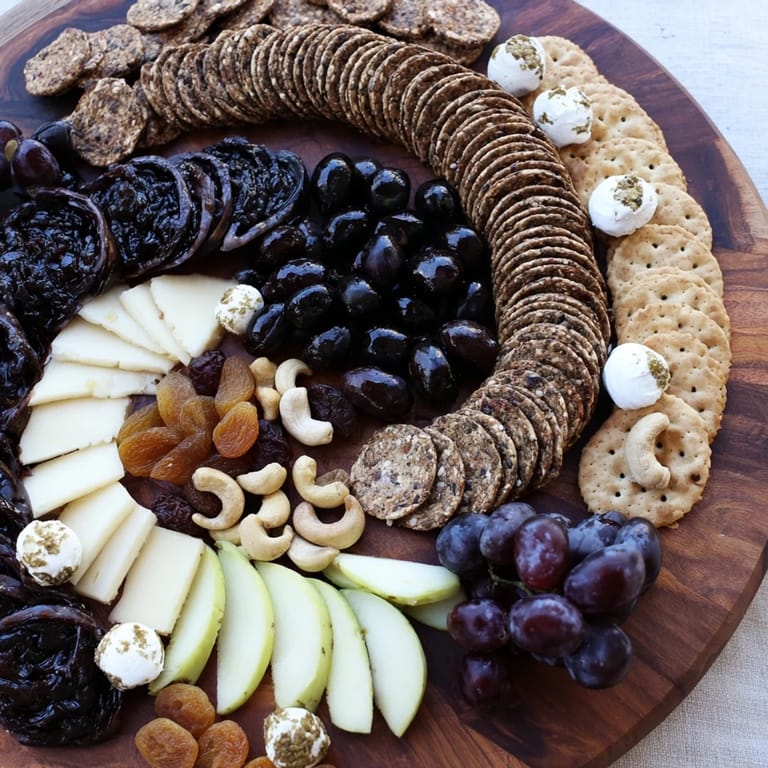
Save I still remember the afternoon I discovered the yin and yang balance board at a dinner party in San Francisco. A friend had arranged the most stunning circular platter I'd ever seen, with dark and light ingredients flowing into each other like a philosophical dance on ceramic. She told me it took her only twenty minutes to create, and I was instantly hooked. The moment I saw how naturally the contrasting flavors worked together—the deep earthiness of black olives against the creamy brightness of goat cheese—I knew I had to recreate this magic at home. Now, whenever I need to impress without stress, this is my go-to canvas for entertaining.
I'll never forget my cousin's wedding reception when I brought this board as part of the appetizer spread. A stranger approached me later saying it was the most beautiful thing they'd eaten all evening, and that's when I realized this isn't just food—it's edible art that tells a story of balance and harmony with every bite.
Ingredients
- Black olives, pitted (1 cup): These are your anchor for the dark side, bringing a briny, sophisticated depth. I always pit them myself when I can because it shows respect to your guests and prevents that awkward moment of someone biting into a pit.
- Dark rye crackers (80 g): The dark side needs texture, and rye brings an earthy robustness that plays beautifully against the richness of aged cheeses.
- Aged balsamic-glazed mushrooms (80 g, sliced, optional): If you can find these, they're the secret weapon. They add umami depth that makes people pause and ask what that incredible flavor is.
- Black grapes or blackberries (60 g): A touch of natural sweetness that balances the salty elements without overwhelming them.
- Dark chocolate squares (50 g, 70% cacao or above): This is your conversation starter. The unexpected chocolate on a savory board creates delightful surprise.
- White cheese such as goat cheese, brie, or mozzarella (120 g, sliced or cubed): The light side's creamy foundation. I prefer goat cheese for its tangy personality, but brie works beautifully if you want something milder and more luxurious.
- Rice crackers or water crackers (80 g): These keep the light side delicate and refined. Water crackers especially have this beautiful restraint that lets the cheese shine.
- Raw cashews or blanched almonds (60 g): The crunch that makes everything better. Cashews lean toward buttery elegance, while almonds bring grounded earthiness.
- Dried apricots or white grapes (50 g): Sweet notes that echo the dark side's berries but with a brighter, sunnier disposition.
- Honey (1 tablespoon, for drizzling, optional): A golden finishing touch that ties the light side together and adds a luxurious gloss.
Tired of Takeout? 🥡
Get 10 meals you can make faster than delivery arrives. Seriously.
One email. No spam. Unsubscribe anytime.
Instructions
- Set your stage:
- Place that beautiful round board in front of you like you're about to paint a masterpiece. This is your canvas, so choose something you genuinely love looking at.
- Mark your meditation line:
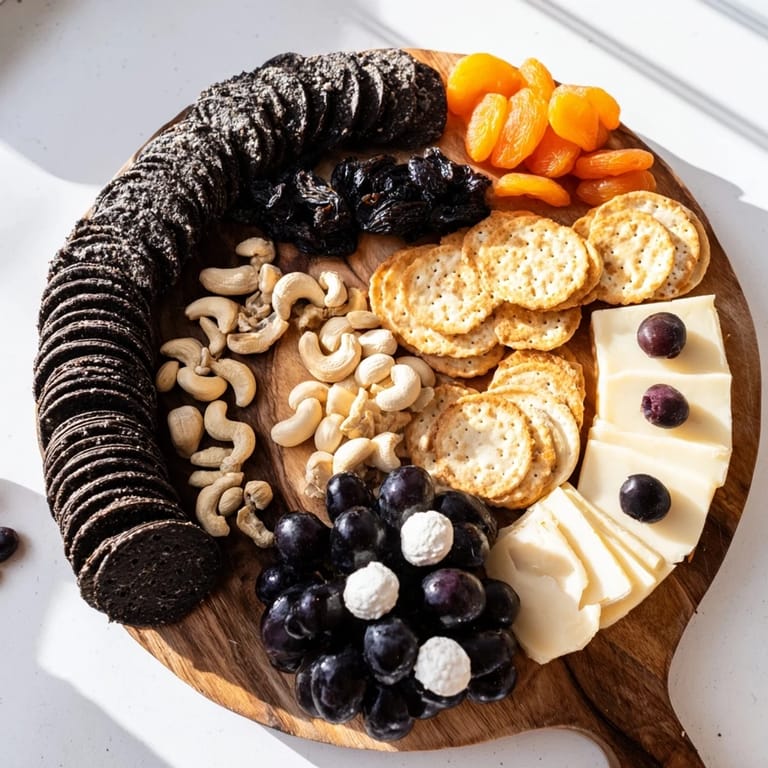
- Use a small bowl or circular cutter to lightly trace an S-shaped curve down the center. Don't press hard—you're creating a guide, not carving stone. This is the moment where philosophy meets practicality, and you're literally drawing balance.
- Build the dark side:
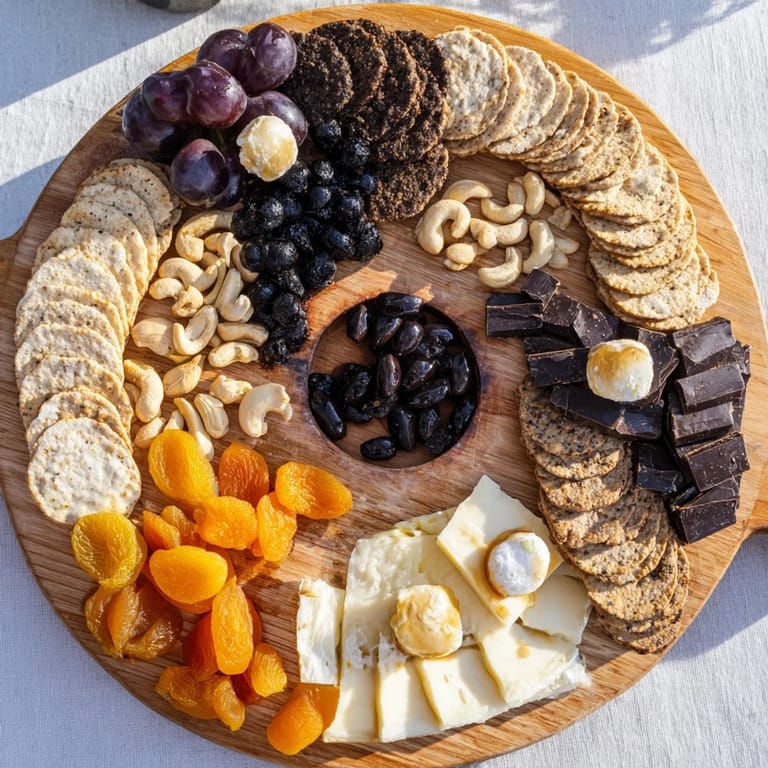
- Start filling one half with intention. Place the black olives first, clustering them in natural groups rather than perfectly spaced. Add the dark rye crackers at angles for visual interest. Layer in those mushrooms, then scatter the dark grapes like little jewels. Tuck the dark chocolate squares into the gaps, letting them peek out mysteriously.
- Illuminate the light side:
- Mirror your approach on the opposite half. Arrange the white cheese pieces with generous spacing so they stay cool and visible. Fan the rice crackers slightly for an elegant presentation. Scatter the nuts and dried apricots with the same organic randomness you used for the dark side.
- Add the dot of harmony:
- This is the detail that makes people stop and smile. Place a small round cheese ball or a single black olive in the heart of each swirl where the yin meets the yang. It completes the symbol and creates visual symmetry that feels almost meditative.
- The finishing drizzle:
- If you're using honey, drizzle it across the light side in delicate threads. Don't overthink it—imperfection here looks intentional and beautiful.
- Serve with presence:
- Bring this to your table with quiet confidence. The moment people see it, they'll know something special is happening. Encourage them to try both sides, to experience the contrast, to taste the philosophy on their plate.
 Save
Save There was a Tuesday evening when my neighbor brought over homemade lavender lemonade right as I was setting out this board. Watching people eat, sip, and then pause to really look at what they were holding reminded me that food is about creating moments. This board does that effortlessly.
The Philosophy of Board Building
This isn't just about flavor; it's about balance. In Chinese philosophy, yin and yang represent complementary opposites that create wholeness. Your dark side brings earthiness, mystery, and depth. Your light side brings brightness, airiness, and clarity. When your guests experience both together, they're tasting philosophy. I think about this every time I build this board, and it makes the arranging feel less like a task and more like a meditation.
Customization as Personal Expression
The beauty of this board is that it's a template, not a prison. Your favorite cheese goes on the light side. That special chocolate you've been saving? Dark side. Someone in your crowd loves olives? Give them a generous section. I once made this for a friend who was recovering from dairy, so I swapped the cheese for cashew cheese and nobody even noticed because the board was so visually stunning and flavor-packed. This is your stage to express what you love.
Pairing and Presentation Magic
This board speaks to aperitif moments and impromptu gatherings. It pairs beautifully with sparkling white wine that echoes the light side's brightness, or a light red wine that complements the dark side's earthiness. I've also served it with herbal tea for afternoon entertaining, and it transitions perfectly into a light lunch if you add some fresh bread. Here's what I've learned makes the experience even better:
- Arrange fresh herbs like mint or basil between sections for color and aromatics that delight the nose before the fork reaches the mouth.
- If you want to add edible flowers, crystallized violets or nasturtiums scattered on the light side create genuine elegance without effort.
- Leave small gaps between ingredients so people can see the board underneath. Crowding it makes it look chaotic instead of intentional.
 Save
Save Every time I create this board, I'm reminded that the most impressive dishes are often the simplest ones, built with intention and a touch of heart. You've got this.
Recipe FAQ
- → What is the best way to arrange the ingredients?
Place the ingredients in a circular board divided by an S-shaped curve to create contrasting dark and light halves, enhancing visual appeal and flavor balance.
- → Can I substitute the cheeses or crackers?
Yes, you can use your preferred varieties of cheese and crackers based on taste or dietary needs without compromising the concept.
- → How can I add extra flavor or aroma?
Fresh herbs or edible flowers make excellent toppings, providing added color, aroma, and subtle flavor complexity.
- → Is this platter suitable for vegetarians?
Yes, all ingredients are vegetarian-friendly, focusing on nuts, cheeses, fruits, and crackers.
- → What drinks pair well with this platter?
Try sparkling white wine or a light red to complement the contrasting flavors and textures.