 Save
Save My grandmother used to say that Hoppin John wasn't just food, it was insurance—a bowl of black-eyed peas and rice that somehow promised better luck for the year ahead. I grew up watching her stir that pot on New Year's Day, the kitchen filling with the smell of smoky bacon and simmering peas, and I never questioned the tradition. It wasn't until I made it myself for the first time that I understood what she really meant: it's the kind of dish that brings people together, humble but deeply satisfying, and somehow tastes even better when shared.
Years back, I made this for a group of friends who'd never had it before, and I watched their faces light up when they took that first bite—not because it was fancy, but because it tasted like home, even if they'd never been to the South. One of them asked for the recipe right there at the table, fork still in hand, and I realized then that Hoppin John doesn't need any pretense. It's just honest cooking.
Ingredients
- Thick-cut bacon (6 oz): Don't skimp here—those rendered drippings are the soul of the dish, infusing every pea with smoky, savory depth that you simply cannot replicate.
- Onion, celery, and garlic: This aromatic trio builds the foundation, and chopping them fine ensures they'll melt into the broth and season every bite evenly.
- Green bell pepper (optional): It adds a subtle sweetness and extra color, but skip it if you prefer a more straightforward, traditional version.
- Black-eyed peas (1½ cups dried): Soaking them overnight shortens cooking time and makes them cook more evenly; if you're in a rush, canned works fine and cuts about 20 minutes off the total time.
- Chicken or vegetable broth (4 cups): Use low-sodium so you control the saltiness—homemade broth will make this taste even more special.
- Bay leaf and thyme: These are quiet seasonings that deepen the flavor without shouting, so don't leave them out even if you think they're unnecessary.
- Cayenne pepper (¼ teaspoon): A pinch adds warmth and complexity; adjust based on how much heat you want, or skip it entirely if you prefer mild.
- Long-grain white rice (2 cups): The blank canvas that lets those peas shine; jasmine or basmati works too if that's what you have on hand.
- Scallions for garnish: The fresh green brightness cuts through the richness and reminds you that good food is about balance.
Tired of Takeout? 🥡
Get 10 meals you can make faster than delivery arrives. Seriously.
One email. No spam. Unsubscribe anytime.
Instructions
- Render the bacon until it sings:
- Dice it into pieces about the size of your pinky nail and cook low and slow—you want it crisp and golden, with every bit of fat melting into the pot. This takes about 6 to 8 minutes and fills your kitchen with a smell that makes everyone stop and ask what you're making.
- Build your flavor base:
- Once you've scooped out half the bacon for garnish, toss in your chopped onion, celery, and bell pepper if using. Let them soften over medium heat for about 5 minutes, stirring occasionally so nothing catches on the bottom. When they're tender and just starting to turn golden at the edges, add the minced garlic and stir constantly for about a minute until it becomes incredibly fragrant.
- Simmer the peas until tender:
- Pour in your soaked and drained peas, the broth, bay leaf, thyme, and cayenne. Bring everything to a boil so you can see active bubbles breaking the surface, then turn the heat down to a gentle simmer and let it cook uncovered for 35 to 45 minutes if using dried peas, or 20 to 25 minutes if using canned. Taste a pea around the 30-minute mark—they should be creamy inside but still hold their shape, never mushy or falling apart.
- Cook the rice while the peas do their thing:
- In a separate saucepan, combine your rice, water, butter, and a pinch of salt. Bring to a boil, give it a stir, then cover tightly and turn the heat down to low for exactly 15 minutes—don't peek. When the time's up, remove from heat and let it sit, still covered, for 5 minutes so the grains finish absorbing any remaining moisture and fluff up beautifully.
- Finish and serve:
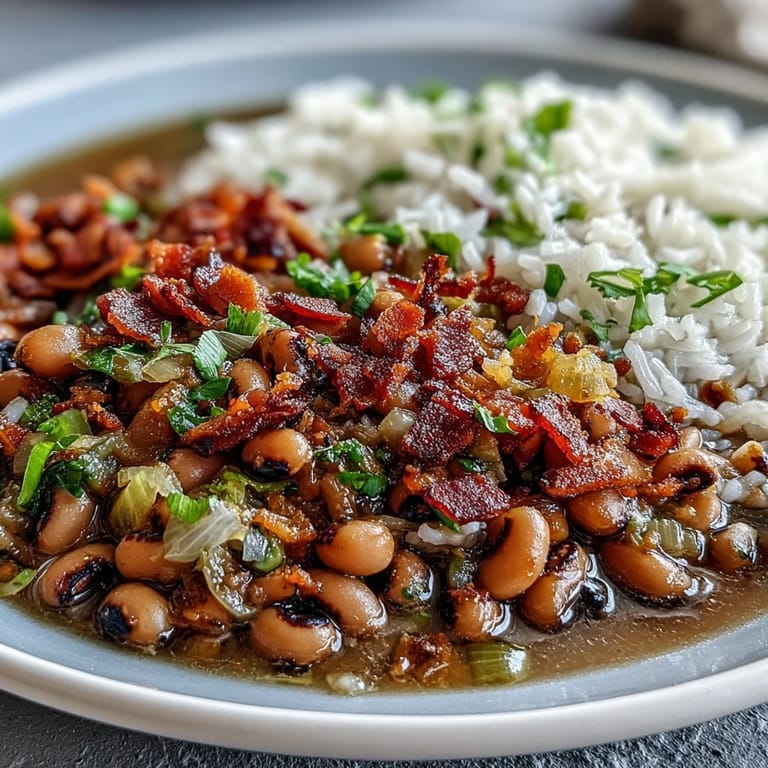
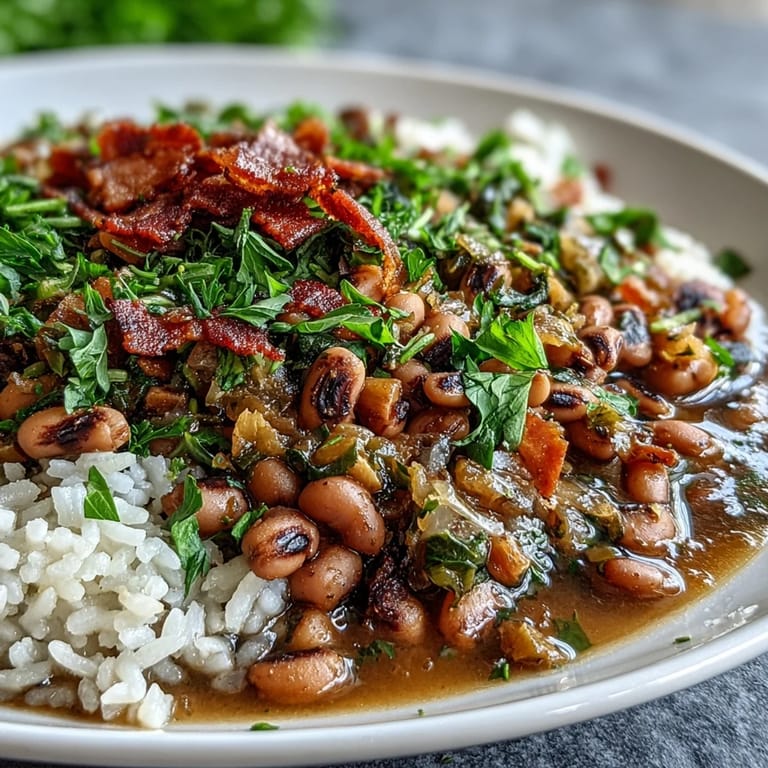
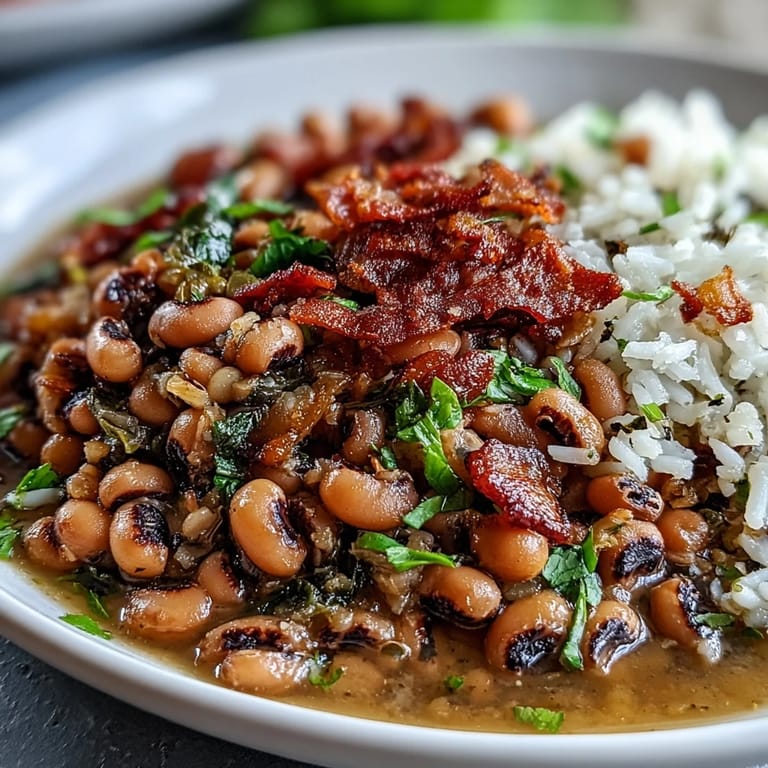
- Fluff the rice with a fork so each grain is separate and light, then scoop it into bowls or onto plates. Ladle the black-eyed peas and their broth over the rice, scatter the reserved crispy bacon on top, add a handful of sliced scallions for color and freshness, and pass the hot sauce at the table for anyone who wants extra heat.
 Save
Save I think about my grandmother every time I make this, and somewhere in that pot of simmering peas is her belief that food shared is luck multiplied. Whether you're chasing tradition or just hungry for something real, this dish delivers on both fronts.
The Story Behind the Superstition
Hoppin John carries generations of meaning—the black-eyed peas supposedly represent coins, the rice looks like silver, and the whole meal is meant to bring prosperity and good fortune in the new year. I've never been one to lean hard into superstitions, but I've also never skipped making this on January 1st, and I've noticed that people show up for it, that it creates a reason to gather, and that feels like its own kind of luck. Whether you're New Year cooking or just Tuesday hungry, the tradition doesn't require belief—just an appetite and someone to share it with.
Making It Your Own
The beauty of Hoppin John is that it's forgiving enough to adapt to what you have and who you're cooking for. Some years I add collard greens right to the pot during the last 10 minutes of cooking, letting them soften and add earthiness. Other times I'll stir in a can of diced tomatoes for brightness, or a splash of apple cider vinegar for tang. The core—the bacon, the peas, the aromatics—stays the same, but everything else is yours to play with.
Serving Suggestions and Pairings
Hoppin John isn't a dish that needs much accompaniment, but it does love company at the table. A skillet of buttery cornbread is the obvious pairing, its sweetness balancing the savory peas. Sautéed collard greens or mustard greens on the side add another layer of Southern authenticity and nutritional heft. Some people like to serve it with sliced onions on the side, a hot sauce situation for those who want extra heat, and maybe a simple green salad to cut through the richness.
- Cornbread with a touch of honey or jalapeños transforms a side into something memorable.
- A squeeze of fresh lemon juice over the finished bowl brightens everything without overwhelming the delicate pea flavor.
- If you have leftovers, reheat gently with a splash of broth and serve as is, or fold into a tortilla with cheese for a completely different meal.
 Save
Save This is the kind of dish that teaches you something about cooking and about people the longer you make it. Return to it again and again, and it never stops delivering.
Recipe FAQ
- → Why is Hoppin John traditionally eaten on New Year's Day?
The black-eyed peas symbolize coins and prosperity, while the collard greens often served alongside represent folded money—making this dish a beloved tradition for attracting good fortune in the coming year.
- → Can I make Hoppin John vegetarian?
Absolutely. Simply omit the bacon and add smoked paprika or liquid smoke to maintain that signature smoky depth. Vegetable broth works perfectly as a flavorful base for the peas.
- → Do I need to soak dried black-eyed peas overnight?
Overnight soaking ensures even cooking and tender texture. If you're short on time, canned black-eyed peas work beautifully and reduce cooking time to about 20-25 minutes.
- → What makes authentic Hoppin John?
The key elements include black-eyed peas, some form of pork (traditionally bacon or ham hock), aromatic vegetables like onion and celery, and serving it all over fluffy white rice. The smoky, savory broth brings everything together.
- → How should I store leftovers?
Keep refrigerated in an airtight container for up to 4 days. The flavors actually deepen and improve after a day or two. Reheat gently with a splash of broth to restore consistency.