 Save
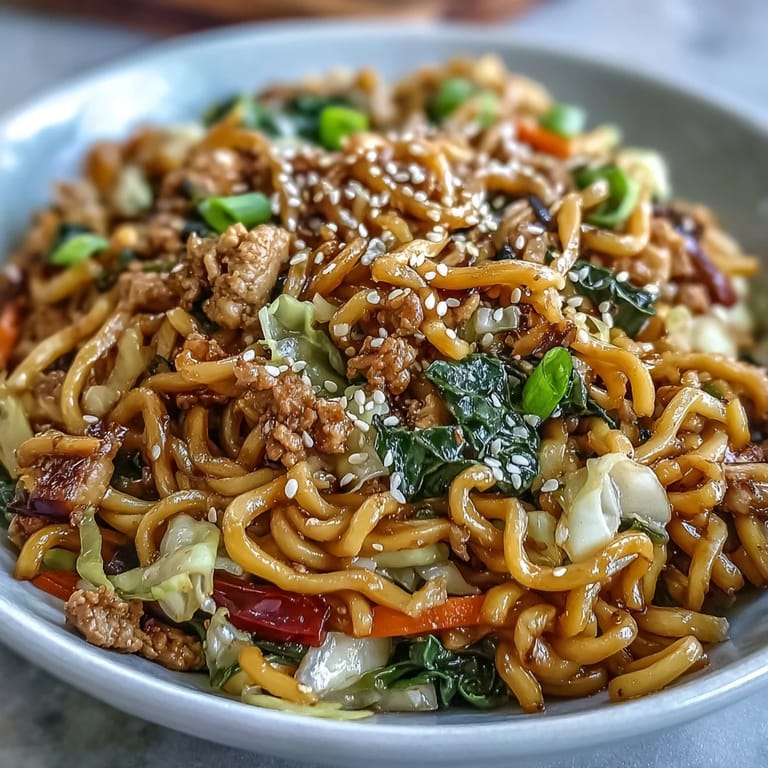
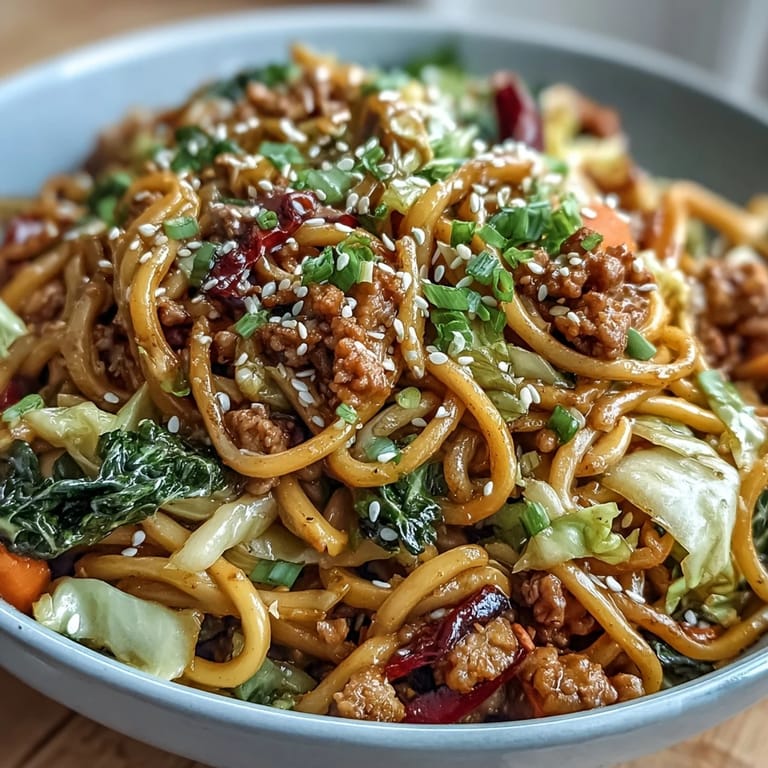
Save My neighbor came home exhausted from a double shift and mentioned she'd been craving something Korean but couldn't face a long recipe. That's when I pulled out ground turkey, whatever vegetables were hanging around the fridge, and threw together this fusion that somehow hit all the right notes. The gochujang and sesame oil do the heavy lifting while you're barely paying attention, and twenty minutes later you're eating something that tastes like it took actual effort.
I made this for a weeknight dinner with my partner and their friend who'd just moved to the neighborhood. The friend kept asking what restaurant it came from, and I loved watching their face when I said it was just noodles and turkey from the pantry. We ate it standing around the counter, and somehow that made it taste even better than if we'd sat down properly.
Ingredients
- Ground turkey: The lean protein that won't weigh you down, and it takes on the sauce flavors like a sponge without getting gamey or tough.
- Fresh or dried wheat noodles: Use whatever feels right to you, though fresh ramen or udon noodles give the best texture if you can find them.
- Shredded carrots: They sweeten slightly when they hit the heat and add a welcome crunch that stays even after mixing.
- Red bell pepper: The sweetness balances the spice from the gochujang, and the color makes the whole dish pop.
- Napa cabbage: This wilts down beautifully and picks up the sauce without falling apart like regular cabbage would.
- Green onions: Split them between cooking and garnish so you get fresh bite at the end.
- Soy sauce: The umami backbone that makes everything taste intentional and complete.
- Gochujang: Korean chili paste that brings depth and gentle heat without screaming at you, trust the 2 tablespoons.
- Sesame oil: Just a tablespoon goes a long way, and it's what makes people ask if you've been secretly trained as a chef.
- Brown sugar: A teaspoon mellows the spice and rounds out the flavors so nothing tastes sharp or one-note.
- Garlic and ginger: Mince them fresh if you can, the difference between paste and real is worth the extra thirty seconds.
- Rice vinegar: The acid that wakes everything up and keeps the sauce from tasting flat.
- Sesame seeds and extra green onions: These aren't just pretty, they're the last layer of flavor and texture that makes you want another bite.
Tired of Takeout? 🥡
Get 10 meals you can make faster than delivery arrives. Seriously.
One email. No spam. Unsubscribe anytime.
Instructions
- Make your sauce first:
- Whisk together the soy sauce, gochujang, sesame oil, brown sugar, minced garlic, rice vinegar, and ginger in a small bowl until the gochujang breaks down and everything looks smooth. Setting it aside now means you're not scrambling with one hand while the other's holding a wooden spoon covered in turkey.
- Get the noodles going:
- Cook them according to the package, then drain and rinse under cold water right away so they stop cooking and won't turn to mush when you toss them later. Cold noodles also prevent them from clumping together while you're handling everything else.
- Brown the turkey properly:
- Heat your skillet or wok over medium-high heat with just a drizzle of oil, then add the ground turkey and let it sit for a minute before breaking it apart with your spoon. You want actual color on the meat, not just cooked-through and pale, which takes about 4 to 5 minutes of attention.
- Build the vegetables layer by layer:
- Start with the onion, carrots, and bell pepper and let them soften for a couple minutes, then add the cabbage and give everything another minute so nothing gets overcooked or mushy. The order matters because the harder vegetables need a head start.
- Bring it all together:
- Pour in your prepared sauce and toss everything with the turkey and vegetables so every piece gets coated, then add the cooled noodles and stir-fry for another 2 to 3 minutes until the noodles are heated through and the sauce clings to them. This is where the magic happens and your kitchen will smell like a Korean restaurant.
- Finish and serve:
- Pull it off the heat, shower it with toasted sesame seeds and fresh green onions, and get it to the table while it's still steaming. It cools down faster than you'd expect, so timing matters here.
 Save
Save There's something about feeding people food that tastes like you know what you're doing, even when it's just four ingredients in a sauce doing all the work. My partner's colleague came back for thirds and asked for the recipe, and I realized this dish has that quality where it feels like a celebration of flavor even though it's just Tuesday night dinner.
The Truth About Ground Turkey
Ground turkey gets a bad reputation for being bland and dry, but it's actually perfect here because it's lean enough that it doesn't fight with the sauce, and flavorful enough when cooked properly that it stands on its own. The key is not overcooking it and letting the sauce do the heavy lifting of making it taste like something worth eating. I've learned that higher fat ground turkey (around 85/15 instead of 93/7) actually gives better texture, so don't assume leaner is always better.
Why Gochujang Changes Everything
Most home cooks either avoid gochujang because it looks intimidating or go overboard and end up with a dish that's pure fire with no flavor underneath. The sweet spot is exactly 2 tablespoons whisked into a sauce with something to balance it, like sesame oil and brown sugar, so you get spice that enhances rather than dominates. Once you realize how good this combination is, you'll find yourself reaching for it in fried rice, scrambled eggs, and anything else that could use some depth.
Making This Dish Your Own
The beauty of this recipe is that it's a template you can play with depending on what's in your kitchen and what mood you're in. Some nights I add snap peas or broccoli if I have them, and I've tried it with ground beef when turkey wasn't around. The sauce is what matters most, so focus on getting that right and everything else follows naturally.
- If you want more heat, add a pinch of gochugaru or extra gochujang, but go slow because you can always add more but you can't take it back.
- Serve it with a soft-boiled egg on top for richness, or with a squeeze of lime juice if you want brightness.
- Leftovers are genuinely good cold the next day if you bring them to room temperature first, so don't hesitate to make extra.
 Save
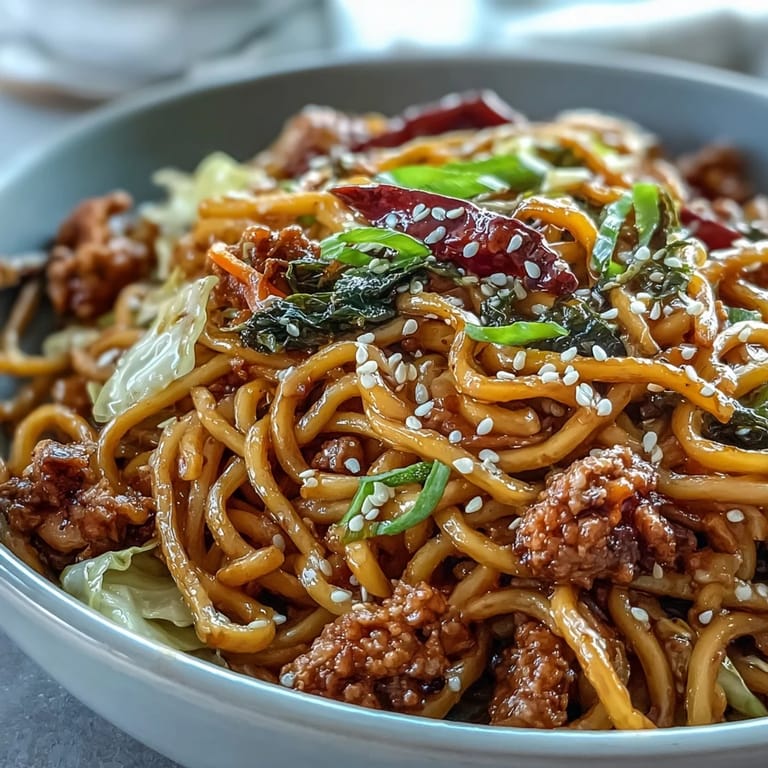
Save This meal lives in that sweet spot where it's fast enough for a weeknight but good enough for when you want to impress someone. Keep gochujang in your pantry and you'll find yourself making this more often than you'd expect.
Recipe FAQ
- → Can I use other proteins instead of ground turkey?
Ground chicken or beef work beautifully as substitutes. Both absorb the Korean sauce well and cook in about the same time as turkey. For a vegetarian version, try crumbled tofu or your favorite plant-based ground meat alternative.
- → What type of noodles work best?
Fresh or dried udon noodles are ideal due to their thick, chewy texture that stands up well to stir-frying. Ramen noodles also work great. For a lighter option, try soba noodles or even spaghetti in a pinch.
- → How spicy is this dish?
The level of heat comes from gochujang, which offers a moderate kick with complex fermented flavors. If you're sensitive to spice, start with one tablespoon and adjust to taste. For extra heat, add gochugaru (Korean chili flakes) or additional gochujang.
- → Can I make this gluten-free?
Simply substitute regular soy sauce with gluten-free tamari and choose rice noodles, soba (made from 100% buckwheat), or your favorite gluten-free noodle variety. The flavors and cooking method remain exactly the same.
- → How should I store leftovers?
Store in an airtight container in the refrigerator for up to 3 days. The noodles will absorb more sauce over time, so you may want to add a splash of water or extra sauce when reheating. Reheat in a skillet over medium heat for the best texture.